
How Much Does Tooth Extraction Cost?
Tooth pain can make it hard to sleep, eat, work, or focus on anything else. If a tooth is badly decayed, infected, cracked, loose, or damaged beyond repair, a dentist may recommend removal. That often leads to an immediate question: how much does tooth extraction cost?
The answer depends on the type of extraction, the tooth involved, your location, the dentist’s evaluation, dental insurance, and whether the situation requires urgent care. Some patients need a simple extraction for a visible tooth. Others need a surgical extraction for broken, impacted, or infected teeth. Wisdom teeth may also cost more, especially when they’re impacted or require sedation.
Emergency Dental Squad helps patients find fast emergency dental care when pain or damaged teeth can’t wait. The service is available 24/7 and helps connect patients with trusted local dentists for urgent issues such as toothaches, chipped or broken teeth, abscesses, X-rays, and extractions. If you need help now, call to speak with a local dentist and ask about same-day availability.
Tooth Extraction Costs and What Affects the Extraction Cost
Tooth extraction costs vary because every mouth, tooth, and treatment plan is different. A tooth that is fully visible and easy to loosen usually costs less to remove than one that is broken below the gumline. A front tooth may be easier to access than a molar. A wisdom tooth may require a different approach, especially if it’s impacted or angled.
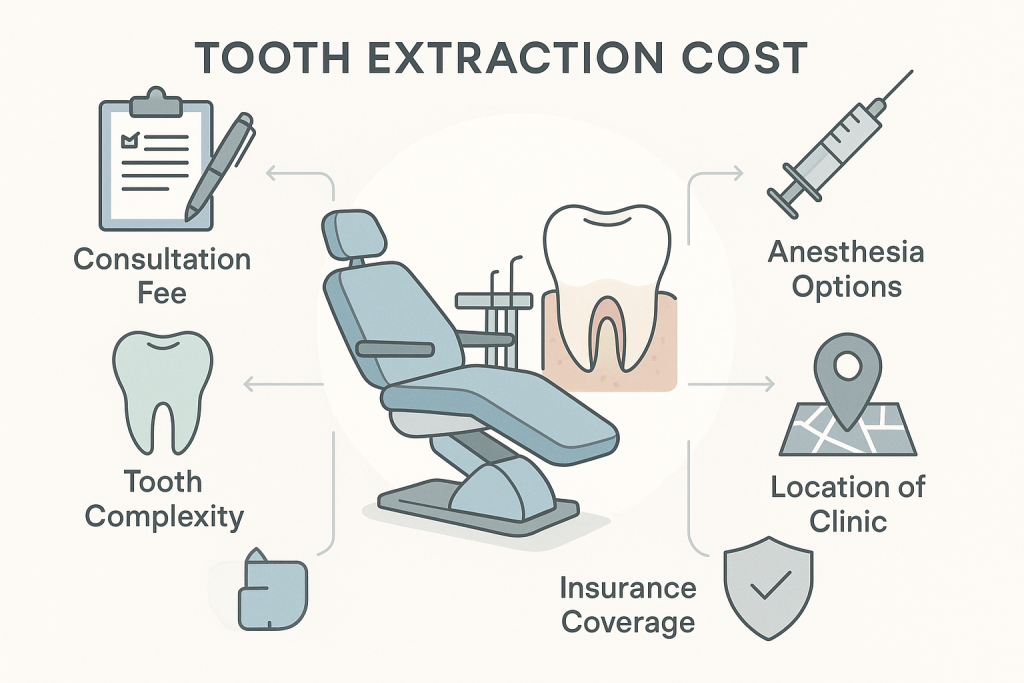
Simple tooth extraction costs vary based on several details, including the dentist’s exam findings and whether additional services are needed. The final extraction cost may include the exam, dental X-rays, local anesthesia, the removal itself, and aftercare instructions. In some cases, antibiotics, sedation, bone grafting, or follow-up visits may add to the total.
Several factors can influence what you pay:
- Type of extraction, such as simple extraction or surgical extraction
- Tooth location, including front teeth, molars, or wisdom teeth
- Condition of the tooth, such as decay, infection, fracture, or impaction
- Need for X-rays or imaging before treatment
- Anesthesia or sedation options used for comfort
- Urgency of the appointment, including same-day or after-hours care
- Dental insurance coverage, deductible, and plan limits
- Location of the dental office and local pricing
The best way to understand your price is to schedule an exam. A dentist can determine whether the tooth can be removed simply or whether a surgical approach is needed. Emergency Dental Squad can help you connect with a local provider so you can get answers quickly, especially when pain is severe or the tooth is already broken.
Average Cost When You Need a Tooth Pulled
Patients often want a clear average before calling a dentist. While prices vary by state, provider, and treatment needs, simple extractions are generally less expensive than surgical procedures. If the tooth is visible, stable enough to remove with standard instruments, and doesn’t require complex work, the cost is usually lower.
Surgical extraction costs are typically higher because the dentist may need to access the tooth through the gum, remove bone, divide the tooth into smaller pieces, or manage a more involved infection or fracture. Wisdom teeth may fall into this category, especially if they’re impacted.
| Type of Extraction | When It May Be Needed | Common Cost Factors |
| Simple extraction | Tooth is visible and accessible | Exam, X-ray, local anesthesia, tooth location |
| Surgical extraction | Tooth is broken, impacted, or below the gumline | Imaging, incision, bone removal, sedation, complexity |
| Wisdom teeth removal | One or more wisdom teeth are painful, infected, or impacted | Number of teeth, impaction, sedation, oral surgery needs |
| Emergency extraction | Severe pain, swelling, trauma, or infection requires fast care | Same-day visit, after-hours care, X-rays, treatment urgency |
| Full mouth extractions | Multiple teeth must be removed | Number of teeth, anesthesia, replacement planning, healing needs |
The average cost may also change if the tooth needs replacement later. After a tooth is removed, some patients ask about dental implants, bridges, or dentures. These are separate treatments and usually have separate costs. A dentist can explain whether replacement is recommended for your oral health, bite, appearance, and long-term care.
If you’re searching for the cheapest place to get a tooth pulled without insurance, remember that price shouldn’t be the only factor. Safe care, proper diagnosis, pain control, and infection management matter. A low price may not include X-rays, sedation, aftercare, or treatment for complications, so always ask what the estimate includes.
Dental Plans, Dental Insurance, and Out-of-Pocket Costs
Dental insurance can help reduce the amount you pay for an extraction, but coverage depends on your plan. Some dental plans classify a simple extraction as a basic service. Others treat surgical removal as a higher-level procedure. Your deductible, annual maximum, waiting period, and coverage percentage can all affect your out-of-pocket cost.
If you have dental insurance, call your insurance company or ask the dental office to review your benefits. Ask your plan provider what is covered before treatment when possible. In an urgent situation, the office may still be able to provide an estimate based on available information.
Ask these questions before treatment:
- Is the extraction covered under my plan?
- Is it considered basic or surgical treatment?
- Has my deductible been met?
- What percentage will insurance pay?
- Does my plan have a waiting period?
- Is there an annual maximum that affects my coverage?
- Are X-rays, sedation, antibiotics, or follow-up visits covered?
- Will I need pre-authorization for a surgical procedure?
Patients without insurance still have options. Emergency Dental Squad offers information for patients seeking affordable extraction options without insurance, including providers that may offer payment plans or savings plans. You can ask the dental office about cash pricing, payment arrangements, or available discount options.
Don’t delay care because you’re unsure about insurance. A painful infection, swelling, or damaged tooth may worsen over time. Getting an exam can help you understand the treatment, the cost, and the safest next step.
Simple Extraction vs. Surgical Extraction
A simple extraction is used when the tooth is visible above the gumline and can be removed with standard dental tools. The dentist numbs the area, loosens the tooth, and removes it carefully. This type of extraction is often used for teeth that are decayed, loose, or damaged but still accessible.
A surgical extraction is different. It may be needed when the tooth is impacted, broken at or below the gumline, not fully erupted, or difficult to access. Wisdom teeth are a common example. A dentist or oral surgery provider may need to make a small opening in the gum, remove bone, or divide the tooth for safer removal.
Surgical treatment often costs more because it may require added time, imaging, tools, and anesthesia planning. It may also involve a longer recovery period. If sedation is used, that can add to the total.
Signs your extraction may be surgical include:
- The tooth is broken close to the gumline.
- The tooth is impacted or not fully visible.
- The tooth is a wisdom tooth with limited room.
- The tooth has curved or difficult roots.
- There is infection, swelling, or bone involvement.
- A previous attempt to remove the tooth wasn’t simple.
A dentist can determine which type of procedure is needed after an exam and X-ray. Emergency Dental Squad can help you find local dental care if the pain is severe, your regular dentist is unavailable, or you need help outside normal hours.
Emergency Dental Care for Pain, Infection, or a Broken Tooth
Not every extraction can wait for a routine appointment. Severe tooth pain, swelling, fever, pus, facial swelling, or a broken tooth with exposed nerves may need urgent attention. Emergency Dental Squad’s website states that it helps patients across the U.S. get fast, reliable emergency dental care 24/7 and connects patients with trusted dentists for issues such as severe tooth pain and broken or lost dental work.
Call for urgent dental care if you have:
- Severe tooth pain that doesn’t improve
- Swelling in the gums, jaw, or face
- A broken tooth with sharp edges or exposed inner structure
- A dental abscess or bad taste in the mouth
- Bleeding that doesn’t stop
- A loose adult tooth
- Pain that prevents eating, sleeping, or working
- Trouble opening your mouth or swallowing
Emergency care may include an exam, X-rays, pain relief, antibiotics when appropriate, drainage for certain infections, or extraction if the tooth can’t be saved. The dentist will recommend treatment based on your diagnosis.
If you’re unsure whether your tooth needs to be pulled, call for guidance. Some teeth can be saved with a filling, crown, or root canal. Others may need removal to stop pain, infection, or further oral damage.
Affordable Options, Replacement Planning, and Next Steps
Tooth removal can solve an urgent problem, but it’s also important to think about healing and replacement when needed. After an extraction, the dentist may discuss dental implants, bridges, partial dentures, or other tooth replacement options. Replacement isn’t always immediate, but it may help preserve chewing function, appearance, and bite stability.
The cost to get a tooth pulled and replaced is higher than extraction alone because replacement is a separate treatment. Dental implants, bridges, and dentures each have different timelines and costs. If you need multiple teeth removed or full mouth extractions, ask the dentist for a staged treatment plan so you understand what comes first and what can wait.
If you have dental insurance, bring your plan information to the appointment and ask what may be covered. If you don’t have insurance, ask about payment options, expected costs, and whether treatment can be prioritized in phases. Getting clear pricing early can help you make informed decisions without delaying needed care.
If tooth pain is disrupting your day, don’t wait for it to get worse. Call Emergency Dental Squad 24/7 to speak with a local dentist, ask about same-day availability, and get help finding care for toothaches, infections, broken teeth, wisdom teeth, and extractions.
