
Cracked Tooth Treatment: Signs, Symptoms, Causes, Diagnosis, and Repair Options
A cracked tooth can make eating, drinking, speaking, or sleeping difficult. The pain may be sharp and sudden, or it may come and go when you bite down. Some cracks are easy to see, while others sit below the surface and only become noticeable when the tooth reacts to pressure, heat, cold, or sweets.
Getting prompt cracked tooth treatment can reduce discomfort, protect the damaged area, and help prevent the crack from spreading.
Emergency Dental Squad helps people across the U.S. look for participating local dental providers who handle urgent dental concerns. Scheduling support is available 24/7, including nights, weekends, and holidays. Same-day appointments may be available depending on your location and the local provider’s schedule.
Finding help can feel especially difficult when pain starts overnight, during a weekend, while traveling, or when your regular dental office is unavailable.
Emergency Dental Squad can reduce the time you spend calling multiple offices while you are already uncomfortable. Share your location and concern, and the team can help you search for a participating provider and ask about available appointment options.
Emergency Dental Squad is a connection service, not a dental office. The local provider will examine your tooth, make the diagnosis, explain the available options, and recommend treatment based on the condition of your tooth.
Cracked Tooth Treatment when You Need Help Fast
A cracked tooth can worsen under everyday chewing pressure, even when the pain comes and goes. Seeking care promptly gives a local dentist the chance to assess the damage, relieve discomfort, and determine whether the tooth can be stabilized before the fracture spreads.
Contact Emergency Dental Squad when you need help looking for urgent dental care and do not know which offices may be available. You can share your location and describe what happened, such as biting a hard food, losing part of a tooth, developing sudden sensitivity, or noticing swelling around the affected area. The team can then help you search for a participating local provider and ask about appointment availability.
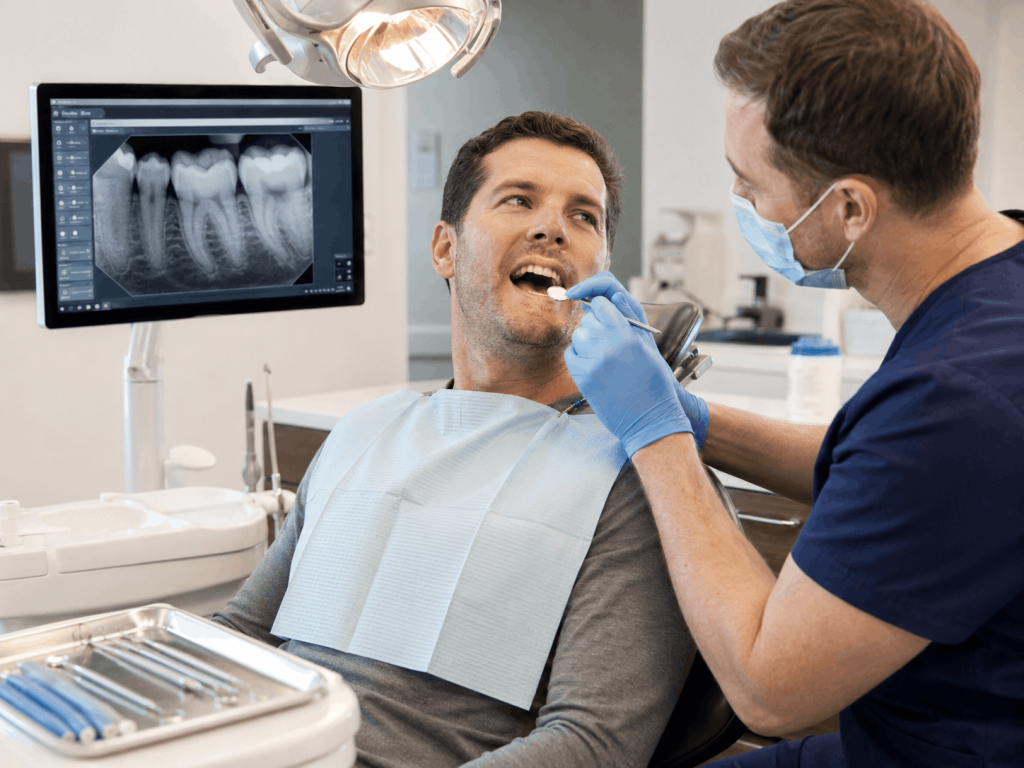
The dentist you visit will decide which examination, imaging, and treatment steps are appropriate. Depending on the damage, care may involve smoothing a sharp edge, placing a temporary restoration, repairing the tooth with bonding or a crown, treating the pulp, or removing a tooth that cannot be restored.
Scheduling support is available at any time, including nights, weekends, and holidays. Appointment timing depends on your location and the participating provider’s availability, but reaching out gives you a clear next step without having to call multiple dental offices while you are in pain.
Signs, Causes, and Risks of a Fractured Tooth
Cracked teeth do not always cause steady pain. In many cases, discomfort appears only while chewing or when you release your bite. This can make the source difficult to identify without a dental exam.
Common symptoms include:
- Sharp pain when biting or chewing, especially on one side of the mouth
- Sensitivity to hot, cold, sweet, or acidic foods and drinks
- Pain that appears and disappears without a clear pattern
- A rough edge, visible line, chip, or missing piece of tooth
- Swelling, tenderness, or irritation in the gum near the damaged area
- A change in the way your teeth meet when you close your mouth
- Lingering discomfort after pressure is removed from the tooth
A hairline crack may cause mild sensitivity without visible damage. A deeper tooth fracture may expose dentin or reach the tooth pulp, where the nerves and blood vessels are located. That type of injury may cause stronger pain, lingering temperature sensitivity, swelling, or signs of infection.
A tooth cracked in half may not always hurt right away, especially if the nerve is no longer responsive. A lack of pain does not mean the tooth is safe to ignore. Understanding the risks of leaving dental damage untreated can help you see why prompt care matters. A split tooth, loose section, or crack below the gumline needs professional evaluation because the remaining structure may not be stable.
Seek urgent dental care if you have severe pain, facial swelling, persistent bleeding, pus, fever, difficulty swallowing, or a tooth that feels loose after an injury. Significant swelling that affects breathing or swallowing requires emergency medical attention.
A healthy tooth can crack when exposed to sudden force. Teeth can also weaken gradually because of decay, wear, grinding, or large restorations. In many cases, several factors contribute to the damage.
Frequent causes of a cracked or broken tooth include biting ice, hard candy, popcorn kernels, bones, or other hard foods. Teeth may also fracture during sports, falls, car accidents, or direct impacts to the face. Using your teeth to open packages, cut tags, or hold objects places unnecessary pressure on enamel and existing dental work.
Grinding and clenching create repeated stress. Over time, that pressure can form small cracks, wear down enamel, or weaken the area around a filling. People who grind at night may not realize it is happening until a dentist notices wear patterns or a tooth begins to hurt.
Large or aging fillings can leave less natural tooth structure available to absorb chewing force. Decay can weaken enamel and dentin from within. A tooth that has received root canal therapy may also be more prone to fracture if it is not adequately restored and protected.
Cracks can also form around a loose, damaged, or missing filling. If part of a filling comes out, avoid chewing on that side and arrange an evaluation. The remaining tooth may be exposed to pressure, bacteria, and further breakage.
You cannot prevent every tooth fracture, but you can lower avoidable risks. Do not chew ice or use your teeth as tools. Wear a mouthguard during contact sports. Ask a dentist about a night guard if you grind or clench. Routine dental visits can also identify weakened fillings, decay, and bite problems before they lead to an urgent break.
How a Dentist Diagnoses Tooth Pain and Damage
A cracked tooth can be difficult to diagnose because the fracture may be too small to see and may not appear clearly on a standard X-ray. The dental provider will consider your symptoms, dental history, and exam findings to determine where the damage is located and how deeply it extends.
The visit usually begins with questions about when the pain started, what triggers it, and whether the tooth has been injured or restored before. The dentist may ask you to bite gently on a small instrument to identify the area that hurts under pressure. Light, magnification, dye, and careful inspection may make fine cracks easier to find. The gum around the tooth may also be checked for a narrow pocket that could indicate a deeper fracture.
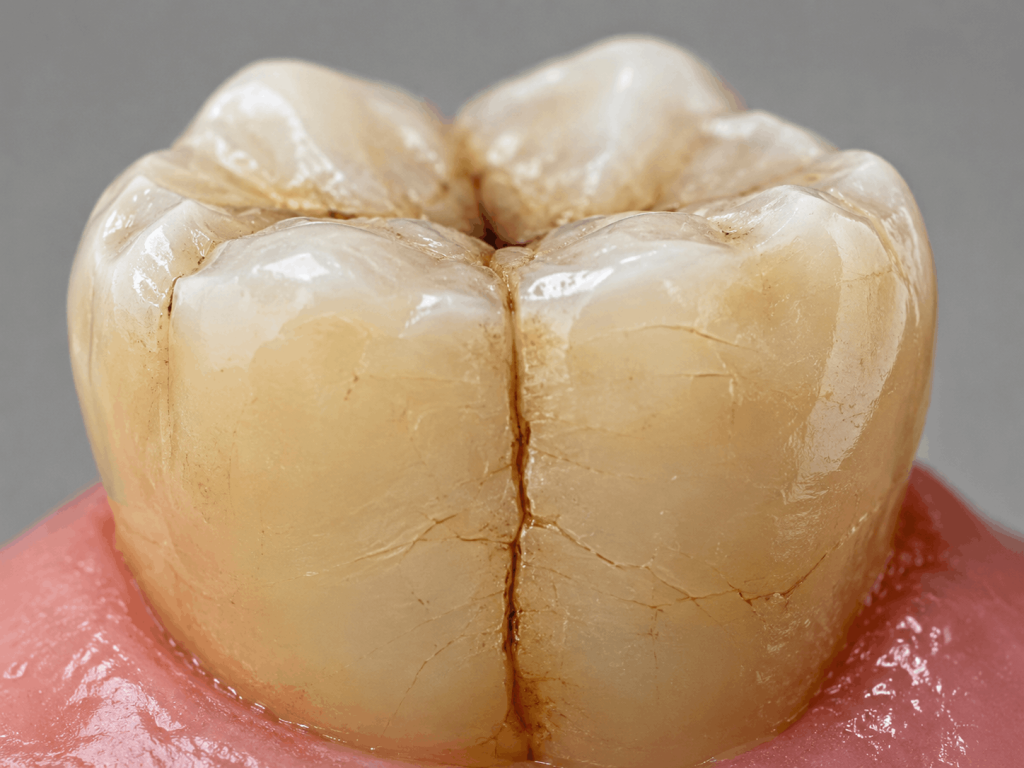
Dental X-rays can help the provider look for decay, infection, bone changes, previous treatment, and damage near the root. The crack itself may not be visible, but related changes can still support the diagnosis. In some cases, additional imaging or a referral to an endodontist may be recommended.
The provider will also assess the health of the pulp. Temperature and pressure tests can show whether the nerve is irritated, inflamed, or no longer responsive. These findings help determine whether the tooth may be repaired with bonding or a crown, requires root canal treatment, or cannot be saved.
| Finding | What It May Mean | Possible Next Step |
| Small surface line with no pain | Craze line or shallow enamel crack | Monitoring, smoothing, or cosmetic care |
| Small chip or shallow crack | Limited loss of enamel or dentin | Dental bonding or filling |
| Pain when biting or releasing pressure | Crack affecting a chewing surface | Crown or another protective restoration |
| Lingering heat or cold sensitivity | Pulp irritation or inflammation | Root canal evaluation and restoration |
| Crack extending below the gumline | Deep structural damage | Surgical assessment or tooth extraction |
| Tooth separated into movable sections | Split tooth | Removal of the unstable portion or extraction |
The exact plan depends on the tooth, the crack’s location, the condition of the root, and the amount of stable structure that remains. Your dentist may provide treatment during the same visit or arrange follow-up care with a provider who handles complex root canal or surgical procedures.
Cracked Tooth Repair Options with Dental Bonding
Many cracked teeth can be treated when enough stable tooth and root structure remain. The examining dentist will determine the safest option after assessing the depth of the crack, the remaining tooth structure, the pulp, the root, and the surrounding tissue.
Dental bonding may be suitable for a small chip or shallow crack, especially on a front tooth. The dentist applies tooth-colored resin, shapes it to match the tooth, and hardens it. Bonding can cover a sharp edge, rebuild a missing area, and improve the tooth’s appearance. It is not designed to stabilize every type of structural crack.
A dental filling may repair a small damaged area when enough healthy tooth remains. The provider removes decay or unstable material, places the filling, and shapes the surface so your bite feels natural.
A dental crown covers the visible part of a weakened tooth. Crowns are often used when a larger section is missing, an old filling has failed, or a crack has reduced the tooth’s strength. The crown helps distribute chewing pressure and may reduce the chance of further breakage.
Root canal therapy may be needed when the crack reaches the pulp or causes irreversible inflammation or infection. The dentist or endodontist removes the affected tissue, cleans the inside of the tooth, and seals the canal space. A crown is often placed afterward to protect the remaining structure. Root canal treatment may relieve pain and preserve a tooth that still has a stable root and repairable outer structure.
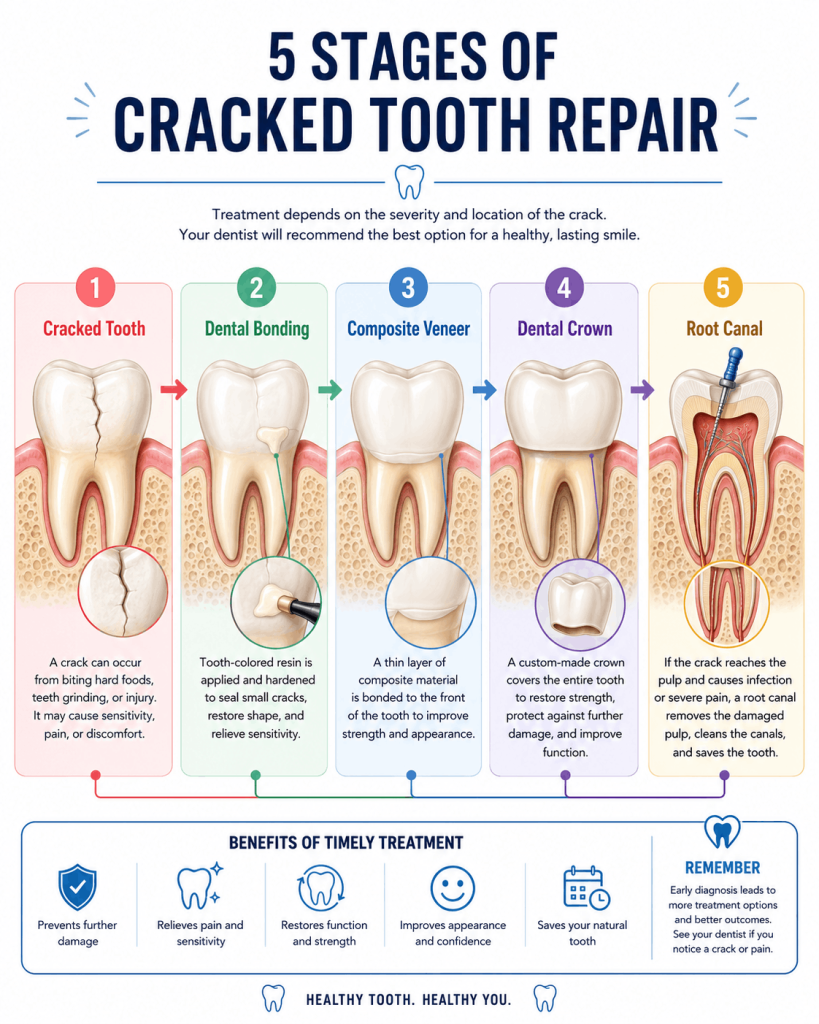
Veneers may be considered for certain front-tooth chips or cosmetic fractures. A veneer covers the front surface of the tooth. It is not suitable for a deep crack, an unstable tooth, or an injury that affects the pulp.
Tooth extraction may be necessary when the fracture extends deeply below the gumline, the root is split, the tooth has separated into sections, or too little healthy structure remains for a dependable repair. After removal, the dentist can discuss replacement choices such as a bridge, partial denture, or dental implant.
Home care cannot permanently repair a cracked tooth. Temporary steps may ease discomfort, but they cannot seal the fracture, remove infected tissue, or restore missing structure. A dental examination is needed to find out whether the tooth can be saved and which treatment is appropriate.
What to Do before Your Dental Appointment
Care at home should focus on protecting the damaged area and staying as comfortable as possible until you can see a provider. Avoid placing aspirin directly on the tooth or gum, using household glue, trying to remove the tooth yourself, or repeatedly biting down to test it.
Take these steps while you wait for care:
- Rinse your mouth gently with warm water to clear away food and debris
- Avoid chewing on the affected side and choose soft foods
- Hold a cold compress against the outside of your cheek in short intervals if swelling is present
- Use clean gauze and light pressure if the area is bleeding
- Cover a sharp edge with dental wax or sugar-free gum to protect your tongue or cheek
- Save any broken fragment and bring it to your appointment
- Use an over-the-counter pain reliever only as directed on the label and when it is safe for you
Avoid very hot, cold, hard, sticky, or sugary foods. Keep the area clean, but brush carefully around the damaged tooth. If a fragment has broken away, do not scrub it. Place it in a clean container with milk or saline when possible and bring it with you.
Do not assume the problem has resolved because the pain fades. A crack can move under chewing pressure, and bacteria may enter deeper layers of the tooth. Seek help sooner if discomfort increases, the gum begins to swell, or you develop a bad taste, drainage, fever, or facial swelling.
Emergency Dental Squad can help you look for local care when your regular office is closed, fully booked, or unavailable. You do not have to manage the search alone. Appointment availability, pricing, and treatment options vary by provider and location.
Cracked Tooth Treatment Cost and What Affects Pricing
The cost to repair a cracked tooth depends on the recommended treatment, the tooth’s location, the complexity of the fracture, and whether the pulp or root is involved. A small bonding repair usually costs less than a crown, root canal, extraction, or tooth replacement. Diagnostic examinations and X-rays may be billed separately.
Insurance coverage varies by plan. Some policies may cover part of a filling, crown, root canal, or extraction when the procedure is medically necessary. Cosmetic treatment may receive limited coverage or none. The local dental provider can explain the proposed fee, available payment methods, and whether insurance information can be submitted.
Treating a small crack early may cost less than waiting until the tooth breaks further or becomes infected. Delayed care may lead to a root canal, extraction, or tooth replacement plan.
Emergency Dental Squad does not diagnose the crack or set clinical fees. The service connects you with a local provider who can examine the tooth and discuss available treatment choices. Ask for a written estimate when possible, including the examination, imaging, temporary care, permanent restoration, and follow-up visits.
Frequently Asked Questions About Cracked Tooth Treatment
Can a cracked tooth be fixed?
Many cracked teeth can be repaired when enough stable tooth and root structure remain. Treatment may involve bonding, a filling, a crown, or root canal therapy. A deep root fracture or fully split tooth may require extraction.
How long can a cracked tooth go untreated?
There is no dependable safe waiting period. Some shallow cracks remain stable for a time, while others spread with the next bite. New pain, swelling, temperature sensitivity, or a visible fracture should be checked promptly.
Does a cracked tooth need to be pulled?
Not always. Extraction is usually considered when the crack extends too far below the gumline, reaches the root in a way that cannot be repaired, or leaves too little stable structure. A dentist needs to examine the tooth before making that decision.
What should I avoid with a cracked tooth?
Avoid chewing on the damaged side, biting hard foods, applying aspirin to the gum, or trying to repair the tooth with glue. Repeatedly testing the tooth by biting down may deepen the fracture.
Why does a cracked tooth hurt only sometimes?
Movement along the crack can irritate the inner tooth when you bite or release pressure. Temperature changes may also trigger pain if the dentin or pulp is affected.
Can a tooth be cracked with no pain?
Yes. Small enamel cracks and some deeper fractures may cause little or no pain at first. A visible crack, missing piece, or change in your bite still needs professional evaluation.
Find Fast Cracked Tooth Care with Emergency Dental Squad
A cracked tooth can be painful, stressful, and difficult to assess on your own. You do not need to wait until normal office hours or spend hours calling providers one by one. Emergency Dental Squad offers 24/7 scheduling support for people seeking local care for cracked teeth, broken teeth, severe tooth pain, swelling, lost fillings, damaged dental work, and other urgent concerns.
Call to share your location and symptoms. The team can help you search for a participating local provider and ask about available appointment options. The dentist you visit will complete the examination, explain the findings, and recommend treatment based on the condition of your tooth.
Prompt evaluation may improve the chance of preserving the tooth and limiting further damage. Reach out to Emergency Dental Squad for a clearer next step and help finding available local care.
