
How Does a Dentist Fix a Cracked Tooth?
A cracked tooth can cause sharp pain, temperature sensitivity, or discomfort when you bite. Sometimes the damage is visible. In other cases, the crack is hidden beneath a filling or cannot be seen without a dental examination.
The answer to “how does a dentist fix a cracked tooth” depends on where the crack begins, how deeply it extends, and whether the pulp or root is affected. Minor damage may be repaired with dental bonding or a filling, while treatment options for a damaged tooth may also include a crown or root canal. If the tooth is split or damaged below the gumline, extraction may be necessary.
Prompt care can reduce pain, stop the crack from spreading, and improve the chance of saving the tooth. Emergency Dental Squad is available 24/7 to help people across the U.S. connect with trusted local dentists and healthcare providers.
Types of Cracked, Chipped, and Broken Teeth
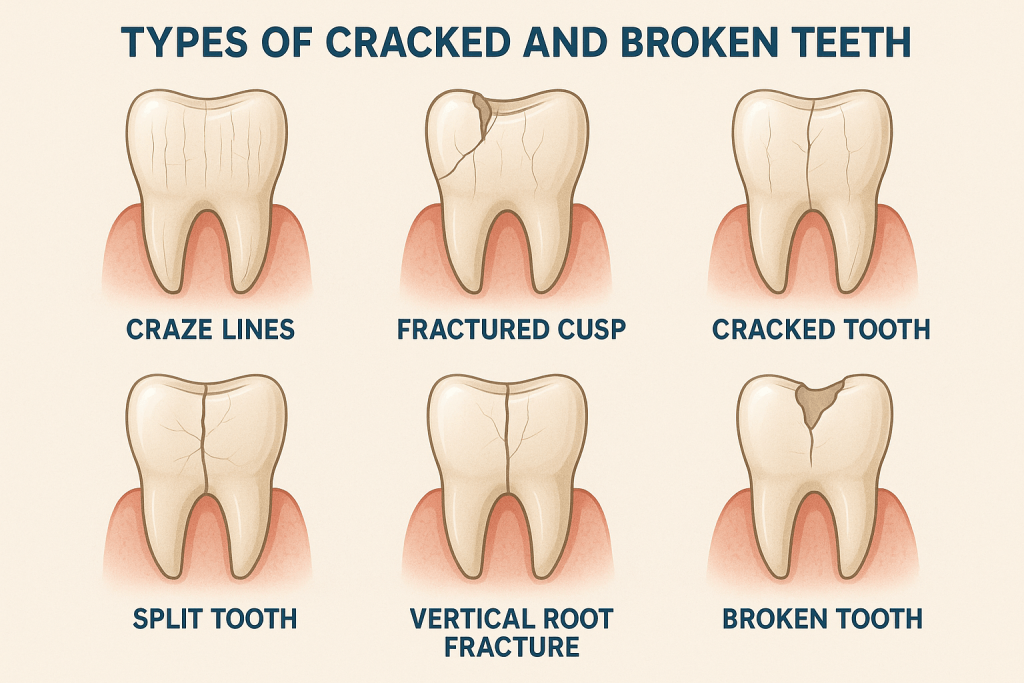
A crack’s location and depth determine whether the tooth can be repaired and which procedure may work.
Craze lines are tiny surface lines in the enamel. They are common and usually painless. Treatment is often unnecessary unless their appearance is a concern.
A fractured cusp occurs when part of the chewing surface breaks, often around a large filling. The area may feel sharp or sensitive. If the fracture does not reach the pulp, the tooth can often be restored with a filling or crown.
A cracked tooth has a line that begins on the chewing surface and extends downward. The tooth may remain intact, but continued chewing pressure can spread the crack. Early treatment improves the chance of stabilizing it.
A split tooth has separated into sections and is usually too damaged for a simple repair. A dentist may remove one section or recommend extraction.
A vertical root fracture begins below the gumline and travels upward. Symptoms may not appear until the surrounding tissue becomes inflamed. Treatment often requires removal of the affected root or tooth.
A broken tooth may result from trauma, decay, an old restoration, or grinding. Some breaks affect only enamel, while others expose dentin or pulp.
A chipped tooth usually removes a small piece of enamel without affecting the pulp. A fracture may extend into dentin or nerve tissue, increasing the risk of pain and infection.
Even a small chip should be examined if it causes sensitivity, leaves a sharp edge, or changes the bite. A dentist can determine whether the damaged tooth can still be restored.
Symptoms and Causes of a Cracked Tooth
Some cracked teeth cause immediate pain. Others produce mild or irregular symptoms.
A common sign is pain when biting down or releasing pressure. Movement between cracked sections may irritate the pulp. Sensitivity to cold, heat, or sweet foods can occur when the crack exposes dentin.
Other warning signs include:
- Pain that comes and goes
- Sensitivity around one tooth
- Swelling or tenderness near the gumline
- A rough edge or missing fragment
- Pain when chewing firm foods
- A change in the bite
- Redness, drainage, or a bump on the gum
A tooth cracked in half may not hurt if the nerve is already damaged. A visible split still requires urgent care because bacteria can enter the tooth and surrounding tissues.
Cracks can result from an accident or repeated pressure. Common causes include biting ice, hard candy, popcorn kernels, or other rigid foods. Using teeth to open packaging also strains enamel.
Grinding and clenching stress the back teeth. Large fillings can weaken the remaining structure, while decay, enamel erosion, and previous dental work can raise the risk.
| Cause or Risk Factor | How It Affects the Tooth | People Who May Face Greater Risk |
| Teeth grinding or clenching | Places repeated pressure on enamel and restorations | People with bruxism, stress, or bite problems |
| Hard foods and objects | Can cause a sudden chip, break, or fracture | People who chew ice, hard candy, pens, or fingernails |
| Facial trauma | May fracture one or several teeth | Athletes, accident victims, and people who experience falls |
| Large or aging fillings | Leaves less natural structure to support chewing | Adults with extensive previous dental work |
| Decay or enamel erosion | Weakens tooth layers | People with cavities, acid reflux, or frequent acidic drink intake |
| Sudden temperature changes | May stress weakened enamel | People who alternate very hot and cold foods or drinks |
| Age-related wear | Gradually reduces enamel strength | Middle-aged and older adults |
Cracked teeth cannot heal themselves. Home remedies may ease discomfort briefly, but they cannot seal the fracture. Learning how an untreated crack can worsen over time explains why a dentist must determine whether the damage reaches the pulp, root, or bone.
How a Dentist Diagnoses a Cracked Tooth
Some fractures are too small to appear on a standard X-ray. The dentist begins by asking when the pain started, what triggers it, and whether the tooth was previously injured or restored.
The mouth is examined for visible lines, broken fillings, worn enamel, swelling, and gum changes. Magnification and focused lighting may reveal a small crack.
A bite test can locate the affected cusp. The patient bites on a small instrument one area at a time, and pain may identify the damaged section.
The dentist may use additional tests to find a hidden fracture and inspect the gum pocket around the tooth. A deep, narrow pocket can suggest that the crack extends below the gumline.
X-rays help check the root, bone, decay, and infection, but may not show the crack. Additional imaging may be considered when a hidden problem is suspected.
An old filling or crown may need to be removed before the full damage can be seen. The dentist may also test different areas to locate the pain.
Once the fracture pattern is identified, the dentist will consider:
- Whether the crack reaches the pulp
- Whether it extends beneath the gumline
- How much healthy tooth structure remains
- Whether the sections move under pressure
- Whether infection or bone loss is present
- Whether the tooth can support a restoration
Continued chewing can deepen a shallow crack. Delayed treatment may turn a repairable problem into one requiring root canal therapy or extraction.
Dental Bonding, Fillings, Crowns, and Root Canal Treatment
Treatment depends on the tooth’s condition and aims to relieve discomfort, restore strength, and protect inner tissues.
For small chips and surface cracks, dental bonding may be appropriate. The dentist applies tooth-colored resin, shapes it, and hardens it with a curing light.
Bonding can smooth a sharp edge with little removal of natural tooth structure. It may not be strong enough for a deep crack or heavily loaded back tooth.
Fillings may be used when the damage is limited to a smaller area. A filling can repair a spot where part of the tooth or an older restoration has broken away. The damaged material is removed and replaced with composite resin or another material.
A filling works best when enough strong tooth structure remains. If much of the chewing surface is missing, a crown may offer better protection.
Crowns are often used for weakened or fractured teeth. A dental crown covers the visible part of the tooth, holds the structure together, and distributes chewing pressure.
Before placing the treatment crown, the dentist reshapes the tooth and removes weakened areas. Your dentist will take impressions or a digital scan so the restoration fits your bite. A temporary crown may be used while the permanent one is prepared.
Crowns are often recommended for fractured cusps and cracks that have not extended too far below the gumline. They can reduce movement and protect the tooth from further damage.
Root canal therapy may be necessary when the pulp is affected. A crack that reaches the pulp can cause inflammation or infection. Symptoms may include lingering sensitivity, severe pain, swelling, or tenderness.
The dentist or endodontic specialist removes the damaged pulp, cleans the root canals, and seals the space. The tooth is usually restored with a crown.
A cracked tooth does not always need a root canal. If the pulp is healthy and the fracture can be stabilized, a crown may be enough. Root canal treatment cannot repair a split extending through the root.
Extraction is reserved for teeth that cannot be saved. It may be necessary when the tooth is fully split, the root is fractured, or the damage extends too far below the gumline. The dentist will explain the findings and replacement choices.
Dental implants, bridges, and removable partial dentures can replace a missing tooth. The right choice depends on bone support, oral health, cost, timing, and location.
Bonding or a filling may be completed in one visit. A crown may require one or two appointments. Root canal therapy may take one or several visits.
Local anesthetic is normally used. Patients may feel pressure or vibration, but treatment should not be sharply painful. Mild soreness afterward should improve.
What to Do Before Your Dental Appointment
A cracked or broken tooth should be assessed quickly, especially when pain, swelling, bleeding, or visible separation is present.
Rinse gently with warm water. If part of the tooth has broken off, save it in a clean container and bring it to the appointment. Do not scrub or attempt gluing it back into place.
Avoid chewing on the affected side. Choose soft foods and avoid very hot, cold, hard, or sticky items. A cold compress may help reduce swelling.
Over-the-counter pain medication may help when taken as directed and medically appropriate. Do not place aspirin directly on the tooth or gum.
Temporary dental repair material may briefly cover a rough edge or lost filling, but it should not delay care.
Seek prompt help for facial swelling, fever, uncontrolled bleeding, severe pain, difficulty opening your mouth, or signs of infection. Seek emergency medical care immediately when swelling affects breathing or swallowing or when the injury involves serious head or facial trauma.
After treatment, follow the dentist’s instructions. Avoid hard foods on a temporary crown, keep the area clean, and attend follow-up visits. Patients who grind their teeth may need a nightguard, while athletes may benefit from a fitted mouthguard.
Brush with a soft-bristled toothbrush, clean between the teeth daily, and schedule routine examinations. Avoid chewing ice and using your teeth as tools. Monitor fillings and crowns for wear or damage.
Get Fast Cracked Tooth Care Through Emergency Dental Squad
Sudden tooth pain or damage can feel stressful, especially at night, on weekends, or during holidays. A crack can spread even when pain is mild, so prompt help may preserve treatment options and lower the risk of infection or tooth loss.
Emergency Dental Squad is a free 24/7 service that helps people across the U.S. connect with trusted local dentists and healthcare providers. Fast or same-day appointments may be available depending on location and provider availability.
The local provider can examine the injury and determine whether treatment may involve bonding, a filling, a crown, root canal therapy, extraction, or another option. Seek care promptly for pain while biting, temperature sensitivity, swelling, a missing fragment, or a visible fracture. Fast assessment improves the chance of protecting the tooth and restoring function.
