
Deciding Between a Dentist and an Oral Surgeon: Who Performs Tooth Extractions?
When tooth pain becomes severe or a tooth is too damaged to save, removal may be the best way to stop pain, prevent infection from spreading, and protect your oral health. Many patients aren’t sure who to call first. Should you see a dentist, an oral surgeon, or another dental professional?
Who performs tooth extractions? The answer depends on the tooth, the reason it needs to be removed, and how complex the procedure is. A general dentist can often handle routine extractions when the tooth is visible and accessible. An oral surgeon may be needed for impacted wisdom teeth, teeth broken below the gumline, complex root shapes, deep infection, or cases that require advanced sedation.
Emergency Dental Squad helps patients find fast dental care when pain, swelling, broken teeth, or other urgent concerns can’t wait. If you need a tooth extracted, the team can help connect you with a trusted local dentist or appropriate provider for your situation. Same-day service may be available, and support is open 24/7.
Tooth Extraction by a Dentist or General Dentist
A dentist is often the first provider patients call for tooth pain, broken teeth, swelling, or a suspected infection. General dentists routinely perform extractions when the tooth can be removed safely in a standard dental setting.
A simple tooth extraction may be recommended when the tooth is visible above the gumline and can be loosened and removed with dental instruments. This can happen when a tooth is badly decayed, cracked, loose from gum disease, or damaged beyond repair but still accessible.
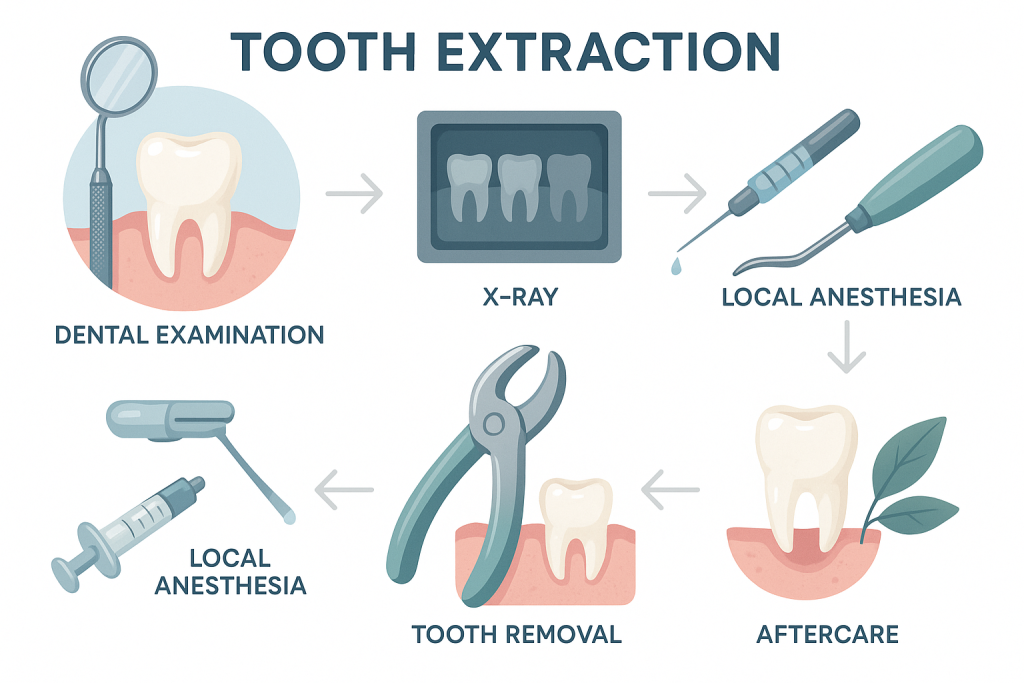
A general dentist may also take X-rays, check surrounding teeth, review your medical history, numb the area, remove the tooth, and provide aftercare instructions. In many cases, the procedure is done with local anesthesia, which numbs the area while you remain awake.
A dentist may perform tooth removal for:
- Severe tooth decay when the tooth can’t be restored
- A broken tooth that is visible and accessible
- Advanced gum disease causing looseness
- A baby tooth that doesn’t come out on its own
- A crowded tooth as part of a dental care plan
- Some wisdom teeth when they’re fully erupted and easy to reach
Not every painful tooth needs to be pulled. A dentist will first determine whether another treatment, such as a filling, crown, or root canal, could save the tooth. If removal is the safest option, the dentist will explain what to expect and whether your case can be handled in the office.
If your regular office is closed, Emergency Dental Squad can help you connect with available local care.
An Oral Surgeon, Oral Surgery, and Complex Extractions
An oral surgeon is a dental specialist trained to handle more complex tooth removals and surgical procedures involving the teeth, gums, jaw, and face. Oral surgeons often treat cases that go beyond a routine extraction.
A general dentist may refer you to an oral surgeon when the tooth is impacted, broken below the gumline, close to nerves, surrounded by dense bone, or affected by serious infection. Wisdom teeth are one of the most common reasons for referral, especially when they’re trapped under the gum, angled sideways, or only partly erupted.
Oral surgery may involve making a small incision in the gum, removing bone around the tooth, sectioning the tooth into pieces, or placing stitches after removal. These steps can make the procedure safer and more controlled when a tooth is difficult to access.
An oral surgeon may be recommended for:
- Impacted wisdom teeth
- Teeth broken below the gumline
- Curved, long, or complicated roots
- Teeth near nerves or sinus areas
- Infection involving bone or deeper tissues
- Multiple teeth that need removal in one visit
- Patients who need advanced sedation
- Cases involving trauma to the jaw or face
Dentists and oral surgeons often work together. The dentist identifies the problem, explains the options, and refers the patient when specialist care is the safer choice. This referral isn’t a delay. It’s a way to make sure the right health professionals are involved for the level of care needed.
If you’re in pain and unsure whether you need a dentist or oral surgeon, Emergency Dental Squad can help you find the right type of local provider based on your symptoms, timing, and location.
Dentoalveolar Surgery, Maxillofacial Surgery, and General Anesthesia
Some extractions are part of a larger surgical category called dentoalveolar surgery. This type of care involves the teeth and the bone that supports them. It may be needed when a tooth is impacted, broken below the gumline, or surrounded by bone that must be carefully managed during removal.
Maxillofacial surgery is broader. It may involve the jaw, face, mouth, neck, and related structures. Oral and maxillofacial surgeons handle advanced cases, including jaw injuries, facial trauma, cysts, tumors, severe infections, and complex tooth removal.
General anesthesia may be used for some oral surgery procedures, especially when the procedure is complex, multiple teeth are being removed, or the patient has high anxiety or special medical needs. It allows the patient to be fully asleep during treatment. Not every extraction requires it. Many routine procedures only require local anesthesia.
The choice of anesthesia depends on the procedure, the patient’s medical history, comfort level, and safety needs. A dentist or oral surgeon may discuss options such as local anesthesia, nitrous oxide, oral sedation, IV sedation, or general anesthesia.
| Situation | Likely Provider | Common Comfort Option |
| Visible tooth with simple decay or damage | General dentist | Local anesthesia |
| Fully erupted wisdom tooth | Dentist or oral surgeon | Local anesthesia or sedation |
| Impacted wisdom teeth | Oral surgeon | Sedation or general anesthesia may be discussed |
| Tooth broken below the gumline | Oral surgeon or experienced dentist | Local anesthesia, sedation, or surgical care |
| Facial trauma or jaw involvement | Oral and maxillofacial surgeon | Advanced anesthesia planning |
| Infection with swelling or spreading symptoms | Dentist, emergency dentist, or specialist referral | Diagnosis, pain control, antibiotics when appropriate, possible extraction |
Patients should always share medical conditions, medications, allergies, and past anesthesia concerns before treatment. This helps the dental team plan care safely.
Emergency Tooth Extraction: Fast Access When Pain Can’t Wait
Some dental problems should be evaluated quickly. Severe tooth pain, facial swelling, pus, fever, bleeding, a broken tooth, or trouble opening your mouth can point to an urgent dental issue. If a tooth can’t be saved, an emergency extraction may be recommended.
Call for urgent dental care if you have:
- Severe tooth pain that doesn’t improve
- Swelling in the gums, jaw, or face
- A broken tooth with sharp edges or exposed inner structure
- A bad taste, pus, or signs of an abscess
- Bleeding after injury
- A loose adult tooth
- Pain that prevents eating or sleeping
- Trouble swallowing, breathing, or opening your mouth
For symptoms such as trouble breathing, rapidly spreading facial swelling, or serious injury to the jaw or face, seek emergency medical care. Hospital staff may stabilize serious conditions, but tooth removal is usually handled by a dentist or oral surgeon rather than the emergency room. If the case involves severe facial trauma or jaw injury, oral and maxillofacial surgery may be involved.
Emergency Dental Squad helps reduce the stress of figuring out whom to call. Instead of searching late at night or calling multiple offices, patients can get help connecting with local emergency dental care.
What Happens during a Tooth Extraction Appointment
A tooth extraction appointment usually begins with an exam. The dentist or oral surgeon will ask about your symptoms, review your medical history, and take X-rays if needed. The X-ray helps show the tooth roots, bone, nearby nerves, and whether the tooth is simple or surgical to remove.
Once the provider determines that the tooth should be extracted, they will explain the procedure and comfort options. For a simple extraction, the area is numbed with local anesthesia. The dentist then gently loosens the tooth and removes it. Gauze is placed to help form a clot, and you receive aftercare instructions.
For a surgical extraction, the provider may make a small opening in the gum or divide the tooth into smaller sections. Stitches may be placed. Surgical cases may take longer and may involve additional recovery instructions.
The process often includes:
- Exam and diagnosis to confirm the tooth can’t be saved
- X-rays or imaging to see roots, bone, and nearby structures
- Numbing or sedation planning based on the procedure and patient needs
- Tooth removal using simple or surgical techniques
- Bleeding control with gauze and clot protection
- Aftercare instructions for healing, eating, cleaning, and pain control
Patients should ask what type of extraction is being performed, whether stitches are needed, what to avoid afterward, and when to call if symptoms don’t improve.
Recovery, Healing, and Things to Avoid after Tooth Extraction
Recovery starts as soon as the tooth is removed. A blood clot forms in the socket and protects the healing area. Keeping that clot in place is one of the most important parts of early healing.
Some soreness, mild swelling, and light bleeding can be normal after extraction. Your dental team will explain how to manage discomfort and when to call for help. Follow their instructions closely, especially during the first night after tooth extraction.
Things to avoid after tooth extraction include:
- Drinking through a straw
- Smoking or vaping
- Spitting forcefully
- Rinsing aggressively during the first day
- Touching the socket with your tongue or fingers
- Eating hard, crunchy, or spicy foods too soon
- Heavy exercise right after the procedure
- Skipping prescribed instructions or follow-up care
Soft foods are usually easiest during the early healing period. Examples include yogurt, applesauce, mashed potatoes, soup that isn’t too hot, smoothies without a straw, scrambled eggs, and soft pasta.
Many patients ask how long tooth extraction takes to heal. Early gum healing often begins within days, but full healing takes longer. Surgical extractions, wisdom teeth, infection, smoking, and medical conditions can affect the timeline. If pain gets worse after a few days, if swelling increases, or if you notice a bad odor or taste, call your dentist. These may be signs of dry socket or infection.
A missing tooth can also affect long-term bite function. Depending on the location, the dentist may discuss replacement options such as a dental implant, bridge, partial denture, or full denture. Replacement planning can help prevent neighboring teeth from shifting and support normal chewing.
Fast Help for Tooth Extractions
When you’re in pain, the biggest question is not just who performs tooth extractions. It’s who can help you now. Emergency Dental Squad can help connect you with local dental care for toothaches, broken teeth, infections, extractions, and other urgent needs. Support is available 24/7, and same-day appointments may be available in many areas.
If pain, swelling, or a broken tooth is disrupting your day, call Emergency Dental Squad now. You can speak with a local dentist, ask about urgent tooth extraction options, and get help finding care that fits your situation.
