
Why Do I Need an Emergency Dentist?
Dental pain rarely arrives at a convenient time. A tooth can crack during a meal, a crown can come loose before work, or severe mouth pain can wake you in the middle of the night. When that happens, waiting days for a routine appointment can allow the problem to get worse.
Why do I need an emergency dentist? An emergency dentist is trained to handle urgent dental issues that need fast attention. These may include severe tooth pain, swelling, infection, a dental abscess, a cracked tooth, uncontrolled bleeding, broken dental work, or a knocked-out tooth. Quick care can relieve pain, protect your teeth, and lower the risk of infection spreading.
Emergency Dental Squad helps patients across the U.S. connect with local dental providers 24/7. If you’re in pain, worried about swelling, or unsure whether your symptoms require urgent dental care, you don’t have to figure it out alone.
When Severe Tooth Pain or Urgent Dental Symptoms Can’t Wait
Emergency dental issues are ones that require immediate attention because they may involve infection, injury, exposed nerves, or damage that can worsen quickly. Pain is often the first warning sign. Mild sensitivity may pass, but severe tooth pain that keeps you awake, makes eating difficult, or doesn’t improve with over-the-counter medication should be checked as soon as possible.
Dental pain can come from decay, a damaged filling, gum infection, dying pulp, a cracked tooth, or pressure from an abscess. Some people try to wait it out because they hope the pain will fade. While discomfort may come and go, the underlying cause often remains. When the source is infection or nerve damage, waiting may lead to stronger pain and more involved treatment.
You may need an emergency dentist if you have:
- Severe tooth pain that feels deep, sharp, throbbing, or constant
- Mouth pain with swelling in the gums, jaw, cheek, or face
- A dental abscess, pus, fever, bad taste, or a pimple-like bump on the gums
- A cracked tooth, chipped tooth, loose adult tooth, or knocked-out tooth
- Bleeding that doesn’t slow with gentle pressure
- Broken dental work, such as a lost crown, filling, bridge, or denture
- Pain after any injury to the mouth, jaw, or face
- Trouble opening your mouth, chewing, swallowing, or speaking
A dental emergency is not only about pain relief. It’s also about protecting your health, saving natural teeth when possible, and preventing a manageable issue from turning into a larger problem. If your symptoms feel sudden, severe, or unusual, call for help.
Broken Dental Work, Cracked Teeth, and Knocked-Out Tooth Injuries
A broken dental issue can happen without warning. You may bite into something hard, fall during an activity, or notice that an old crown or filling has come loose. Even if the damage looks small, the tooth may be exposed to bacteria, pressure, and temperature changes.
A cracked tooth can be especially tricky. Sometimes the crack is easy to see. Other times, pain only appears when you bite down or release pressure. Cracks can extend deeper over time, which may expose the nerve or allow bacteria to enter. Fast treatment gives the dentist a better chance to repair the tooth before damage spreads.
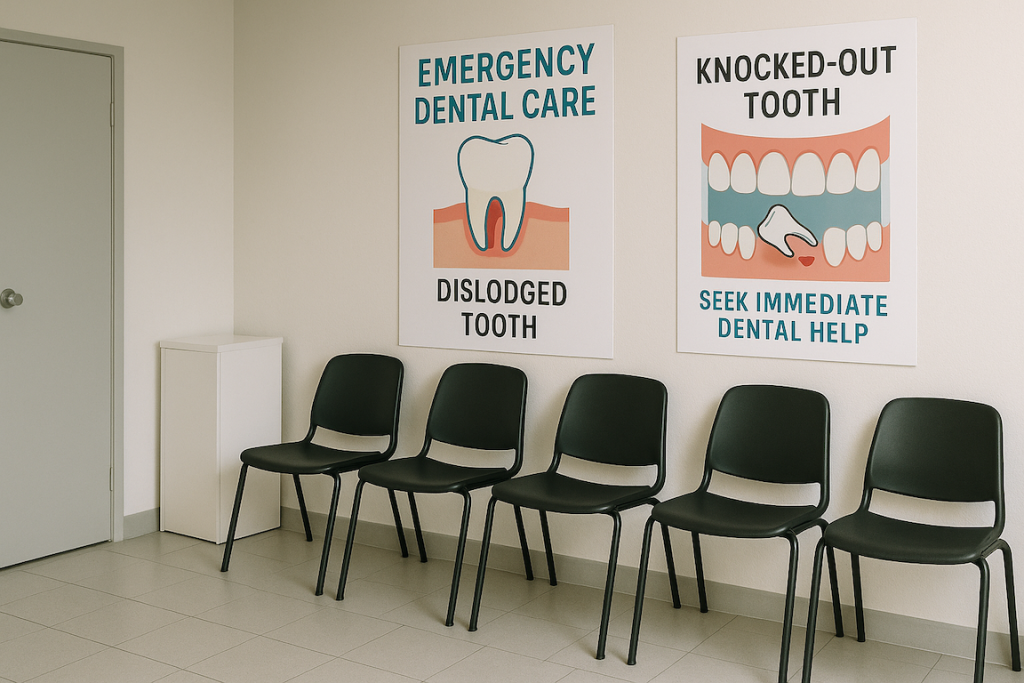
A knocked-out adult tooth needs urgent dental care right away. Handle the tooth by the crown, not the root. If it’s dirty, rinse it gently with water. Don’t scrub it. Try to place it back in the socket if you can do so safely. If not, keep it moist in milk or a tooth preservation product and call for an emergency appointment.
Lost fillings, broken crowns, loose bridges, and damaged dentures also deserve prompt attention. A missing restoration can leave the tooth sensitive and weak. Sharp edges can cut the cheek, tongue, or gums. Damaged dentures or partial plates can change your bite and create sore spots.
| Dental Problem | Why It Matters | What an Emergency Dentist May Do |
| Severe tooth pain | May point to decay, infection, or nerve damage | Exam, X-rays, pain control, filling, root canal, or extraction |
| Dental abscess | Infection can spread beyond the tooth | Drainage, medication when needed, root canal, or extraction |
| Cracked tooth | Crack may deepen and expose the nerve | Bonding, crown, root canal, or removal if the tooth can’t be saved |
| Knocked-out tooth | Fast action may improve the chance of saving it | Repositioning, splinting, X-rays, or follow-up treatment |
| Lost crown or filling | Exposed tooth can become painful or infected | Temporary repair, new filling, crown re-cementing, or replacement |
| Uncontrolled bleeding | May signal trauma or a complication after treatment | Pressure control, exam, wound care, or referral if medical care is needed |
Managing sudden dental issues starts with taking the problem seriously. If a tooth breaks, loosens, or comes out, time matters. Emergency Dental Squad can help you find a nearby provider instead of spending hours searching while you’re uncomfortable.
How 24/7 Emergency Dental Services Protect Your Teeth and Health
Dental emergencies don’t wait for business hours. Pain may start at night, swelling may appear on a weekend, and injuries may happen during travel. 24/7 emergency dental access helps patients get direction and care when regular offices are closed.
Fast care can help protect your teeth in several ways. A dentist can identify the source of pain, numb the area, take X-rays, treat infection, repair damaged tooth structure, and recommend the next step. Early treatment may prevent a cracked tooth from worsening, keep a dental abscess from spreading, and reduce the chance of losing a tooth.
Infection is one of the biggest reasons not to delay care. A dental abscess may begin near a tooth root or in the gums. It can cause swelling, fever, pus, bad taste, and pressure. Pain medicine may reduce discomfort for a short time, but it doesn’t remove the source of infection. A dentist may need to drain the abscess, perform root canal therapy, prescribe medication when appropriate, or remove a tooth that can’t be repaired.
There are times when the emergency room is the right place to go first. Seek medical help right away if you have trouble breathing, trouble swallowing, swelling that spreads quickly, major facial trauma, confusion, high fever, or bleeding that won’t slow down. Emergency rooms may not repair teeth, but they can help stabilize serious medical symptoms. After that, dental treatment is often still required.
Emergency Dental Squad helps bridge the gap between panic and care. With 24-hour emergency dental care near you, same-day service, and fast scheduling, patients can get connected with local dentists for toothaches, dental injuries, broken dental work, extractions, root canals, fillings, crowns, dentures, and related services.
What to Do before You Reach Professional Help
Home care can’t fix the source of a dental emergency, but it can help protect your mouth and reduce discomfort until you get to your appointment. Keep your actions gentle and avoid anything that could irritate the area.
Start by rinsing your mouth with warm water. If the gums are sore or swollen, warm salt water may help clean the area. Use floss carefully if you think food is trapped between your teeth. Don’t use sharp tools to remove anything from your mouth.
Apply a cold compress to the outside of your cheek if you have swelling or injury. Take over-the-counter pain medication only as directed on the label. Don’t place aspirin on your gums or tooth because it can burn soft tissue.
If a tooth is chipped or broken, save any pieces and bring them to the appointment. Cover sharp edges with dental wax or sugarless gum if they’re cutting your cheek or tongue. Avoid chewing on the affected side, and stay away from very hot, cold, hard, sticky, sweet, or acidic foods.
If a crown or filling falls out, save it if you can. Don’t use household glue. Temporary dental cement from a pharmacy may help cover the area for a short time, but you still need professional care. If dentures or a partial plate break, stop wearing them if they cause pain or cuts.
If you’re dealing with a dental emergency at night or on the weekend, call instead of waiting for morning when your symptoms are severe. If you’re worried about cost, dental insurance, or what to do in a dental emergency with no money, ask about payment options and appointment availability when you call. Getting guidance early is better than letting pain or infection grow.
Preventing Dental Emergencies When Possible
Not every emergency can be avoided, but smart habits can lower your risk. Prevention is not only about brushing. It also includes protecting your teeth from injury, treating small problems early, and keeping dental restorations in good shape.
Brush twice a day with fluoride toothpaste and floss daily. These habits lower the risk of decay and gum problems that can lead to sudden pain. Routine dental visits also allow a dentist to find weak fillings, cracked enamel, gum inflammation, or early decay before they cause urgent symptoms.
Wear a mouthguard during sports or high-impact activities. A custom mouthguard can reduce the risk of broken teeth, lip injuries, and knocked-out teeth. If you grind your teeth at night, ask about a night guard. Grinding can wear down enamel, crack teeth, and damage crowns.
Avoid chewing ice, pens, hard candy, popcorn kernels, or other hard objects. These habits can chip enamel and break dental work. If a tooth feels sensitive or sore, don’t ignore it. Small warning signs often appear before larger emergencies.
Helpful prevention habits include:
- Keep regular dental checkups so small concerns can be treated early.
- Replace loose, worn, or cracked fillings and crowns before they fail.
- Use a sports mouthguard or night guard when recommended.
- Limit sugary snacks and drinks that contribute to decay.
- Call a dentist when you notice swelling, sensitivity, bleeding, or pain.
- Keep Emergency Dental Squad’s number available in case symptoms appear suddenly.
Prevention reduces risk, but it can’t stop every accident or infection. Having a plan helps you respond faster if a dental emergency is required.
Fast Emergency Dental Help When Pain Can’t Wait
You need an emergency dentist when pain, swelling, injury, bleeding, or broken dental work can’t safely wait for a routine appointment. Fast care can help relieve discomfort, protect your teeth, treat infection, and reduce the chance of more involved treatment later.
If you’re unsure whether your symptoms qualify as a dental emergency, it’s safer to ask. Emergency Dental Squad helps patients across the U.S. connect with trusted local dentists 24/7.
