
When Should I Call an Emergency Dentist?
Dental pain can be confusing. Some symptoms can wait for a regular appointment, while others need help right away. If you’re wondering, “when should I call an emergency dentist,” the answer depends on how severe the pain is, whether there is swelling or bleeding, and whether a tooth or dental restoration has been damaged.
When should I call an emergency dentist? Call for emergency dental care when you have severe tooth pain, a tooth that has been knocked out, bleeding that won’t stop, facial swelling, signs of infection, a broken tooth, or broken dental work that exposes sensitive tooth structure. These situations can become worse without prompt treatment.
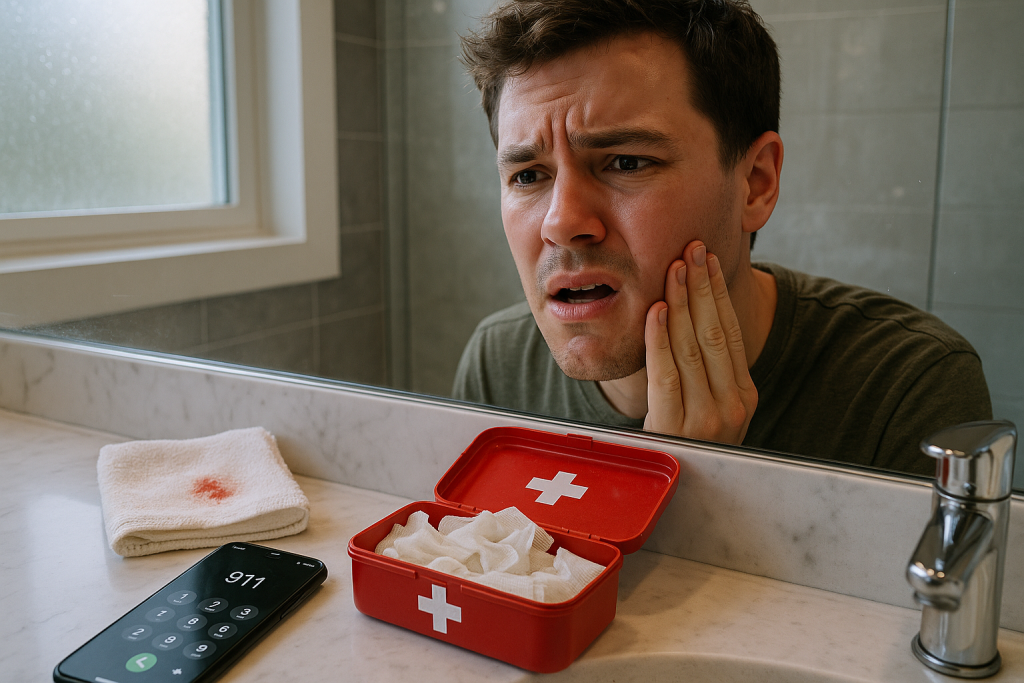
Severe Tooth Pain and Warning Signs That Need Immediate Attention
The first sign that you need urgent dental help is often pain that feels stronger than a normal toothache. A toothache is often linked to decay, infection, nerve irritation, a cracked tooth, gum disease, or a damaged filling. If pain is mild and fades quickly, you may be able to schedule a routine visit. If it’s deep, throbbing, sharp, constant, or spreading, call an emergency dentist.
Severe tooth pain that keeps you from sleeping, eating, working, or focusing shouldn’t be ignored. Pain that returns after medication wears off may also point to a deeper issue. A dentist can examine the tooth, take X-rays, identify the source, and recommend treatment before the problem grows.
You should also call for emergency dentistry if your pain is paired with fever, pus, a bad taste, swollen gums, or pressure in the jaw. These may point to a tooth abscess or dental abscess. An abscess is an infection that can spread if it’s not treated. Pain relievers may reduce discomfort for a short time, but they won’t remove the infection.
Other warning signs include a loose adult tooth, sudden bite changes, numbness after trauma, mouth sores that worsen, or tooth sensitivity that appears suddenly and doesn’t fade. In most instances, symptoms that feel sudden, severe, or unusual deserve a call. A short conversation with a dental professional can help you decide whether same-day treatment is needed.
Emergency Dental Squad can help you find 24-hour emergency dental care near you, especially when your regular dentist is closed or you don’t have a provider.
Tooth Swelling, Infection, and Facial Symptoms
Swelling is one of the clearest signs that a dental emergency may be developing. Swelling in the gums near one tooth may signal infection. Swelling in the cheek, jaw, face, neck, or under the chin can be more serious, especially if it spreads quickly or comes with fever.
A dental abscess may cause a pimple-like bump on the gums, pus, a foul taste, bad breath, throbbing pain, or tenderness when biting. Some abscesses begin with untreated decay. Others may develop after gum disease, trauma, or a cracked tooth. Once infection reaches the inner tooth or surrounding tissue, professional treatment is required.
A dentist may treat an abscess by draining the infection, cleaning the area, prescribing medication when appropriate, performing root canal therapy, or removing a tooth that can’t be saved. The right treatment depends on the source and severity of the infection.
Call for emergency dental care if you notice:
- Swelling in your gums, jaw, cheek, face, or neck
- Pus, fever, chills, or a bad taste in your mouth
- Tooth pain that spreads to the ear, jaw, or head
- Pain when biting or chewing
- A swollen bump on the gums
- Trouble opening your mouth fully
- Symptoms that get worse instead of better
Go to the emergency room right away if swelling makes it hard to breathe, swallow, speak, or open your mouth. The ER may not repair the tooth, but it can help with symptoms that threaten your safety. Dental treatment is often still needed after medical stabilization.
Broken Dental Work, Lost Fillings, and Damaged Teeth
Broken dental work can feel less alarming than intense pain, but it can still expose the tooth to bacteria, pressure, and temperature changes. A lost filling, loose crown, cracked bridge, chipped veneer, or damaged denture can create pain and raise the risk of further damage.
A filling protects a tooth after decay has been removed. When it falls out, the exposed area can trap food and bacteria. A crown covers and strengthens a weakened tooth. When a crown comes loose, the tooth underneath may be sensitive, fragile, or prone to cracking. Chipped dental work may also leave sharp edges that cut your tongue or cheek.
Broken dental restorations should be checked quickly if you have pain, sensitivity, swelling, exposed tooth structure, or trouble chewing. Even if discomfort is mild, waiting may turn a simple repair into a larger treatment.
| Problem | Why You Should Call | What to Do Until the Visit |
| Lost filling | Tooth may be exposed to food, bacteria, and sensitivity | Rinse gently, avoid chewing on that side, and call for an appointment |
| Loose crown | Tooth underneath may be weak or sensitive | Save the crown, avoid sticky foods, and don’t use household glue |
| Broken crown or bridge | Sharp edges may cut the mouth and affect chewing | Cover sharp areas with dental wax and seek repair |
| Chipped tooth | Damage may expose deeper tooth layers | Save any pieces, rinse gently, and avoid hard foods |
| Knocked-out tooth | Fast care may improve the chance of saving it | Hold by the crown, keep it moist, and seek care right away |
| Bleeding after injury | May signal soft tissue damage or trauma | Apply gentle pressure and call if bleeding continues |
If you have dental pain from damaged work, call Emergency Dental Squad for help connecting with a local dentist. Fast treatment can protect your smile and restore function before the area becomes more painful.
Knocked-Out Teeth, Bleeding, and Dental Injury
A tooth emergency after trauma needs fast action. Sports injuries, falls, car accidents, and biting hard foods can crack, loosen, or knock out teeth. Even if the injury looks small, the root, nerve, bone, or gum tissue may be affected.
A permanent tooth that has been knocked out should be handled with care. Pick it up by the crown, not the root. If it’s dirty, rinse it gently with water. Don’t scrub it, wrap it in a dry napkin, or let it dry out. If possible, place it back into the socket and hold it there by gently biting on clean gauze. If that’s not possible, keep it in milk or a tooth preservation product and call for emergency dental care right away.
Bleeding that doesn’t stop also deserves prompt attention. Apply steady, gentle pressure with clean gauze or a clean cloth. If the bleeding remains heavy, follows major facial trauma, or doesn’t slow, seek urgent help. Bleeding after a dental procedure, such as an extraction, should also be evaluated if it continues despite pressure.
A cracked, loose, or displaced tooth can often be stabilized when treated quickly. A dentist may use X-rays, splinting, bonding, a crown, root canal therapy, extraction, or referral depending on the injury. Quick action may reduce pain, protect nearby teeth, and support a better treatment outcome.
Don’t use sharp tools in the mouth, don’t force a tooth back into place if it won’t fit, and don’t ignore pain after an injury. If you’re uncertain whether the damage is serious, call for guidance.
What to Do before Your Emergency Dental Visit
The steps you take before treatment can help reduce discomfort and protect the affected area. Home care isn’t a replacement for professional dental care, but it can help while you’re arranging an appointment.
Before your visit:
- Rinse your mouth gently with warm water to clear debris.
- Use warm salt water if your gums feel irritated or swollen.
- Apply a cold compress to the outside of the cheek for swelling or injury.
- Take over-the-counter pain medication only as directed on the label.
- Avoid chewing on the painful or damaged side.
- Save broken tooth pieces, crowns, fillings, bridges, or dentures.
- Cover sharp edges with dental wax or sugarless gum.
- Keep a knocked-out tooth moist in milk or a tooth preservation product.
- Call for help instead of waiting when symptoms are severe.
Don’t place aspirin directly on your gums or tooth because it can burn soft tissue. Don’t try to drain an abscess at home. Don’t use household glue on dental work. Don’t eat hard, sticky, very hot, very cold, sweet, or acidic foods if they trigger pain.
If you have dental insurance, keep that information ready when calling. If you’re worried about cost or wondering what to do in a dental emergency with no money, ask about payment options, appointment availability, and the most urgent treatment needs. Getting advice early is better than letting pain or infection grow.
Emergency Dental Squad can help when you have a dental emergency on the weekend, at night, or while traveling. Same-day help may be available for toothaches, broken teeth, abscesses, extractions, crowns, fillings, root canals, X-rays, and related urgent services.
When the Emergency Room Makes Sense
Many dental emergencies are best handled by a dentist because dentists can treat the source of tooth pain. They can take dental X-rays, repair teeth, drain abscesses, replace fillings, treat infected pulp, and perform extractions when needed. Emergency rooms may help with pain control or medication, but they often don’t complete dental repairs.
Go to the emergency room or call emergency services if you have symptoms that could affect your safety. These include trouble breathing or swallowing, major facial injury, jaw fracture concerns, swelling that spreads rapidly, high fever with weakness or confusion, or bleeding that won’t stop.
If you’re asking whether emergency rooms have dentists on call, the answer varies by hospital. Some may have access to oral surgeons or dental specialists, while others may focus on stabilizing symptoms and referring you to dental care. For tooth repair and most urgent oral treatment, an emergency dentist is usually the right provider.
Questions about online pain tips also come up often. The “3-3-3 rule” sometimes mentioned for toothaches isn’t a cure for dental pain or infection. Pain medication may help temporarily, but it can’t repair decay, fix a cracked tooth, or remove an abscess. If pain is intense or paired with swelling, call a dental professional.
A dentist may also notice unusual lumps, sores, swelling, or tissue changes during an oral exam and may refer you to a medical provider if more testing is needed. Changes in the mouth should not be ignored.
Call for Fast Emergency Dental Care When Symptoms Can’t Wait
Call an emergency dentist when dental pain, swelling, bleeding, infection signs, knocked-out teeth, broken restorations, or mouth injuries can’t safely wait for a routine appointment. Fast care can relieve pain, protect your smile, and reduce the risk of the problem becoming harder to treat.
If symptoms are severe or you’re unsure what to do, ask for help. Emergency Dental Squad connects patients across the U.S. with local dentists 24/7. Whether your emergency happens after hours, on the weekend, or during travel, you can get guidance and help finding care near you.
