
Who Treats Dental Emergencies?
Dental pain or injury can leave you unsure where to turn. A tooth may break during dinner, swelling may appear overnight, or a severe toothache may start when your regular office is closed. In those moments, knowing who treats dental emergencies helps you act quickly and choose the right care.
Who treats dental emergencies? Most dental emergencies are treated by an emergency dentist, a general dentist with urgent appointment availability, or a dental specialist when advanced treatment is needed. Hospitals and emergency rooms can help with serious medical symptoms, such as trouble breathing, uncontrolled bleeding, major facial trauma, or swelling that affects swallowing, but they may not be able to repair the tooth itself.
Emergency Dental Squad helps patients across the U.S. connect with local dentists 24/7. If you need emergency care for pain, infection, broken teeth, lost dental work, or urgent tooth treatment, call now for help finding a provider near you.
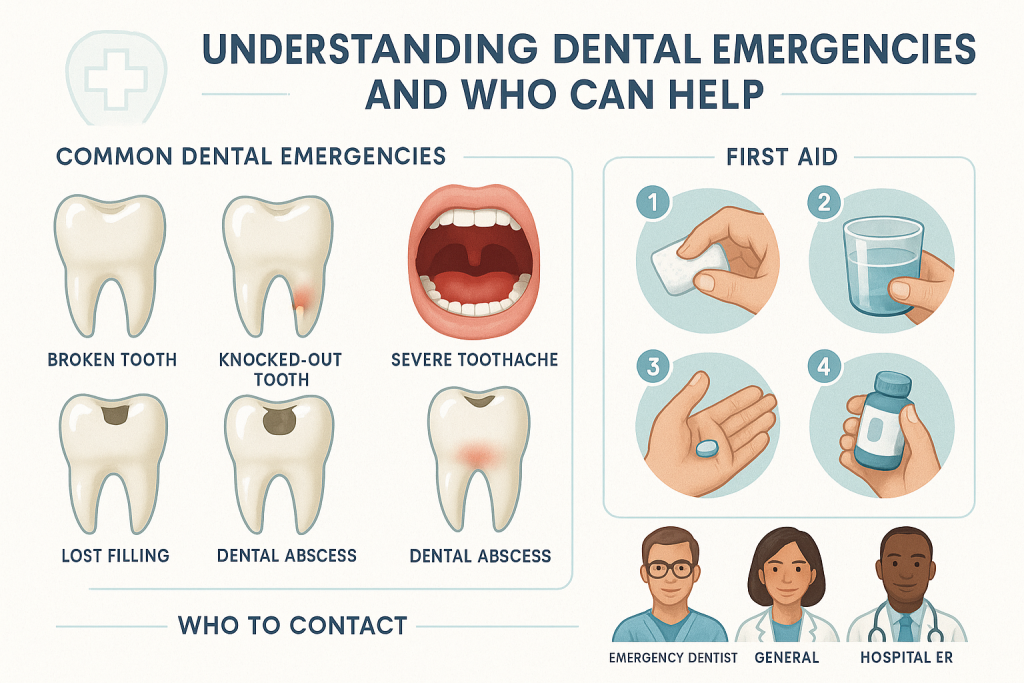
Dental Emergencies and the Providers Who Can Help
A dental emergency is a problem involving the teeth, gums, jaw, or mouth that needs prompt treatment to relieve pain, stop bleeding, treat infection, or protect a tooth from further damage. Some issues can wait for a routine appointment. Others need same-day dental care because waiting can lead to worsening pain, tooth loss, or spread of infection.
The main providers who treat urgent dental problems include emergency dentists, general dentists, oral surgeons, endodontists, periodontists, pediatric dentists, and hospital emergency teams. The right choice depends on your symptoms, the severity of the injury, and whether your health is at risk.
Emergency dentists handle many urgent problems, including severe tooth pain, dental abscesses, broken teeth, knocked-out teeth, lost fillings, loose crowns, cracked bridges, wisdom tooth pain, and infections. They can often provide X-rays, pain relief, fillings, extractions, root canals, temporary repairs, and follow-up treatment plans.
General dentists may also treat emergencies during business hours or through same-day openings. If you already have a provider, always call your dentist first when the office is open. Your dentist will treat you directly when possible or refer you to the right specialist.
Specialists may be needed for complex issues. An oral surgeon may treat severe dental trauma, jaw injuries, impacted wisdom teeth, or 24-hour emergency dental extraction needs. An endodontist may treat pain from infected tooth pulp through root canal therapy. A periodontist may manage advanced gum infections or abscesses involving the supporting tissue around teeth.
Emergency Dental Squad can help when you don’t have a regular dentist, are traveling, need weekend care, or can’t find an urgent appointment quickly.
When to Contact an Emergency Dentist First
For most dental emergencies, contacting an emergency dentist is the best first step. Dentists have the tools and training needed to diagnose and treat the source of pain. They can take X-rays, numb the area, repair the tooth, drain an abscess, remove decay, place a filling, stabilize a crown, or perform an extraction when needed.
Contact your dentist or an emergency dental service right away if you have:
- Severe tooth pain that keeps getting worse
- A knocked-out tooth, loose adult tooth, or broken tooth
- Swelling in the gums, jaw, cheek, or face
- A tooth abscess, pus, fever, or a bad taste in the mouth
- Bleeding that doesn’t slow with gentle pressure
- A lost filling, loose crown, broken bridge, or damaged dentures causing pain
- Dental trauma after a fall, sports injury, accident, or blow to the mouth
A knocked-out tooth needs fast attention. Handle it by the crown, not the root. If it’s dirty, rinse it gently with water. Try to place it back in the socket if you can do so safely. If not, keep it moist in milk or a tooth preservation product and seek emergency dental care as soon as possible.
A dental abscess also needs prompt treatment. An abscess can cause deep pain, swelling, pus, fever, and pressure near the affected tooth. Pain medicine may help for a short time, but it won’t remove the infection. A dentist may need to drain the abscess, treat the root canal system, prescribe medication when appropriate, or remove the tooth if it can’t be saved.
Emergency dentistry is also the right choice for broken restorations. A missing crown or large filling can expose sensitive tooth structure and create sharp pain when eating or drinking. A same-day visit can protect the area and prevent added damage.
When the Emergency Room or a Doctor Is the Right Choice
The emergency room is not usually the best place for routine dental treatment, but it can be the right choice when symptoms may affect your overall safety. Hospitals can help stabilize serious medical problems, manage severe infection symptoms, treat major trauma, and control bleeding. Still, many emergency rooms don’t have a dentist available to repair teeth, replace fillings, or complete root canals.
Go to the emergency room or call emergency services if you have:
- Trouble breathing, swallowing, or speaking because of swelling
- Rapid facial, neck, jaw, or eye swelling
- Uncontrolled bleeding from the mouth
- A serious accident involving the jaw, face, or head
- High fever, confusion, weakness, or signs of spreading infection
- Severe pain with medical symptoms that feel unsafe to manage at home
A doctor may prescribe medication or provide emergency medical support, but you will often still need dental treatment afterward. For example, antibiotics may help control infection spread, but a tooth abscess often needs drainage, root canal therapy, or extraction to address the source.
If you’re unsure where to go, describe your symptoms clearly when you call for help. Mention swelling, fever, bleeding, trauma, breathing problems, pain level, and how long the issue has been happening. Emergency Dental Squad can help you decide whether to seek dental care, medical care, or both.
How 24/7 Emergency Dental Clinics Support Urgent Care
Dental problems rarely follow a convenient schedule. A tooth can crack on a weekend, pain can spike at midnight, and a crown can come loose while you’re away from home. 24/7 emergency dental clinics and urgent dental networks help patients find care outside normal office hours.
| Provider or Care Setting | Best For | Possible Services |
| Emergency dentist | Tooth pain, broken teeth, abscesses, lost dental work | Exams, X-rays, pain relief, fillings, crowns, extractions, root canals |
| General dentist | Existing patients with urgent needs during office hours | Diagnosis, repairs, referrals, follow-up treatment |
| Oral surgeon | Complex extractions, facial trauma, impacted wisdom teeth | Surgical treatment, tooth removal, trauma care |
| Endodontist | Infected or inflamed tooth pulp | Root canal therapy, pain diagnosis |
| Periodontist | Advanced gum infection or gum abscess | Gum treatment, infection care, deep cleaning |
| Emergency room | Breathing trouble, major trauma, uncontrolled bleeding, spreading infection | Medical stabilization, imaging, medication, referral |
A 24/7 emergency dental network can also support triage. That means the team helps identify how urgent the problem is, what first steps may protect your mouth, and what kind of provider fits your symptoms. Same-day scheduling, fast communication, and local provider access can reduce stress during a painful situation.
These services matter most when minutes count. A knocked-out tooth, severe swelling, or uncontrolled bleeding shouldn’t wait for a routine appointment days away. Quick care may improve comfort, protect nearby teeth, and lower the risk of added treatment later.
What to Do before You Receive Dental Treatment
While you’re arranging care, simple steps can help protect your mouth and reduce discomfort. Home care isn’t a substitute for professional treatment, but it can help prevent added injury.
For tooth pain, rinse your mouth gently with warm water. Floss carefully if you think food is trapped between teeth. Avoid chewing on the painful side. Use a cold compress on the outside of the cheek if swelling is present. Take over-the-counter pain medication only as directed on the label.
For a broken tooth, rinse gently and save any pieces you can find. Cover sharp edges with dental wax if they’re cutting your cheek or tongue. Avoid hard, sticky, very hot, very cold, or sugary foods until a dentist checks the tooth.
For bleeding, apply gentle pressure with clean gauze or a clean cloth. If bleeding continues, becomes heavy, or follows major trauma, seek urgent medical help.
For a lost crown or filling, save the restoration and bring it with you. Don’t use household glue. Temporary dental cement from a pharmacy may protect the tooth for a short time, but the tooth still needs professional care.
For dentures, bridges, or partial plates that break, stop wearing them if they cause cuts, pain, or bite changes. A dentist can help repair, adjust, or replace the appliance safely.
If you have dental insurance, keep your card available when calling. If you don’t have insurance, still ask about appointment options. Many offices can discuss cost, payment methods, and the most urgent treatment needs before you arrive. If you’re wondering what to do in a dental emergency with no money, calling early is better than waiting until pain or infection worsens.
Choosing the Right Emergency Dental Provider
When you’re in pain, speed matters, but so does trust. The right provider should be able to assess your symptoms, explain treatment clearly, and help you understand your next step. A good emergency dental experience should feel organized, calm, and focused on relief.
Look for a provider or service that offers same-day appointments, clear communication, emergency dentistry experience, and help with common urgent services. These may include toothaches, dental abscess treatment, dental trauma care, extractions, fillings, crowns, root canals, X-rays, and denture repairs.
Accessibility also matters. Patients may need help at night, on weekends, during holidays, or in an unfamiliar city. Teledentistry or phone triage may help you explain symptoms and receive direction, but hands-on care is often needed for repairs, infection treatment, X-rays, or extraction.
Emergency Dental Squad helps patients connect with trusted local providers instead of searching alone. The service is designed for people who need fast scheduling, nearby care, and clear guidance during stressful dental emergencies.
Use the following signs when deciding whether a provider is a good fit:
- The office or network offers urgent or same-day visits.
- The team can explain what to do before arrival.
- The provider treats a wide range of dental emergencies.
- The office discusses payment options, insurance, and expected next steps.
- The dental team communicates clearly and treats your pain seriously.
- Follow-up care is available if you need a crown, root canal, denture repair, or ongoing treatment.
Dental emergencies and management require both fast action and the right provider. Getting connected quickly can make the situation less overwhelming and help you move from uncertainty to treatment.
Fast Help for Dental Emergencies across the U.S.
The right provider depends on your symptoms. An emergency dentist treats most urgent tooth and gum problems. A general dentist may help if you already have one and the office is open. A specialist may be needed for complex root canal treatment, gum disease, wisdom teeth, or oral surgery. The emergency room is the right place for serious medical symptoms such as breathing trouble, uncontrolled bleeding, major trauma, or swelling that affects swallowing.
If you have a dental emergency and no dentist, you still have options. Emergency Dental Squad helps patients across the U.S. connect with local dentists 24/7 for pain, swelling, infection, broken teeth, lost dental work, urgent treatment, and follow-up care.
