
Why Would a Dentist Extract a Tooth?
A dentist will usually try to save a natural tooth whenever possible. Fillings, crowns, deep cleanings, and root canals can often repair damage, stop infection, and keep a tooth in place. Sometimes, though, the safest choice is tooth removal.
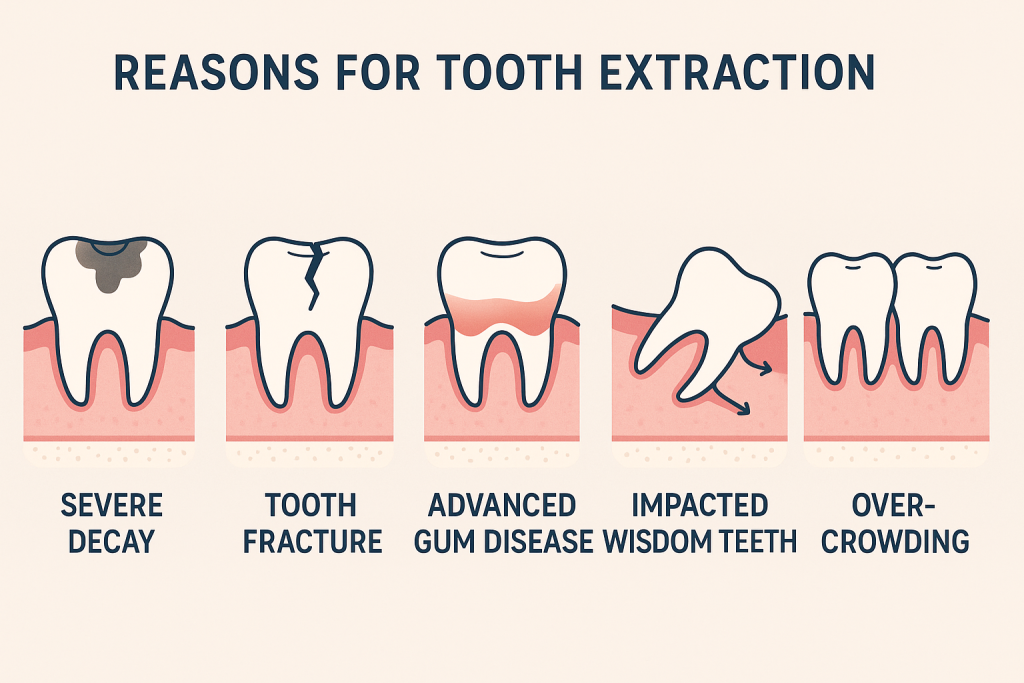
So, why would a dentist extract a tooth? A tooth may need to come out when it’s too decayed, cracked, loose, infected, impacted, crowded, or damaged to function safely. Removing it can stop pain, protect nearby teeth, and lower the risk of infection spreading through the mouth.
Emergency Dental Squad helps patients find fast help when tooth pain, swelling, injury, or infection can’t wait. They connect patients with trusted local dentists for problems like severe tooth pain, broken dental work, and extractions.
If you’re in pain or think a tooth may need to be removed, call now to speak with a local dentist and ask about same-day availability.
Dental Extractions for Overwhelming Decay and Tooth Damage
Overwhelming decay is one of the most common reasons a dentist may recommend extraction. Tooth decay is caused by bacteria that damage the tooth structure. In early stages, decay may be treated with a filling. If the damage is larger, a crown or root canal may help save the tooth. If too much structure is gone, the tooth can become too weak to restore.
A dentist may recommend removing the tooth when there’s not enough healthy structure left to support a repair. This can happen when a cavity reaches deep into the tooth, the tooth breaks while chewing, or decay extends below the gumline.
A badly broken tooth may also need extraction. If a crack extends into the root or the tooth has fractured below the gumline, a crown may not be enough. The dentist will take X-rays, check the remaining tooth structure, and decide whether saving it is realistic.
Tooth removal may be considered when:
- Decay has destroyed too much of the tooth
- A tooth is cracked into the root
- A broken tooth can’t support a crown
- An old filling or crown has failed and the tooth is unstable
- Pain or infection keeps returning after previous treatment
- The tooth is too damaged to chew safely
In these cases, the goal is not simply removing a problem tooth. The goal is to protect the rest of the mouth. A severely damaged tooth can trap bacteria, irritate the gums, affect neighboring teeth, and make eating painful.
Emergency Dental Squad’s services include extractions, fillings, crowns, and broken dental work support. When tooth pain becomes severe or the damage is sudden, fast access to a dentist can help you understand whether repair or extraction is the right option.
Gum Disease, Infection, and Emergency Tooth Removal
Gum disease can make tooth extraction necessary when the tissues and bone that support the tooth have been damaged. In its early stages, gum disease may cause bleeding, swelling, or tenderness. As it progresses, the gums can pull away from the teeth and the bone can shrink. A tooth may become loose, painful, or unable to handle normal chewing.
A dentist may recommend extraction when a tooth has lost too much support to remain stable. If the tooth shifts, moves when touched, or causes repeated infection, keeping it in place may create more problems.
Infection is another reason for tooth removal. A dental abscess can cause severe pain, swelling, fever, a bad taste, or pus near the gums. Some infected teeth can be treated with root canal therapy. If the tooth can’t be saved or the infection is severe, extraction may be the safest way to remove the source.
Emergency tooth concerns should be taken seriously. A spreading infection can affect the gums, jaw, and surrounding tissues. If swelling moves into the face or neck, or if you have trouble breathing or swallowing, seek emergency medical care right away.
Common warning signs include:
- Severe tooth pain that doesn’t improve
- Swelling in the gums, jaw, cheek, or face
- Pus, a bad taste, or a pimple-like bump on the gums
- A loose adult tooth
- Pain when biting or chewing
- Fever or feeling unwell with dental pain
- Gum bleeding, deep pockets, or visible gum recession
Emergency Dental Squad offers fast emergency dental care for severe tooth pain and broken or lost dental work, with help available 24/7. If you have pain or swelling and are unsure whether you need an extraction, call for guidance. A dentist can evaluate the tooth, explain your options, and help you take the next step.
Simple Extractions, Surgical Extractions, and Impacted Tooth Concerns
Not all dental extractions are the same. The type of procedure depends on the tooth’s position, condition, and root shape. A visible, accessible tooth may be removed with a simple extraction. A tooth that hasn’t erupted, is broken below the gumline, or is trapped in the jaw may require a surgical approach.
Simple extractions are often used when the tooth is fully visible in the mouth. The dentist numbs the area, loosens the tooth, and removes it with dental instruments. This is commonly used for teeth that are loose, decayed, cracked, or damaged but still easy to access.
Surgical extractions are more involved. They may be needed when a tooth is below the gumline, impacted, broken into pieces, or difficult to reach. The dentist or oral surgeon may need to make a small opening in the gum, remove bone, section the tooth, or place stitches.
| Extraction Type | When It May Be Used | What Patients Can Expect |
| Simple extraction | Tooth is visible and accessible | Local numbing, gentle loosening, removal, gauze placement |
| Surgical extraction | Tooth is broken below the gumline or hard to access | X-rays, numbing or sedation options, possible gum opening or stitches |
| Wisdom tooth extraction | Wisdom tooth is painful, infected, crowded, or impacted | Evaluation of tooth position, roots, and nearby structures |
| Emergency extraction | Pain, swelling, trauma, or infection cannot wait | Same-day or urgent exam, diagnosis, pain control, treatment plan |
An impacted tooth is one that can’t fully come through the gums. This is common with a wisdom tooth. It may grow at an angle, press against other teeth, or trap bacteria under the gum tissue. In some cases, an impacted tooth causes pain, swelling, infection, jaw stiffness, or damage to nearby teeth.
Emergency Dental Squad’s tooth extraction page highlights same-day service, emergency dentists, fast scheduling, speaking with a local dentist, and 24/7 availability.
What Happens before, during, and after Tooth Extraction
Before extraction, the dentist will examine your mouth and ask about your symptoms. X-rays may be needed to see the roots, surrounding bone, and nearby teeth. The dentist will also review your medical history, medications, allergies, and any conditions that may affect healing.
The dentist will first determine whether the tooth can be saved. If a filling, crown, root canal, or periodontal treatment is likely to work, those options may be discussed. If the tooth can’t be saved, the dentist will explain the extraction process.
During the procedure, the area is numbed so you don’t feel sharp pain. You may feel pressure, but the goal is to keep you as comfortable as possible. For simple extractions, the dentist loosens and removes the tooth. For surgical extractions, additional steps may be needed.
After the tooth is removed, gauze is placed over the extraction site to help a blood clot form. That clot protects the socket and supports healing. You will receive instructions for food, cleaning, pain relief, bleeding control, and when to call the office.
Patients should avoid actions that disturb the clot. That means no smoking, no straws, no forceful spitting, and no aggressive rinsing right after the procedure. Soft foods and rest are usually recommended early in recovery.
A dentist may also discuss future tooth replacement if needed. Depending on the location of the missing tooth, options may include an implant, bridge, partial denture, or dentures.
Healing Tips and Things to Avoid after Tooth Removal
Healing after a tooth extraction depends on the type of extraction, your overall health, the tooth’s condition, and how well aftercare instructions are followed. Some soreness and mild swelling can be normal. Pain should gradually improve, not get worse.
The first night after a tooth extraction is important because the blood clot is still forming. Keep firm but gentle pressure on gauze as instructed. Rest with your head slightly elevated. Eat soft foods and drink water, but avoid using a straw.
Follow these recovery tips:
- Keep the extraction site protected. Avoid touching the socket with your tongue or fingers.
- Use cold compresses as directed. This may help reduce swelling.
- Eat soft foods. Try applesauce, yogurt, mashed potatoes, scrambled eggs, or lukewarm soup.
- Brush carefully. Clean the rest of your mouth, but avoid scrubbing the extraction area early on.
- Take medication as instructed. Follow your dentist’s directions for pain relief or antibiotics.
- Call if symptoms worsen. Increasing pain, swelling, fever, or a foul taste should be checked.
Things to avoid after your tooth extraction include smoking, vaping, drinking through a straw, spitting forcefully, hard foods, crunchy foods, alcohol early in healing, and heavy exercise right away.
Patients often ask how long a tooth extraction takes to heal. Many people feel better within a few days, but complete healing takes longer. Surgical extractions, wisdom tooth removal, infection, and medical conditions can affect recovery time. If pain becomes stronger after a few days or you notice a bad odor or taste, call your dentist. These may be signs of dry socket or infection.
Fast Help for Tooth Extractions and Emergency Dental Care
A tooth extraction may sound intimidating, but it can be the right step when a tooth is causing pain, infection, crowding, or damage that can’t be corrected another way. Emergency Dental Squad helps patients find care quickly for toothaches, broken teeth, dental injuries, extractions, root canals, fillings, crowns, dentures, and related urgent needs.
If dental pain is keeping you from eating, sleeping, or getting through the day, call Emergency Dental Squad now. Help is available 24/7 so you can speak with a local dentist, ask about same-day care, and find out whether extraction or another treatment is the right next step.
