
Dental Fillings | How to Find Tooth Filling Services
A small cavity can become painful faster than many people expect. If you have tooth sensitivity, a sharp edge, pain while chewing, or an old filling that feels loose, it may be time to make an appointment with a dentist who can evaluate the tooth and recommend the right treatment.
Emergency Dental Squad helps patients connect with dental care when timing matters. Whether you need a cavity filling, a replacement filling, or fast help for a broken tooth, the goal is simple: get you to a reliable dental professional who can reduce pain, protect your teeth, and help you feel confident about your care.
If you are wondering how to find tooth filling services, start by looking for a provider who offers prompt appointments, clear pricing, multiple filling options, and guidance for urgent symptoms. The right dentist can explain the filling procedure, answer your questions, and help you choose a material that fits your comfort, appearance, and budget needs.
What Dental Fillings Do for Your Teeth
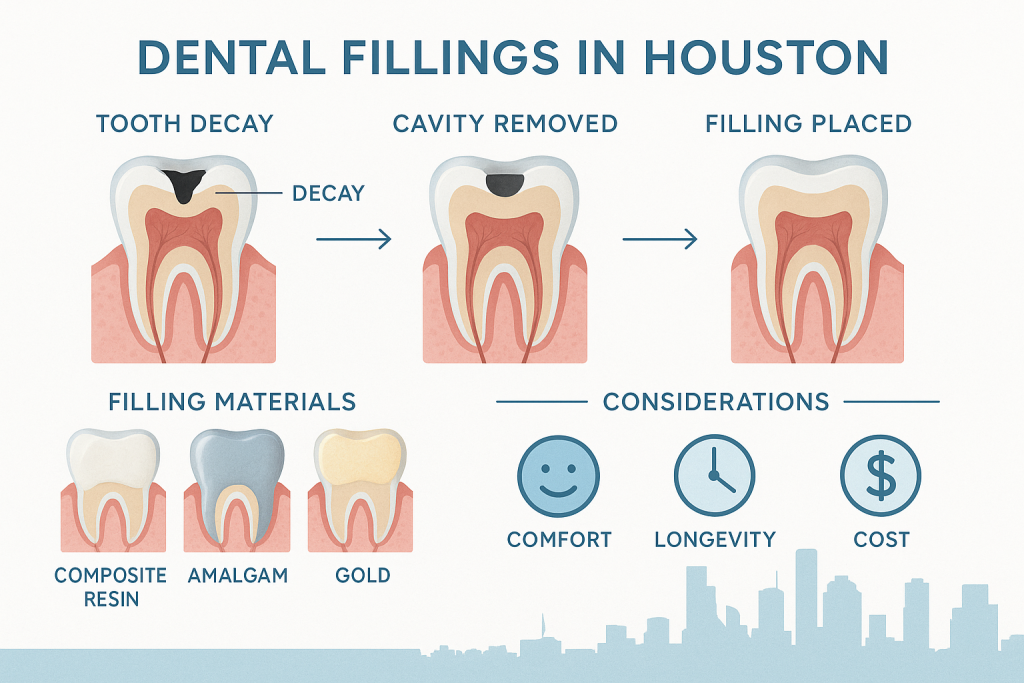
Dental fillings repair areas of a tooth damaged by decay, minor fractures, or wear. When a cavity forms, bacteria weaken the tooth structure. A dentist removes the damaged area, cleans the space, and places filling material to restore shape and function. This helps protect the tooth from further decay and allows you to bite and chew with greater comfort.
A filling may also be used when a previous restoration cracks, wears down, or falls out. Waiting too long can leave the inside of the tooth exposed to bacteria, temperature changes, and food particles. That can lead to severe pain, infection, or a need for a larger treatment such as a crown or root canal.
Dental fillings can help with:
- Restoring a tooth after a cavity
- Reducing sensitivity caused by exposed areas
- Rebuilding a chipped or worn biting surface
- Protecting a tooth after an old filling fails
- Improving comfort during eating and speaking
The right filling depends on the location of the tooth, the size of the damaged area, your bite, your budget, and your cosmetic goals. A dentist can explain your choices and help you decide which material fits your needs.
Signs You May Need a Cavity Filling
Many people do not notice a cavity right away. Early decay can be painless, which is why regular dental checkups are so helpful. Still, some symptoms should not be ignored, especially if they appear suddenly or keep getting worse.
You may need a filling if you notice:
- Tooth sensitivity to cold, heat, sweet foods, or pressure
- Pain when biting or chewing
- A visible dark spot, hole, or rough area on a tooth
- Food getting trapped in the same place often
- A chipped tooth or sharp edge
- A loose, cracked, or missing filling
- Bad taste near one tooth or gum swelling
Some symptoms call for faster care. Severe pain, facial swelling, bleeding, fever, or a broken tooth that exposes a sharp edge should be treated as an urgent dental concern. Emergency Dental Squad can help connect you with emergency dental support so you are not left searching while pain gets worse.
Do not try to place a permanent tooth filling at home. Temporary dental repair products may cover a sharp area for a short time, but they do not remove decay or seal the tooth the way professional dentistry can. A dentist needs to inspect the tooth, remove damaged tissue, and place the right filling material safely.
How to Choose a Reliable Dentist
There are many dental offices, but not every practice is the right fit for your situation. Some patients need urgent relief. Others need affordable dental options, help with dental insurance, or a provider who can treat a child, older adult, or anxious patient with extra care.
Start by looking for a dentist who clearly explains services, availability, and treatment steps. A good provider should answer questions without rushing you and should give you a clear estimate before work begins.
Ask these questions before scheduling:
- Do you treat urgent tooth pain or broken fillings?
- What types of dental fillings do you offer?
- Do you use tooth-colored composite filling materials?
- How long does the filling procedure usually take?
- What can I expect after the appointment?
- Do you accept my dental insurance?
- Are payment plans or savings options available?
- Can you give an estimate before treatment begins?
Licensing, patient reviews, office hours, and clear communication all matter. If you are dealing with pain, also ask how soon you can be seen. Waiting several days may not be practical if you have swelling, a missing filling, or pain that keeps you from eating or sleeping.
Emergency Dental Squad supports patients by helping them find dental care quickly. For people who are unsure where to start, that can reduce stress and make the path to treatment much easier.
Dental Filling Materials and What to Expect for Tooth Filling
Dental filling materials vary in appearance, strength, cost, and placement process. Your dentist will recommend an option based on where the tooth is located, how much tooth structure needs repair, and how visible the filling will be when you smile.
| Filling type | Common use | Appearance | Notes to discuss with your dentist |
| Composite resin | Front teeth, small to medium cavities, visible areas | Tooth-colored | Blends with natural teeth and bonds to tooth structure |
| Amalgam | Back teeth and chewing surfaces | Silver-colored | Strong and often budget-friendly, but more noticeable |
| Ceramic | Visible teeth or larger restorations | Tooth-colored | Stain-resistant and natural-looking, often higher in cost |
| Gold | Back teeth or long-term restorations | Gold-colored | Durable, but visible and usually more costly |
Most filling appointments are straightforward. The dentist numbs the area, removes decay, cleans the tooth, places the filling, shapes it, and checks your bite. Many patients return to normal routines the same day, though numbness may last for a few hours.
Mild sensitivity can happen after a dental filling, especially with hot, cold, or pressure. This often improves as the tooth adjusts. If pain is sharp, lasts for days, or feels worse when biting, contact the office. The filling may need a small bite adjustment, or the tooth may need another evaluation.
Patients often ask whether the procedure hurts. Local anesthetic helps keep the area comfortable. You may feel pressure or vibration during the appointment, but sharp pain should not be part of the process. Tell the dentist right away if you feel discomfort so they can adjust your care.
Cost, Insurance, and Affordable Dental Options
Filling cost depends on the tooth, the size of the cavity, the material used, and whether additional work is needed. A small filling usually costs less than a larger restoration. A tooth-colored filling may cost more than amalgam in some offices. If several teeth need fillings, the total price can add up quickly.
Dental insurance may cover part of the cost for basic fillings, but coverage varies by plan. Some plans cover amalgam at one rate and composite at another. Others may have waiting periods, annual maximums, deductibles, or network rules.
Before treatment, ask the dental office to review:
- Estimated cost with and without insurance
- Whether your plan covers the selected filling material
- Your deductible, copay, or coinsurance
- Any payment plan options
- In-house savings plans or third-party financing
- Whether the office can treat urgent needs first and plan other care later
If you do not have insurance, ask about affordable dental options before assuming care is out of reach. Many offices offer payment arrangements, membership plans, or phased treatment when multiple fillings are needed. Community health centers may also be an option for some patients, especially when budget is a major concern.
Timely treatment can also help control cost. A small cavity filling is usually less expensive than treating an infection, replacing a large broken filling, or repairing a tooth that needs a crown. Getting care early is often better for your teeth and your wallet.
Keep Your Fillings Strong and Know When to Call
A filling can last for years, but it still needs daily care. Good oral care protects the restored tooth, the surrounding enamel, and your gums. It also lowers the chance of new decay forming around the filling.
Brush twice a day with fluoride toothpaste, floss once a day, and keep regular dental visits. Avoid chewing ice, pens, hard candy, or other objects that can crack a filling. If you grind your teeth, ask your dentist whether a night guard could help protect your dental work.
Call a dentist if a filled tooth starts to feel different. A filling may need replacement if you notice roughness, cracking, looseness, pain, new sensitivity, or food catching near the repaired area. Swelling, severe pain, or signs of infection need urgent attention.
Emergency Dental Squad is here to help when you need fast direction. Whether you are trying to schedule a routine dental filling, replace an old restoration, or get emergency dental care for sudden pain, help is available. Reach out today to connect with a dental professional, ask about appointment options, and take the next step toward a stronger, healthier smile.
