
Dental Fillings | Who Does Tooth Fillings?
When a cavity, chipped tooth, or damaged filling starts causing discomfort, it is normal to ask who does tooth fillings and where to turn for care. In most cases, a general dentist performs the treatment. These providers are trained to find decay, remove damaged tooth structure, place the right filling material, and shape the restoration, so your bite feels comfortable again.
Emergency Dental Squad helps patients connect with trusted dental providers when they need direction quickly. If you have tooth pain, sensitivity, swelling, or a cracked or fallen-out filling, waiting can make the problem harder to treat. Fast dental care can reduce pain, protect the tooth, and help prevent a small issue from becoming a larger one.
Dental fillings are among the most common services in family and restorative dentistry. They are used to repair teeth affected by cavities, minor fractures, wear, or old restorations that no longer seal well. A dentist may also recommend a filling when a tooth has a rough edge, a dark spot, or a sensitive area caused by enamel loss.
A filling is not only placed to stop pain. It also supports long-term dental health by sealing off spaces where bacteria can enter. Once decay is removed and the filling is placed, the tooth is better protected during daily chewing, brushing, and flossing.
If you are unsure whether you need treatment, Emergency Dental Squad can help you find a dentist who can evaluate your symptoms, explain your options, and help you plan the next step.
When Tooth Fillings Are Needed
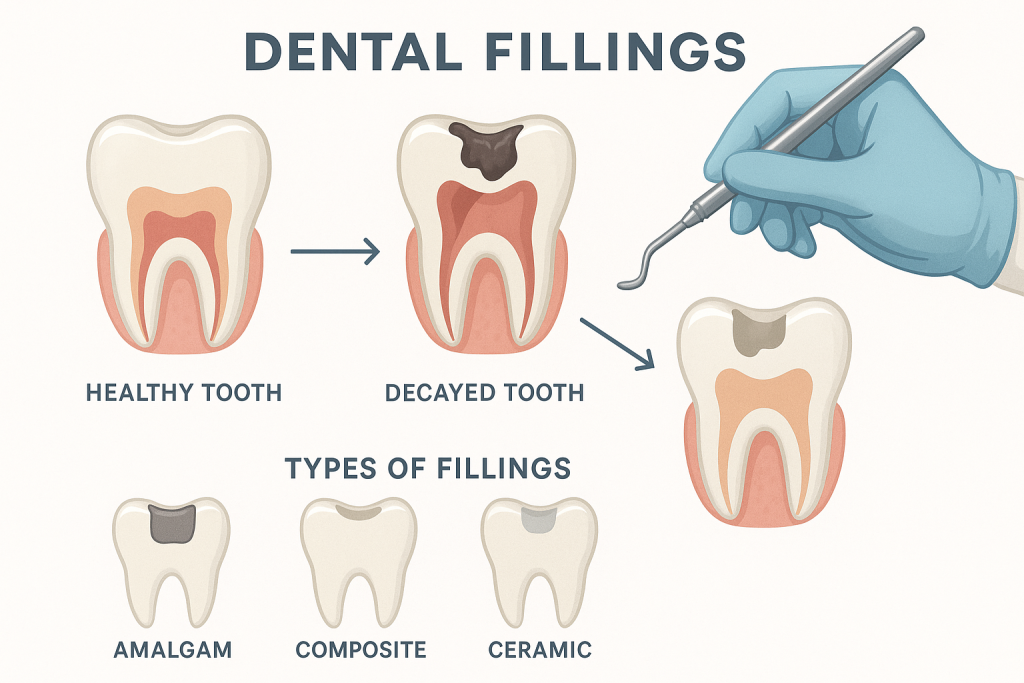
A filling may be needed when a tooth has damage that is too large to ignore but not severe enough to require a crown, root canal, or extraction. Dentists commonly recommend fillings for cavities, worn enamel, small chips, and old fillings that have started to leak, crack, or loosen.
Decay begins when bacteria in the mouth produce acids that weaken enamel. Over time, a cavity can form. Some cavities are visible, while others are found during an exam or X-ray. Early treatment matters because decay can move deeper into the tooth and reach the nerve, which may lead to severe pain and a more involved treatment plan.
You may need a dentist to check a tooth if you notice:
- Sensitivity to hot, cold, sweet foods, or pressure
- Pain when biting or chewing
- A visible hole, dark spot, or rough area
- Food catching in the same place
- A sharp edge on a tooth
- A filling that feels loose, cracked, or uneven
- Swelling, bad taste, or throbbing pain near one tooth
Not every symptom means you need a filling, but these signs should not be ignored. Sensitivity may come from gum recession, grinding, enamel wear, a cracked tooth, or a deep cavity. A dentist can identify the source and recommend the right treatment.
If pain is severe, swelling is present, or a broken tooth has left a sharp edge, the situation may need urgent attention. Emergency Dental Squad can help connect you with emergency dental care so you are not left searching for help while symptoms get worse.
The Dentist’s Role in the Tooth Filling Procedure
A licensed dentist is the main provider who diagnoses cavities and places fillings. Dental hygienists may help with cleanings, X-rays, and prevention, while dental assistants may support the appointment, but the dentist is responsible for preparing the tooth and completing the restoration.
The filling procedure usually begins with an exam. The dentist checks the affected area, asks about your symptoms, and may use X-rays to see how deep the decay goes. If a filling is the right option, the dentist will explain the material choices, estimated appointment time, and what to expect after treatment.
During the appointment, the dentist usually numbs the area with a local anesthetic. Once the tooth is comfortable, damaged or decayed material is removed. The tooth is then cleaned and prepared for the filling. Depending on the material used, the dentist may place the filling in layers, shape it to match the natural tooth, harden it with a curing light, and polish it.
The bite check is an important part of the visit. If a filling is too high, it can cause soreness when chewing. A dentist can make small adjustments so the restored tooth meets the opposing teeth correctly. This helps protect the new filling and keeps daily chewing more comfortable.
Many patients worry that treatment will hurt. A local anesthetic is used to keep the area numb, and you should tell the dentist if you feel discomfort during the appointment. You may feel pressure or vibration, but sharp pain should not continue once the area is numb.
After treatment, mild sensitivity may happen for a short time. That does not always mean something is wrong. However, pain that gets worse, pain when biting, or sensitivity that does not improve should be checked.
Types of Dental Fillings and Materials
Dental fillings can be made from several materials. The best choice depends on the size of the cavity, the tooth’s location, cosmetic goals, chewing pressure, budget, and insurance coverage. Your dentist should explain the pros and limits of each option before treatment begins.
| Filling material | Best suited for | Appearance | What to know |
| Composite resin | Front teeth, visible areas, small to medium cavities | Tooth-colored | Blends with natural teeth and bonds well to tooth structure |
| Amalgam | Back teeth and areas with heavy chewing pressure | Silver-colored | Strong and often lower in cost, but more visible |
| Glass ionomer | Small repairs, baby teeth, low-pressure areas | Tooth-colored but less translucent | Releases fluoride and may be used in pediatric or low-stress cases |
| Ceramic | Visible teeth or larger restorations | Tooth-colored | Stain-resistant and natural-looking, often higher in price |
Composite is popular because it can be matched to the shade of your teeth. Many patients choose it for visible areas or when appearance matters. Amalgam has been used for many years and can be a strong option for molars, especially when chewing pressure is high.
Glass ionomer may be used in certain pediatric cases, near the gumline, or in areas that do not take heavy bite force. Ceramic may be recommended when durability and appearance are both priorities, though it may require a higher investment.
Ask your dentist why a certain material is recommended for your tooth. A back molar that absorbs heavy pressure may need a different approach than a small front-tooth repair. The goal is to place a restoration that feels comfortable, protects the tooth, and fits your needs.
Avoid trying a permanent tooth filling at home. Store-bought temporary repair products may cover a rough edge briefly, but they do not remove decay, clean the damaged area, or seal the tooth like professional treatment. Using temporary material for too long can trap bacteria and worsen the problem.
How to Choose the Right Provider and Dentist for Fillings
Choosing a dentist for fillings should involve more than finding the first available appointment. You want a provider who listens, explains options, offers clear estimates, and uses materials that match your needs.
If you need urgent treatment, availability matters. Tooth pain can interfere with eating, sleeping, and work. Emergency Dental Squad helps patients find dental professionals who can evaluate urgent symptoms and recommend treatment without unnecessary delays.
Before scheduling, ask these questions:
- Does the office treat cavities, broken teeth, and failed fillings?
- How soon can I be seen if I am in pain?
- What filling materials do you offer?
- Will you explain the cost before treatment starts?
- Do you accept my insurance or help check benefits?
- Are payment options available if I do not have coverage?
- What should I expect after the filling is placed?
- When should I call if pain or sensitivity continues?
A good provider should not rush your questions. Clear communication helps you understand what is happening and why the recommended treatment makes sense.
You may also want to ask whether the office handles other dental specialties or can refer you if a filling is not enough. For example, deep decay may require root canal treatment. A heavily damaged tooth may need a crown. Missing teeth may require bridge, implant, or denture planning. A dentist who explains these possibilities upfront can help you avoid surprises.
For families, it may help to choose a provider experienced in family dentistry. Children, adults, and older patients may all need different approaches to comfort, communication, and care planning.
Cost, Insurance, and Access to Care
The cost of a filling can vary based on the tooth, the size of the cavity, the material used, the provider’s fees, and whether other treatment is needed. A small filling usually costs less than a larger restoration. Composite may cost more than amalgam in some cases. A tooth that needs extra work before the filling can also increase the total.
Insurance can reduce out-of-pocket costs, but coverage is not the same for every plan. Some plans cover basic fillings at one percentage and tooth-colored materials at another. Some require you to use an in-network dentist. Others may have deductibles, waiting periods, or yearly maximums.
Before you agree to treatment, ask for estimates that show what your plan may pay and what you may owe. If you do not have coverage, ask about payment plans, membership savings, or phased treatment. Many offices are willing to discuss options, especially when treatment is needed to stop pain or prevent further damage.
Emergency Dental Squad can help patients connect with a dental network that understands urgent needs. If you are unsure where to go, need help finding a provider who accepts your insurance, or want fast support for a painful tooth, reaching out can save time and stress.
Delaying care due to cost may feel tempting, but it can lead to higher expenses later. A small cavity may be treated with a filling. A deeper cavity may require root canal treatment and a crown. If infection spreads, emergency care may become necessary. Early treatment often gives you more choices and a simpler path forward.
Get Help for a Tooth That Needs a Filling
A tooth that hurts, feels rough, or reacts strongly to temperature should be checked before the problem worsens. Fillings can restore comfort, protect teeth from further decay, and help you get back to eating and smiling with confidence.
After a filling, daily care helps the restoration last. Brush twice a day with fluoride toothpaste, floss once a day, and keep regular dental visits. Avoid chewing ice, hard candy, pens, or other hard objects. If you grind your teeth, ask whether a night guard may help protect your dental work.
Call a dentist if you notice:
- Pain that lasts after the numbness wears off
- A bite that feels uneven
- A sharp or rough edge
- Sensitivity that does not improve
- A filling that cracks, loosens, or falls out
- Swelling, bleeding, fever, or throbbing pain
Emergency Dental Squad is ready to help you find care when timing matters. Whether you need a new filling, a replacement restoration, or fast help for sudden dental pain, our team can connect you with a trusted dentist who can evaluate your tooth and explain your treatment options.
Do not wait for discomfort to take over your day. Contact Emergency Dental Squad to get connected with dental care and take the next step toward a healthier, more comfortable smile.
