
Why Does a Tooth Filling Fall Out?
A tooth filling can fall out at the worst possible time. You may feel a gap with your tongue, notice a hard piece in your mouth, or feel sudden sensitivity when you drink something cold. Even if there is no pain, a lost filling should not be ignored. The affected tooth may now have an open space where bacteria, food, and pressure can cause new problems.
Emergency Dental Squad helps patients find dental care when they need answers fast. If a filling fell out, feels loose, or leaves a sharp edge behind, getting prompt support can protect the tooth and reduce the chance of further damage.
Many people ask, “Why does a tooth filling fall out?” The answer depends on several factors. Age, tooth decay, biting pressure, filling materials, improper bonding, and daily habits can all play a role. Some fillings fail after years of normal wear. Others come loose shortly after placement because the tooth surface is not adequately prepared, the exposed tooth surface is soft, or there is new decay present around the restoration.
The goal is not only to replace the filling. A dentist needs to find out why it came loose in the first place. That evaluation helps determine whether the tooth needs a new filling, a crown, root canal treatment, or another form of care.
Common Reasons a Dental Filling May Fall Out
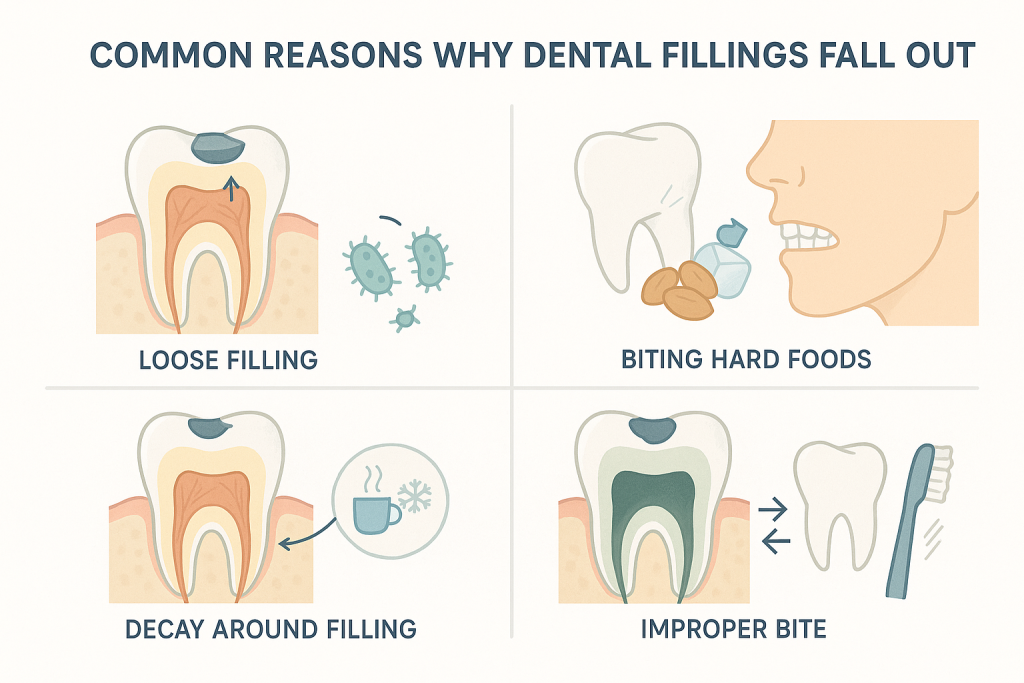
Dental fillings are made to handle normal chewing, but they do not last forever. Over time, pressure, moisture, decay, and tiny gaps can weaken the bond between the filling material and the tooth. Once that seal breaks down, the filling may shift, crack, or come out.
One common cause is new tooth decay around or under the filling. When bacteria slip into small spaces at the edge of the restoration, the tooth structure can soften. If enough support is lost, the filling no longer has a stable surface to hold onto. This can happen even when the filling itself still looks intact from the outside.
A filling may also loosen due to biting something hard. Ice, hard candy, popcorn kernels, nutshells, and pens can place sudden force on a restored tooth. A strong bite may crack the tooth, fracture the filling, or create a broken filling that falls out later.
Grinding or clenching can also wear down fillings. Patients who grind their teeth at night may place repeated stress on the same areas for hours. Over time, that pressure can weaken dental fillings, especially on back teeth that take most of the biting force.
Another possible cause is a debonding issue. This happens when the filling does not stay attached to the tooth as expected. It may occur if moisture interferes during placement, if the tooth surface is difficult to bond, or if the cavity shape does not give enough support.
Common reasons a filling may fail include:
- New decay forming under or around the filling
- Chewing something hard or sticky
- Teeth grinding or clenching
- Normal wear from years of biting and chewing
- A cracked tooth beneath the filling
- Improper bonding during placement
- A filling that is too large for the remaining tooth structure
- Poor fit caused by changes in the bite
- Weak tooth enamel or soft exposed tooth structure
A composite filling can be durable and natural-looking, but it still depends on strong bonding and good tooth support. Amalgam, ceramic, and other filling materials can also fail if the tooth around them weakens.
Signs of a Lost Filling, Loose Filling, or Broken Filling
Some patients know right away when a filling is gone. Others notice only small changes at first. A loose filling may shift slightly, trap food, or make a tooth feel uneven. A broken filling may leave a rough surface or a sharp edge that irritates your tongue or cheek.
Pain is not always present. A tooth filling that fell out with no pain can still be a problem because the tooth may be exposed. The inner tooth structure is softer than enamel and more vulnerable to bacteria. Waiting too long gives decay more time to spread.
You may have a lost filling if you notice:
- A hole, gap, or space in the tooth
- Sudden sensitivity to cold, heat, sweets, or air
- Pain while biting or chewing
- A rough, sharp, or jagged edge
- Food getting stuck in one spot
- A hard piece of filling material in your mouth
- A bite that feels different
- Bad taste or odor near the affected tooth
Some symptoms may point to a dental emergency. Severe pain, swelling, fever, pus, bleeding, or trouble opening your mouth should be addressed quickly. These signs can mean infection or deeper tooth damage. Emergency Dental Squad can help connect you with urgent dental care so you do not have to manage the situation alone.
It is also wise to seek care if a filling falls out after a day, a week, or a month. Early failure may mean the tooth could not hold the material well, the bite needs adjustment, or decay was deeper than expected. A dentist can check the area and recommend the right repair.
What to Do First if Your Filling Fell Out
A lost filling can feel stressful, but a few careful steps can help protect the tooth until you see a dentist. Start by staying calm and checking your mouth gently. If you find the filling piece, remove it from your mouth so you do not swallow or bite down on it.
Rinse with warm water to clear food particles from the area. If the tooth is sensitive, avoid very hot, cold, sweet, hard, or sticky foods. Chew on the opposite side until you receive dental care. Do not use household glue or any non-dental product to put the filling back.
Drugstores may sell temporary dental repair material. This can sometimes cover the exposed area for a short period, but it is not a permanent tooth filling. It does not remove decay, restore proper shape, or create the same seal as professional dentistry. Use it only as a short-term measure if needed, and still contact your dentist promptly.
Here is what to do right away:
- Rinse your mouth with warm water.
- Remove any loose filling material from your mouth.
- Avoid chewing on the affected tooth.
- Cover a sharp edge with dental wax if it irritates your tongue or cheek.
- Use temporary dental cement only if needed and only as directed.
- Take over-the-counter pain relief as directed on the label if you can use it safely.
- Contact a dental provider as soon as possible.
Do not delay care because the tooth does not hurt. A filling protects the tooth from bacteria and biting pressure. Without it, the tooth is unprotected and more likely to develop decay, cracks, pain, or infection.
How Dentists Repair a Filling That Fell Out
When you visit a dentist for a lost filling, the first step is an exam. The dentist will inspect the tooth, ask about your symptoms, and may take X-rays to check for decay, cracks, or infection. This step matters because replacing the filling without finding the cause may lead to another failure.
If the tooth is otherwise healthy, the dentist may clean the area and place a new filling. If there is new decay present, the decayed material must be removed before the tooth is restored. If the cavity is larger than before, the dentist may recommend a different filling material or a crown for better coverage.
If the tooth is cracked, treatment depends on the location and depth of the crack. A small crack may be repaired with a filling or crown. A deeper crack may need root canal treatment or another plan. If the tooth is badly damaged and cannot be saved, the dentist may discuss replacement options such as implants, bridges, or dentures.
| What the dentist finds | Possible treatment | Why it matters |
| Filling came out but tooth is stable | New filling | Restores the seal and chewing surface |
| New decay under the old filling | Decay removal and new restoration | Stops bacteria from spreading deeper |
| Broken filling with weak tooth structure | Larger filling or crown | Gives the tooth stronger coverage |
| Pain from nerve irritation or infection | Root canal evaluation | Treats deeper inflammation or infection |
| Tooth fractured beyond repair | Extraction and replacement planning | Protects oral health and restores function |
The dentist may also check your bite. If a filling sits too high, it can take extra force every time you chew. That pressure can cause soreness, cracks, or another loose filling. A small adjustment can help the restored tooth fit more comfortably.
Emergency Dental Squad can help you find a dental provider who can evaluate the damage and explain your options. Fast care is especially helpful if you are in pain, have swelling, or cannot eat comfortably.
How to Prevent Fillings From Falling Out Again
You cannot control every filling failure, but good habits can lower the risk. Daily oral care helps prevent decay from forming around existing fillings. Brush twice a day with fluoride toothpaste, floss once daily, and keep regular dental visits so small changes can be found early.
Food choices also matter. Try not to chew ice, hard candy, popcorn kernels, or other hard objects. Sticky foods can tug at fillings, especially older ones with worn edges. If you know you grind or clench your teeth, ask a dentist about a night guard. Reducing pressure can protect fillings and natural teeth.
Patients with repeated filling problems may need a closer look at bite force, tooth structure, or cavity size. If composite filling material keeps coming loose in the same tooth, the issue may not be the material alone. The tooth may need a crown, the bite may need adjustment, or decay may be weakening the area.
Regular checkups also help identify older fillings before they fail. A dentist can look for cracks, open margins, staining around the edges, or soft areas near the restoration. Replacing a weak filling before it falls out may prevent pain and reduce the chance of more damage.
Simple prevention steps include:
- Brush with fluoride toothpaste twice daily
- Floss gently around fillings every day
- Limit sugary and acidic snacks
- Avoid chewing ice and hard objects
- Wear a night guard if you grind your teeth
- Schedule routine exams and cleanings
- Ask about repair options when a filling feels rough or loose
Good oral health habits support the filling and the tooth around it. A restoration is only as strong as the structure that holds it.
Get Fast Help for a Lost Filling
A filling that falls out leaves your tooth exposed, even when there is no pain. The safest next step is to have the area checked by a dentist. A quick visit can reveal whether you need a simple replacement, decay treatment, bite adjustment, or a stronger restoration.
Emergency Dental Squad helps patients connect with dental care when timing matters. If you have a lost filling, broken filling, sharp edge, swelling, or tooth pain, our team can help you find support and take the next step toward relief.
Do not wait for sensitivity to become severe or for a small gap to become a larger dental problem. Reach out to Emergency Dental Squad for guidance, appointment support, and access to care for urgent filling concerns. Protect the affected tooth now so you can get back to eating, speaking, and smiling with confidence.
