
What to Do with a Broken Tooth Before You See a Dentist
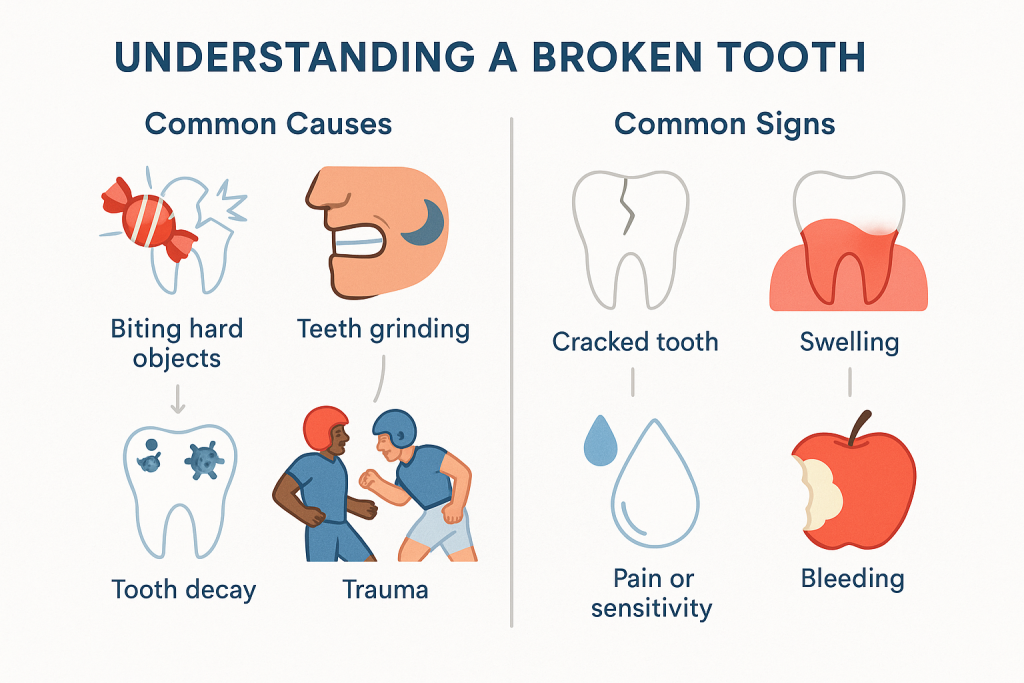
A broken tooth can happen during a meal, after a fall, while playing sports, or from grinding your teeth at night. It may feel sharp, painful, loose, or sensitive. In some cases, a piece breaks off with little pain at first. In others, the injury causes bleeding, swelling, or pain that spreads into your jaw, ear, or neck.
What to do with a broken tooth? Knowing what to do right away can help protect the damaged area until a dentist can examine it. Quick action may also lower the risk of infection, tooth abscess, further cracking, or tooth loss. Even if the break seems small, a dental professional should check it because damage can extend below the surface.
Emergency Dental Squad helps people across the U.S. connect with emergency dental care 24/7. If your tooth is broken, cracked, painful, swollen, or bleeding, you do not have to wait and worry. Call for help finding a local dentist who can evaluate the injury and recommend the right treatment.
Recognize When a Broken Tooth Needs Fast Care
A broken tooth can range from a small enamel chip to a deep fracture that exposes the inner layers. Some injuries are easy to see in the mirror. Others are hidden under the gum line, below an old filling, or between teeth. Pain level alone does not always show how serious the damage is.
Call a dentist quickly if you notice strong pain, swelling, bleeding, a loose tooth, a bad taste, pus near the gum, or sensitivity that does not fade. These symptoms may mean the nerve, root, or surrounding tissue is involved. A cracked tooth can also hurt when you bite down or when you release pressure after chewing.
A tooth cracked in half with no pain should still be checked. When the nerve is not exposed, pain may be mild at first. The problem is that the crack can spread under pressure, and bacteria can enter the damaged area. If infection develops, pain and swelling may appear later.
A broken front tooth can affect how you speak, eat, and smile. A back tooth may not be as visible, but it still handles heavy chewing force. Either type of injury can worsen without care.
You should also watch for changes after the injury. A tooth that darkens, feels numb, or becomes more sensitive may have deeper trauma. Pain that radiates to the jaw, ear, or neck can also signal a larger dental emergency.
Emergency Dental Squad can help you decide how urgent the situation may be and connect you with a provider who handles broken teeth and other time-sensitive oral health problems.
Warm Salt Water, Saved Pieces, and Safe First Steps
Your first goal is to protect your mouth and keep the damaged area as clean as possible. Home care can help with comfort, but it cannot repair the tooth permanently. A dentist still needs to examine the break, check for hidden damage, and decide whether treatment is needed.
Follow these steps while you wait for care:
- Rinse your mouth gently. Use warm water or warm salt water to clear away debris and soothe the area.
- Stop bleeding with light pressure. Place clean gauze or a soft cloth over the area and bite down gently.
- Retrieve any broken pieces that have fallen. Put the tooth fragment in milk, saliva, or saline and bring it to your appointment.
- Use a cold compress. Hold it against the outside of your cheek in short intervals to reduce swelling.
- Cover sharp edges. Dental wax or sugar-free gum can help protect your cheek, tongue, and lips.
- Avoid chewing on that side. Choose soft foods and skip hard, crunchy, sticky, very hot, or very cold items.
- Use pain relief as directed. Do not place aspirin directly on your mouth, gum, or tooth.
Do not use household glue, craft adhesive, nail glue, or any non-dental product. These materials can injure soft tissue and make treatment harder. A temporary dental repair product from a pharmacy may help cover a rough edge for a short time, but it is not a lasting solution.
If a permanent adult tooth is knocked out, handle it by the crown, not the root. If it is dirty, rinse it gently with water. If possible, put it back in the socket and hold it in place. If that is not possible, keep it moist in milk or saliva and get help right away.
Don’t ignore a broken tooth just because you can manage the pain. A small opening can let bacteria inside, and a crack can deepen each time you chew.
When to Call an Emergency Dentist
Not every small chip requires a same-day emergency appointment, but many broken tooth problems should be handled quickly. If you are unsure, calling is safer than waiting.
Seek urgent dental help for severe pain, facial swelling, fever, pus, a bitter taste, uncontrolled bleeding, a loose adult tooth, a large missing piece, or a break near the gum line. These signs can point to infection, nerve exposure, or deeper structural damage.
A dental emergency can also include broken dental work. A lost filling, cracked crown, broken bridge, or damaged denture can expose sensitive tooth structure and change your bite. Prompt care can reduce pain and help protect nearby teeth.
| Situation | What It May Mean | What to Do | Possible Treatment |
| Small chipped tooth with no pain | Enamel damage or rough edge | Schedule a dental exam soon | Smoothing, bonding, or veneers |
| Broken tooth with sensitivity | Dentin may be exposed | Avoid chewing on that side and call | Filling, bonding, or dental crown |
| Fractured tooth with severe pain | Pulp or nerve may be affected | Seek urgent care | Root canal therapy and crown |
| Swelling, pus, or fever | Possible tooth abscess | Call for emergency care | Infection treatment, root canal, or extraction |
| Tooth broken below gumline | Root or support structure may be damaged | Get prompt evaluation | Crown lengthening, root canal, or extraction |
If you have had a broken tooth for years, make an appointment even if it does not hurt. Old breaks can collect bacteria, weaken over time, and lead to future pain. A dentist can determine whether the tooth is stable or needs repair.
A broken tooth is often worth saving when enough healthy structure remains. Saving the natural tooth may help preserve your bite and jaw function. If the damage is too deep, tooth extraction may be necessary, followed by replacement planning such as a dental implant, bridge, or partial denture.
Emergency Dental Squad helps connect patients with emergency dentists who can examine the area, explain your options, and guide the next step.
Chipped Tooth, Fractured Tooth, or Knocked-Out Tooth
Different dental injuries need different levels of care. Understanding the difference can help you describe the problem clearly when you call.
A chipped tooth usually means a small piece of enamel has broken away. It may feel rough or sharp. Some chips are cosmetic, while others expose deeper layers and cause sensitivity. Dental bonding, smoothing, or veneers may be used depending on the size and location of the chip.
A fractured tooth is a deeper structural injury. The crack may run through enamel and dentin, or it may reach the pulp. A fractured tooth may cause pain when biting, swelling, or sensitivity that lingers. Depending on the damage, treatment may include a dental crown, root canal therapy, or extraction.
A cracked tooth may not have a missing piece. It may look normal but hurt when chewing. These cracks can be hard to diagnose without an exam and X-rays. If the crack is caught early, a dentist may be able to stabilize the tooth before it splits further.
A knocked-out tooth is a time-sensitive emergency. Adult teeth have the best chance of being saved when treated quickly. Keep the tooth moist, avoid touching the root, and seek immediate dental care.
A loose adult tooth after trauma should also be treated as urgent. Even if it is still in place, the surrounding bone, ligament, or root may be injured.
No matter how the injury looks, avoid testing the tooth by biting down repeatedly. That pressure can make the damage worse.
Treatment Options for Broken Teeth
The treatment plan depends on the size of the break, the tooth’s location, the health of the root, and whether infection is present. A dentist may take X-rays, check your bite, and test sensitivity before recommending care.
For a minor chipped tooth, the dentist may smooth the rough edge or use dental bonding. Bonding uses tooth-colored resin to rebuild the missing area and improve appearance. It is often used for small chips on front teeth.
For a moderate break, a filling may be used if enough structure remains. Fillings restore shape and help seal the tooth from bacteria. When a larger portion is missing, a dental crown may be a better option. A crown covers the visible part of the tooth, adds support, and helps restore chewing function.
If the break reaches the pulp, root canal therapy may be needed. During a root canal, the dentist removes damaged or infected tissue from inside the tooth, cleans the canal, and seals it. A crown is often placed afterward to protect the remaining structure. Root canals can help save teeth that might otherwise need removal.
If the tooth is broken below the gumline, split vertically, severely infected, or too weak to support a restoration, tooth extraction may be necessary. After extraction, replacement options may include a dental implant, bridge, or denture. Your dentist can explain the pros, cost, and timing of each option.
Veneers may be used when the damage affects the front surface and the tooth is otherwise stable. They can improve shape and appearance, but they are not suitable for every fracture.
Don’t try to fix a cracked tooth naturally or repair a broken tooth at home. Home remedies may reduce discomfort for a short time, but they cannot seal cracks, remove infection, or restore lost structure. Professional dentistry is the safest path to lasting repair.
Get Help for a Broken Tooth Now
A broken tooth can disrupt eating, sleeping, speaking, and daily comfort. It can also affect your oral health if bacteria enter the damaged area or the fracture spreads. Acting quickly gives you a better chance of saving the tooth and avoiding a more involved procedure.
Rinse your mouth, protect sharp edges, save any broken fragment, avoid chewing on that side, and contact a dentist. If you have swelling, fever, severe pain, pus, bleeding, or a loose tooth, seek urgent care right away.
Emergency Dental Squad is available 24/7 to help patients find emergency dental care for broken teeth, tooth pain, abscess symptoms, damaged crowns, lost fillings, extractions, root canals, and other urgent needs. Same-day help may be available depending on your location and provider availability.
Call Emergency Dental Squad now if your tooth is broken, cracked, swollen, painful, or worrying you. A local dental professional can evaluate the damage and help you move toward relief.
