
Why Do Dentures Crack or Break? Causes, Fixes, and When to Get Help
Dentures help restore daily comfort, speech, eating, and confidence. When a denture suddenly cracks, chips, or snaps, it can interrupt your routine right away. It may also leave you unsure whether the appliance can be repaired, whether you should keep wearing it, or whether you need urgent dental care.
Why do dentures crack or break? A damaged denture should never be ignored. Even a small hairline crack in a denture plate can grow wider under chewing pressure. A loose or broken edge can rub the gums, irritate soft tissue, or make eating painful. If the denture is not properly supported, the problem can worsen quickly.
Emergency Dental Squad helps patients connect with trusted local dentists when dental problems can’t wait. If you’re dealing with broken dentures, severe oral discomfort, swelling, a broken tooth, or another urgent concern, same-day help may be available. Call now to speak with a local dentist and get clear next steps.
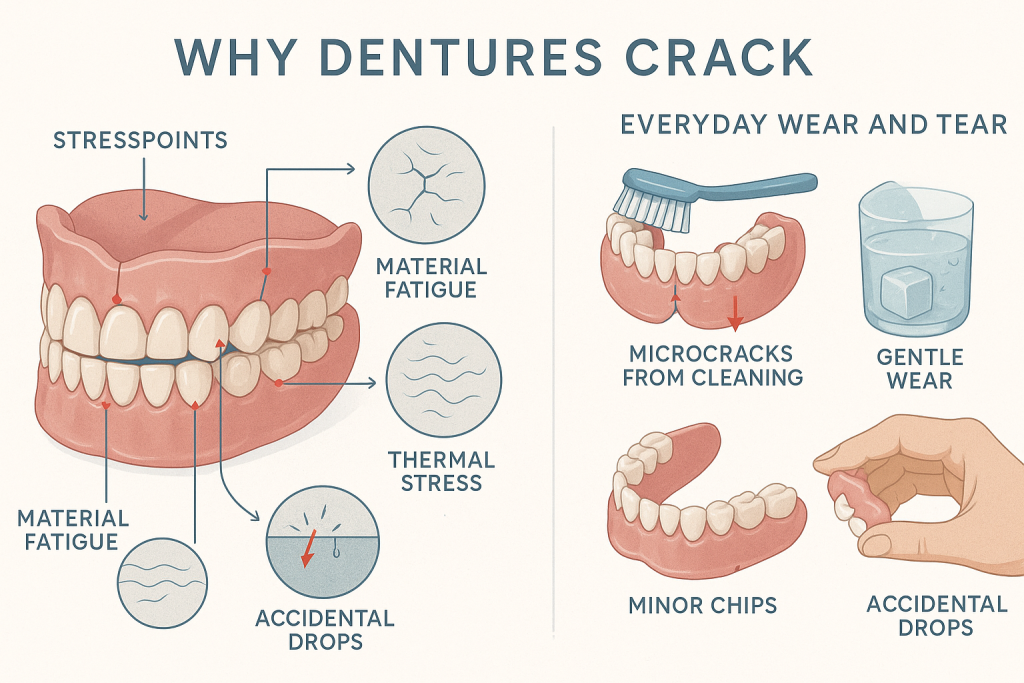
Why Dentures Crack during Daily Use
Dentures are made to handle normal biting, chewing, speaking, and cleaning, but they’re not indestructible. Over time, daily pressure can create material stress. That stress may start as tiny weak spots that are hard to see. Later, those weak spots can turn into cracks, chips, or a full break.
One common reason dentures crack is repeated chewing pressure. Dentists often refer to these biting and chewing pressures as occlusal forces. When the force is spread evenly, the appliance can function comfortably. When the pressure is uneven, certain areas of the denture base may take on too much stress.
This uneven pressure often happens when the fit changes. Your mouth changes over time. Gums and bone can shift, shrink, or settle. A denture that once fit well may begin to move during meals or speech. Dentures that are too loose can move against the gums and place strain on thin parts of the appliance.
Cleaning habits also matter. Brushing too hard, using abrasive toothpaste, soaking in the wrong solution, or rinsing with very hot water can weaken the surface. Removing them over a sink or tile floor also raises the risk of damage if the appliance slips from your hand.
Temperature changes can also play a role. Hot drinks, cold foods, and repeated shifts in temperature may cause denture materials to expand and contract. This doesn’t usually cause an instant break, but over months or years it can contribute to wear.
A patient may first notice a small line, a rough spot, a clicking sound, or a change in fit. These early signs should be checked before the denture cracks or breaks further. Prompt care can often make repair easier and help protect your mouth from sore spots or injury.
Common Reasons Dentures Break
Denture problems often come from a mix of age, fit, handling, and daily habits. Some breaks happen suddenly. Others develop slowly until normal chewing becomes enough to cause visible damage.
| Cause of Damage | How It Happens | What You May Notice |
| Aging materials | Years of chewing, cleaning, and temperature changes weaken the base | Small cracks, dull appearance, thinning, or sudden breakage |
| Poor fit | Gum and bone changes cause rocking or uneven pressure | Soreness, slipping, clicking, or pressure in one area |
| Accidental drops | The appliance slips during cleaning or removal | Chips, snapped pieces, or a fractured plate |
| Hard foods or objects | Biting ice, hard candy, nuts, pens, or packaging creates excess force | Cracks near teeth, loosened denture teeth, or sharp edges |
| Improper ridge support | Changes in the mouth leave the denture without stable support | Rocking, gum irritation, and repeated repairs |
Aging is one of the most common reasons dentures break. Even well-made appliances wear down with use. The base may lose strength, the teeth may wear unevenly, and the fit may change as the mouth changes. If you have worn the same appliance for many years, a crack may be a sign that it’s time for an exam.
Accidentally dropping them is another leading cause of broken dentures. Tile floors, bathroom counters, and porcelain sinks are hard enough to crack the appliance on impact. A small drop can cause hidden damage that shows up later during eating.
Poor fit can create long-term stress. When the denture doesn’t rest evenly on the gums, chewing pressure is not balanced. An improper ridge or changing gum shape can leave one area overloaded. That area may weaken first, then split.
Some patients also have trouble with partials, implant-supported appliances, or older repairs. If a clasp bends, an implant attachment wears down, or a previous repair cracks again, the appliance should be checked by a dentist. Repeated breaks usually mean there is an underlying fit or bite problem that needs attention.
What to Do Right Away after Denture Damage
A cracked or broken denture can feel stressful, especially if you need it to eat, speak, or go to work. The safest response is to stop wearing it until a dentist can check the damage. Wearing it may make the crack larger or cause sharp edges to rub the gums.
Take these steps right away:
- Remove the denture carefully. Don’t bite down to “test” the damage.
- Look for sharp edges or missing pieces. Save every piece you can find.
- Place the appliance in a clean container. Keep it moist if you normally soak it.
- Don’t use household glue. Superglue and craft adhesives aren’t made for oral use.
- Call for dental help. A dentist can tell you whether denture repair is possible.
Many people search for how to fix cracked dentures at home, what glue to use, or whether a denture repair kit will work. These options may seem convenient, but they can create new problems. Household glue may irritate oral tissue, change the shape of the appliance, or make professional repair harder. A poorly placed patch can also affect your bite.
If the denture broke in half, don’t try to force the pieces together. If a tooth came loose from the denture, save it. If the appliance has a hairline crack in the denture plate, avoid bending it to see how deep the crack goes.
Emergency Dental Squad can help when denture damage affects your comfort or daily function. The team is available 24/7 to connect patients with local dentists for urgent dental issues, including broken dental work, denture repair needs, tooth pain, swelling, and related oral concerns. Call now if you need help deciding what to do next.
Denture Repair, Replacement, and Dental Implants
The right treatment depends on the type of damage, the age of the appliance, and the way it fits your mouth. Some denture repairs are simple. Others require a new impression, a reline, or a replacement appliance.
A dentist may be able to repair cracks if the appliance still fits well and the break is clean. A loose denture tooth may also be reset in some cases. If the base has several fracture lines, if the appliance has been repaired many times, or if the fit is poor, replacement may be the better option.
A reline may help when the denture feels loose but is otherwise in good condition. During a reline, material is added to improve the way the appliance rests against the gums. This can reduce movement and help distribute pressure more evenly.
Replacement may be recommended when the appliance is worn, unstable, discolored, warped, or no longer supports the mouth properly. A new appliance can improve comfort, chewing, speech, and appearance.
Some patients ask about dental implants when dentures break often. Implants can provide added support for certain denture designs. Implant-supported options may reduce movement and improve stability, but they aren’t right for every patient. A dentist will need to evaluate your mouth, bone support, oral health, and treatment goals.
Denture repair cost can vary based on the type of damage, the materials involved, and whether new impressions or lab work are needed. The fastest way to get a clear answer is to schedule an exam. If the damage is causing pain, rubbing, or trouble eating, don’t wait for it to get worse.
Emergency Dental Squad helps patients find care quickly when dental work breaks at the wrong time. Whether you need repair, replacement guidance, help with dental implants, or urgent dentistry for pain or swelling, a local dentist can review your options.
How to Prevent Denture Problems
Good daily habits can lower the risk of cracks, sore spots, and sudden breaks. The goal is to protect the appliance and keep the fit stable for as long as possible.
Use these oral care habits to help protect your dentures:
- Clean them daily with a soft denture brush and nonabrasive cleanser.
- Rinse them after meals to remove food particles.
- Handle them over a towel or a basin of water.
- Soak them as directed so they don’t dry out.
- Keep them away from pets and small children.
- Avoid hot water, which can warp the material.
- Don’t chew ice, hard candy, pens, or packaging.
- Schedule routine dental visits to check the fit.
- Call a dentist if you notice slipping, soreness, or cracks.
Regular dental visits are important even if you no longer have natural teeth. Your gums, bite, and bone support can still change. A dentist can look for pressure spots, check the appliance, and recommend adjustments before a small problem turns into a break.
Pay attention to how your denture feels during meals. New rubbing, rocking, or clicking may mean the fit has changed. Don’t try to adjust it with files, pliers, or home tools. Small changes can affect the entire bite and may lead to more damage.
Food choices can also help. You may not have to avoid every firm food forever, but it helps to cut tougher foods into smaller pieces and chew evenly on both sides. This spreads pressure and reduces strain.
If you wear partials, keep up with exams for your remaining teeth as well. A weak tooth, loose clasp, or gum issue can affect the way the partial fits. If you have implants, regular maintenance helps protect both the appliance and the supporting structures.
A broken denture can disrupt your day, but you don’t have to manage it alone. Emergency Dental Squad connects patients with local dentists for urgent dental care 24/7. If your denture cracks or breaks, if you have pain, or if you’re unsure whether repair is possible, call now to speak with someone who can help you take the next step.
