
What Can Make Dry Socket Pain Worse? Normal Healing vs Warning Signs
Soreness after a tooth extraction should generally become easier to manage as the first few days pass. A dry socket follows a different pattern. The discomfort may grow stronger two to four days after the procedure, spread toward the ear or jaw, and respond poorly to routine medication.
What can make dry socket pain worse? Dry socket, medically called alveolar osteitis, develops when the protective blood clot doesn’t form properly, dissolves, or comes out before new tissue covers the underlying bone and nerve endings. Once that protection is lost, air, food, pressure, and repeated movement can irritate the open area. Tobacco use, suction, forceful rinsing, touching the site, and hard or very hot foods can add irritation or disrupt healing.
Appearance can offer clues, but the pattern often tells you more. Normal soreness should steadily ease. An empty socket, visible bone, foul taste, bad breath, or severe throbbing that grows stronger deserves a call.
When the discomfort is getting stronger and the office that performed the procedure is unavailable, Emergency Dental Squad can help connect you with a local provider 24/7. Same-day appointments may be available based on location and provider availability.
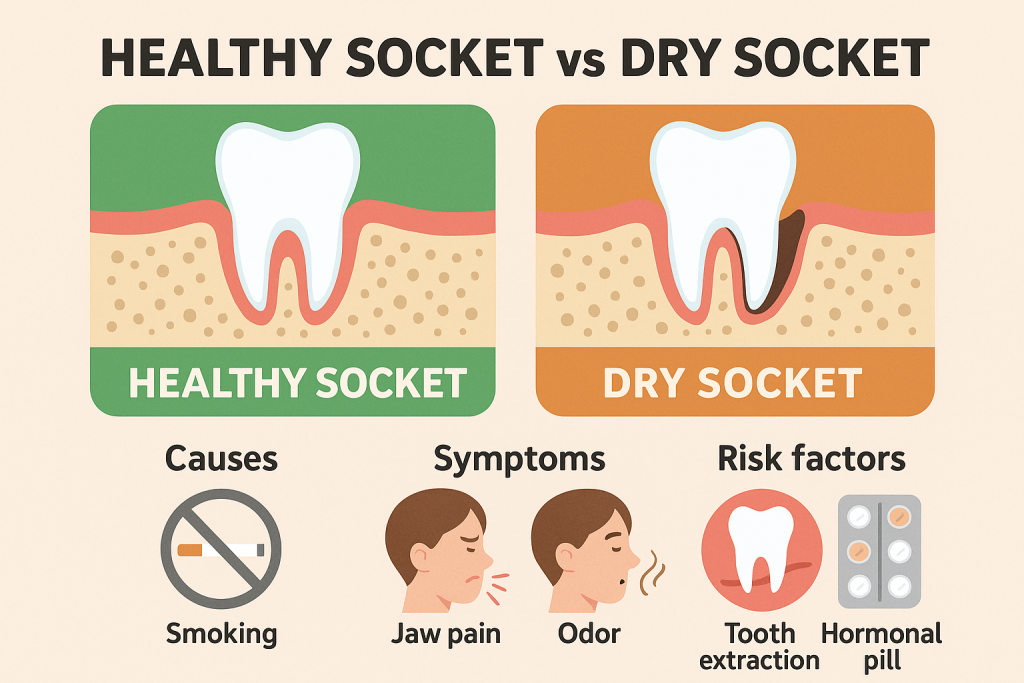
Why a Dry Socket Hurts and Who Is at Risk
After a tooth is removed, blood collects in the opening and forms a clot. This natural covering shields the jawbone and nerves while gum tissue starts growing across the wound. As healing continues, it may fill the space from the bottom and sides. Early protection matters because the tissue underneath is highly sensitive.
When the covering is missing, the site can feel deep, raw, sharp, or relentlessly throbbing. Pain can radiate into the ear, temple, jaw, or neighboring teeth on the same side. Unlike ordinary post-extraction pain, which should gradually fade, discomfort linked with clot loss often becomes stronger and may interrupt sleep, eating, and daily activity.
Several factors can raise the chance of this complication. Difficult wisdom tooth surgery, a previous history of dry sockets, infection near the removed tooth, poor oral hygiene, and missed aftercare steps may interfere with recovery. Hormonal birth control and some medical conditions or medications may also affect clot stability or tissue repair. Share your medication and medical history with the dentist rather than stopping a prescribed drug on your own.
Tobacco use is a major preventable risk. Smoking restricts blood flow, and inhaling creates suction that may loosen the protective layer. Tobacco also introduces toxins that can delay healing.
Everyday Habits That Can Increase Discomfort
Ordinary actions can increase contact with sensitive tissue or move debris into the opening. Even when the protective covering is already missing, avoiding common triggers can help prevent further irritation while you arrange care.
| Habit or action | Why it may increase discomfort | Safer approach |
| Smoking or vaping | Suction can disturb the protective covering and delay tissue repair | Avoid these products for the period given by your provider |
| Drinking through a straw | Negative pressure can pull on the healing area | Drink directly from a cup |
| Vigorous rinsing or forceful spitting | Strong fluid movement can dislodge tissue | Rinse only when directed and let liquid drain without force |
| Hard, crunchy, chewy, or hot foods | Food can scrape tissue, become trapped, or trigger sensitivity | Choose soft, cool or lukewarm foods and chew on the other side |
| Touching or probing the opening | Fingers, toothpicks, swabs, and brush bristles can introduce bacteria and cause injury | Keep hands and objects away from the area |
| Clenching, grinding, or strenuous activity | Jaw pressure and repeated movement may add throbbing or disturb tissue | Rest as directed and reduce jaw tension |
Aggressive cleaning is another common mistake. Keeping the area clean matters, but scrubbing near the wound or using a harsh rinse can cause friction. Don’t remove visible bits of food with a finger or tool. A dentist can irrigate trapped debris without unnecessary trauma.
Use medication exactly as directed. Skipping doses may allow symptoms to build, while taking extra doses or combining products can create safety concerns. Follow the medication plan provided by your dentist, and contact the office if the discomfort continues to increase.
How to Protect the Blood Clot after Oral Surgery
The first several days after the procedure are when the natural covering needs the least disturbance. The instructions from your own provider take priority because the right plan depends on the tooth removed, stitches, bleeding, medical history, and medications.
Protection doesn’t mean ignoring oral hygiene. Clean the rest of the mouth gently and keep food away from the wound without scrubbing the opening. The goal is a clean, quiet area that allows the covering and new tissue to remain undisturbed.
Use these measures to protect the area:
- Control bleeding as directed. Bite gently on clean gauze and replace it only according to the plan you received.
- Avoid suction and pressure. Don’t use straws, tobacco products, or forceful spitting.
- Choose soft foods. Yogurt, applesauce, eggs, and mashed vegetables require less chewing.
- Keep food away from the opening. Chew on the opposite side and avoid seeds, chips, nuts, and small crumbs.
- Clean gently. Brush the other teeth, but keep bristles away from the wound until you’re told to clean closer.
- Rinse only when advised. Use the rinse recommended by your provider, and avoid vigorous swishing.
- Rest with your head elevated. Wait for clearance before strenuous exercise or heavy lifting.
Avoid repeated inspections. Looking once with a mirror and clean light is reasonable, but pulling the cheek, poking the site, or trying to match pictures of dry socket vs normal healing can disturb tissue. Online photos also vary with lighting, stitches, depth, and food debris, so appearance alone can’t confirm a diagnosis.
Dry Socket vs Normal Healing: Symptoms and Timing
Soreness, swelling, mild bleeding, and jaw stiffness can occur after a dental removal. These changes should move toward improvement. The most useful comparison is whether each day is becoming easier or harder.
Normal discomfort is often dull, located near the wound, and manageable with the recommended plan. It commonly peaks early and then declines. With a developing dry socket, the ache may return after initial improvement or intensify around days two through four. A dry socket pain scale can’t diagnose the condition because each person experiences symptoms differently. The pattern, spread, and effect on sleep or eating provide better clues.
Signs that warrant a call include:
- Increasing or severe pain several days after the tooth was removed
- Pain that spreads toward the ear, eye, temple, jaw, neck, or nearby teeth
- An empty-looking opening with little visible protection or possible exposed bone
- Persistent bad breath or foul taste from the treated side
- Poor response to recommended medication
- Fever, pus, increasing facial swelling, or difficulty opening the mouth
What does dry socket look like? It may appear open or pale where darker material was expected, and bone may be visible. Food and lighting can change the appearance, so don’t scrape the area or rely on a photo to identify the problem.
The riskiest days are generally the first several days, when the covering is stabilizing and symptoms often begin. Can you get dry socket after a week? New onset that late is less typical, but severe or returning discomfort after seven days still needs evaluation. Infection, trapped food, or another problem may be responsible.
Dry Socket Treatment and Faster Relief
The fastest route to meaningful relief is an examination by the dentist who performed the procedure or another qualified professional. The provider will review the timing and character of the symptoms, inspect the opening, and check for another cause.
Treatment often begins with gentle irrigation to flush away food and loose debris. The provider may then place a medicated dressing, such as gauze, gel, or paste, over the sensitive surface. A pain-control plan may include an over-the-counter option or prescribed medication based on your medical history. Follow-up care may be scheduled to monitor recovery and adjust treatment if symptoms return.
Many people feel some improvement after cleaning and dressing because the sensitive surface is protected from air, food, and pressure. The material doesn’t instantly close the wound. Relief continues as irritation settles and tissue grows over the area.
If infection is suspected, the provider may prescribe antibiotics. Home measures may offer temporary comfort, but they don’t replace professional care when symptoms are severe, spreading, or becoming harder to control.
Symptoms getting worse after a recent procedure? Call Emergency Dental Squad at (855) 907-3090 for fast scheduling support and help locating a nearby emergency dentist. The service connects patients across the United States with local providers and is open 24/7.
When to Contact a Dentist or Oral Surgeon
A dry socket may eventually improve as tissue grows over the sensitive surface, but severe symptoms shouldn’t be left untreated. Professional cleaning and a protective dressing are what commonly make the area stop hurting fastest. Waiting can mean additional days of disrupted sleep, limited eating, and difficult oral care.
Not every patient describes the discomfort as unbearable. Some report a steady deep ache, while others experience severe pain that radiates across one side of the face. Intensity alone doesn’t confirm the condition. A stronger warning is a recovery pattern that reverses, especially during days two through four, or symptoms that stay intense despite following the medication plan.
Concerns about whether dry socket is dangerous are understandable. The condition is usually manageable, but increasing swelling, pus, fever, or difficulty opening the mouth may indicate infection or another complication. An oral surgeon may be appropriate after complex wisdom tooth surgery, ongoing infection, or a problem that hasn’t improved with standard care. Trouble swallowing or rapidly increasing face or neck swelling should be assessed immediately.
Emergency Dental Squad is a free service that helps users connect with local health care providers. It’s a connection service rather than a dental office and doesn’t replace an in-person examination. For worsening symptoms, an empty-looking site, visible bone, or a foul taste after a tooth removal, call (855) 907-3090 to ask about same-day care near you.
