
How Is Dry Socket Treated by a Dentist? Pain Relief and Recovery
Severe pain that worsens after a tooth extraction may point to dry socket, also called alveolar osteitis. The condition develops when the protective blood clot doesn’t form properly, dissolves, or comes out before new tissue covers the bone and nerve endings.
How is dry socket treated by a dentist? Treatment usually starts with an examination, followed by gentle cleaning, irrigation, and a medicated dressing. The goal is to remove debris, protect the sensitive surface, and reduce discomfort. A dentist may also recommend or prescribe pain medication and schedule follow-up visits.
Dry socket often causes deep, throbbing discomfort within a few days of extraction. Pain may travel toward the ear, eye, temple, jaw, or neck on the same side. Other dry socket symptoms can include an empty-looking opening, visible bone, bad breath, or an unpleasant taste. These changes differ from routine post-procedure soreness, which should gradually improve.
Don’t place medication, oils, powders, or home remedies inside the opening. Dry socket paste and other medicated materials are selected and placed according to the condition of the tissue. If your pain is getting stronger, call the office that performed the procedure. When that office is unavailable, Emergency Dental Squad can help connect you with a local emergency provider 24/7.
How Dentists Diagnose Dry Socket
A diagnosis begins with your symptoms and the timing of the pain. The provider will ask when the tooth was removed, whether discomfort improved before returning, what you have taken for relief, and whether you have noticed odor, taste changes, swelling, or fever. The mouth is then examined for a missing clot, trapped food, inflamed tissue, and bone exposure.
Common findings that may lead to a dry socket diagnosis include:
- Pain that becomes stronger one to four days after an extraction
- Discomfort that spreads from the site toward the ear, temple, jaw, eye, or neck
- An empty-looking opening or visible bone where the clot should be
- Persistent bad breath or taste coming from the treated side
- Limited response to medicine that would usually control routine soreness
The provider may take an X-ray if the symptoms could come from a retained root tip, bone fragment, another tooth, or deeper infection. Pictures of dry socket vs normal healing offer general context, but recovering tissue, stitches, food, and lighting can change what the opening looks like.
Dry socket is mainly an inflammatory problem related to early loss of protection. It’s not automatically an infection. Fever, pus, rapidly increasing swelling, or difficulty opening the mouth may suggest another problem that needs a different plan. A careful exam helps prevent unnecessary antibiotics and directs treatment toward the actual cause.
Socket Cleaning and Flushing at the Dental Office
The first active step is often socket cleaning. Food and loose material can collect against the exposed surface and increase irritation. The provider may irrigate the opening with sterile saline. Flushing out the socket removes debris without the scraping or force that could disturb recovering tissue.
If the area is very sensitive, a local anesthetic may be used to numb nearby tissue before socket flushing. Gentle suction or a small instrument may be needed when material doesn’t rinse away easily. The aim is to create a cleaner environment, not reopen the wound.
A typical office visit may follow these steps:
- Review and examination: Symptoms, medical history, medications, and the extraction are reviewed.
- Gentle irrigation: The opening is rinsed to clear food, loose particles, and other irritants.
- Protective medication: A paste, gel, or dressing may be placed over the exposed surface.
- Pain plan and follow-up: Instructions are provided, and another appointment may be scheduled if the dressing needs attention.
Patients sometimes worry that cleaning will restart the original procedure. It doesn’t involve removing another tooth. It’s focused on the affected opening and may provide noticeable comfort once irritating debris is gone. The provider will explain what was found and whether the socket needs packing, medicine, imaging, or simple monitoring.
| Treatment stage | What the provider may do | Purpose | What you may notice |
| Assessment | Examine the mouth and review the pain pattern | Confirm the likely cause and rule out another problem | Gentle pressure around the treated side |
| Irrigation | Rinse with sterile saline | Remove food and loose debris | Brief sensitivity, followed by a cleaner feeling |
| Dressing | Place medicated gauze, gel, or paste | Cover the exposed surface and reduce irritation | Relief may begin soon after placement |
| Medication plan | Recommend over-the-counter options or prescribe pain medication | Control discomfort between visits | Clear dosing and safety instructions |
| Follow-up | Check tissue and replace or remove material when needed | Track recovery and adjust the plan | Fewer symptoms as tissue grows over the area |
Medicated Dressings, Anesthetic, and Pain Relief
After cleaning, the provider may place a medicated dressing inside the opening. Medicated dressings can form a temporary barrier between exposed tissue and food, air, or pressure. The material may be gauze, gel, or paste, depending on the provider’s judgment and the severity of the discomfort.
Many patients use the phrase dry socket paste for this treatment. Products and schedules vary. Some materials remain in place while tissue settles, while others need replacement. Don’t reposition or replace a dressing yourself. If it falls out and strong pain returns, call the dental office.
Medication choices depend on your medical history, allergies, current prescriptions, and the procedure you had. The provider may recommend an over-the-counter anti-inflammatory or another analgesic. In selected cases, they may prescribe pain medication for a limited period. Take only the dose you were given, and don’t apply aspirin or crushed tablets to the gums.
Antibiotics aren’t part of every dry socket treatment because clot loss alone isn’t a bacterial infection. They may be used when the examination shows infection or when a patient’s health history changes the risk.
Once the socket is treated, comfort may improve quickly, but the tissue still needs time to recover. A dressing controls irritation while the body forms new covering over the exposed surface. It doesn’t permanently seal the opening or complete healing in one visit.
Pain getting worse after a recent extraction? Call Emergency Dental Squad at (855) 907-3090 for fast scheduling support and help finding a local provider. Same-day options may be available based on location and provider availability.
What to Expect after Dry Socket Treatment
Relief often begins after debris is removed and the sensitive surface is covered. Some people notice a reduction within hours, while others need a dressing change or several days before eating and sleeping feel comfortable. The opening may remain visible as soft tissue closes.
For people wondering how long after dry socket treatment they can eat, the safest answer depends on numbness, the material placed, and the provider’s instructions. Wait until any anesthetic has worn off so you don’t bite your cheek or tongue. Start with soft, cool or lukewarm foods, chew on the opposite side, and avoid foods that break into hard or sharp pieces. Ask before eating if you were given a product-specific waiting period.
Without care, the exposed surface may keep collecting irritants. Treatment doesn’t create instant tissue growth, but it can reduce pain while recovery proceeds. Follow-up may be needed if symptoms return, the dressing loosens, or the opening is hard to keep clean.
Call the office if pain increases again after improvement. The provider may repeat irrigation, replace the dressing, take an X-ray, or look for a separate issue. Continued pain doesn’t always mean the original socket treatment failed. A retained fragment, infection, nearby tooth problem, or jaw muscle strain may produce similar symptoms.
A dry opening often settles as tissue covers the surface. Progress should move toward easier eating, better sleep, and less reliance on medicine. Severe or unchanged discomfort deserves another assessment rather than repeated self-treatment.
Home Care and How to Prevent Another Dry Socket
Dry socket treatment at home can’t clean and dress exposed bone like an office visit. Home steps protect the work already done, limit irritation, and keep the mouth clean between appointments. Follow the instructions from the professional who examined you because advice may vary with the dressing, stitches, and extraction.
Use these measures while the area recovers:
- Brush carefully: Clean the other teeth as usual, but keep bristles away from the opening until advised otherwise.
- Rinse gently: Use warm salt water or prescribed rinses only when instructed. Let liquid fall from your mouth instead of spitting forcefully.
- Choose soft foods: Yogurt, applesauce, eggs, mashed vegetables, and similar foods place less pressure on the treated side.
- Avoid suction: Don’t use straws, smoke, vape, or make strong sucking motions.
- Keep follow-up visits: Dressing changes and checks help the provider see whether recovery is moving in the right direction.
- Use medicine as directed: Don’t combine products or exceed the recommended dose.
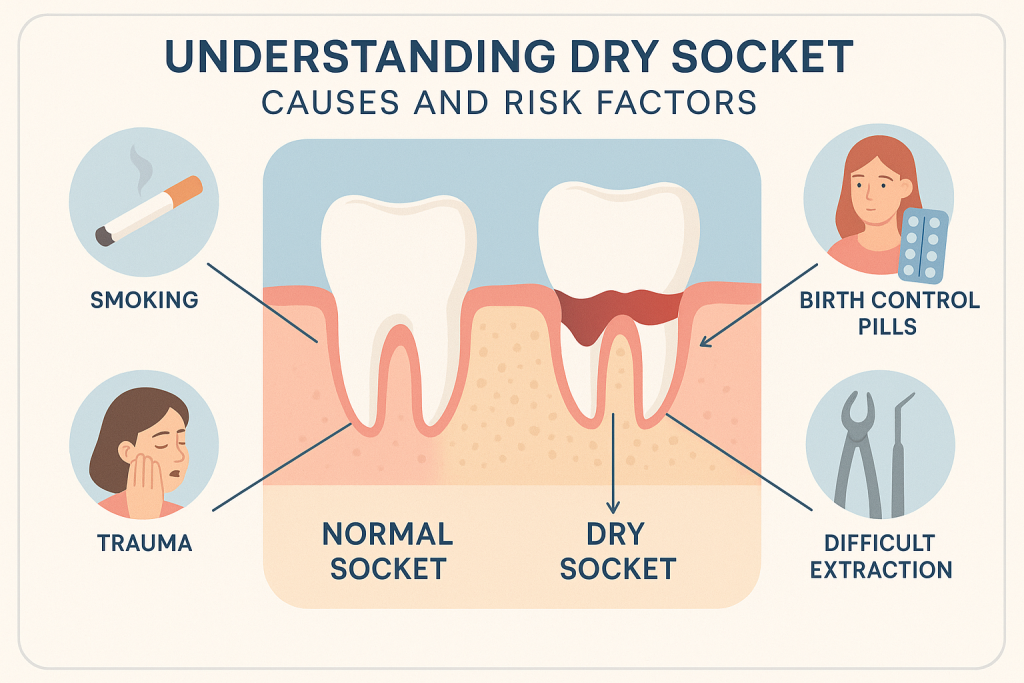
What causes dry socket isn’t always within a patient’s control. Risk rises when the clot is disturbed or breaks down too early. Smoking, difficult extractions, forceful rinsing, poor oral hygiene, past cases, hormonal factors, and mouth infection may contribute.
To help prevent dry socket after a future extraction, follow written aftercare, avoid tobacco, skip straws, and don’t probe the wound. Ask the provider when to restart exercise and normal foods. Gentle habits during the first several days give the clot a better chance to remain in place.
When Ongoing Pain Needs Prompt Dental Care
Dry socket is painful, but it’s usually managed in a dental setting with cleaning, a protective dressing, and a suitable medication plan. It can heal without packing as new tissue develops, yet untreated symptoms may remain intense and interfere with sleep, eating, and daily activity. Seeking treatment sooner can make the recovery period easier and allows the provider to check for another cause.
Some people describe dry socket as the worst dental pain they’ve felt. Severity alone can’t confirm it. A stronger clue is pain that increases several days after extraction, spreads away from the opening, or responds poorly to recommended medicine. Persistent bad taste, odor, or visible bone adds concern.
Contact a dental professional promptly for returning or worsening pain, fever, pus, increasing facial swelling, uncontrolled bleeding, or difficulty opening your mouth. Trouble breathing or swallowing, rapidly spreading face or neck swelling, or major facial trauma requires emergency medical attention. Call 911 or go to the nearest emergency department.
Emergency Dental Squad helps people across the United States connect with local providers 24/7. It’s a connection service, not a substitute for an in-person exam or diagnosis. For urgent post-extraction pain, call (855) 907-3090 to ask about available care near you.
