
Emergency Dental Cost – How Much Does a Walk In Dentist Cost?
Dental pain rarely shows up at a convenient time. A tooth may crack during dinner, a crown may come loose before work, or swelling may start late at night. When pain is sharp, constant, or paired with bleeding or swelling, waiting for a routine appointment may not be realistic.
That is when many people start looking for emergency dental care. And the next logical question is, “how much does a walk in dentist cost?.” Pricing can vary because every dental emergency is different. A simple exam and X-ray will not cost the same as an extraction, dental filling repair, dental crown replacement, abscess treatment, or implant-related visit.
Emergency Dental Squad helps patients find fast care from local emergency dentists, including walk-in and same-day options when available. The goal is to help you get seen quickly, understand your treatment options, and avoid calling multiple offices while you are already in pain.
When Emergency Dental Care Should Not Wait
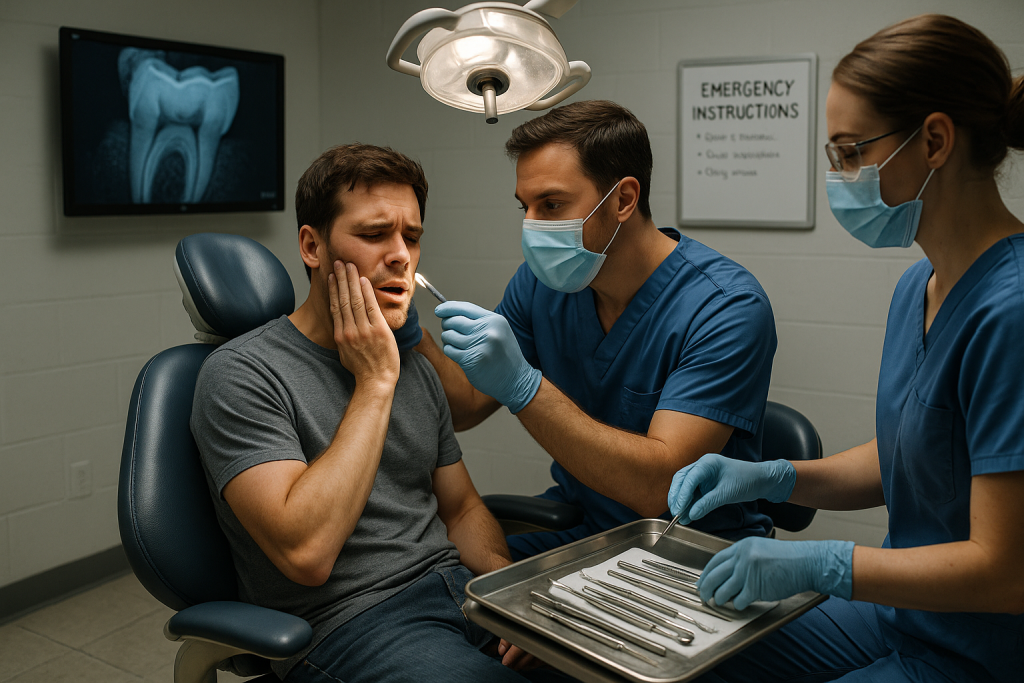
Some dental problems are uncomfortable but can wait a few days. Others need prompt attention because the pain, infection, or damage may worsen quickly. An emergency dentist can evaluate the problem, take X-rays when needed, and explain the safest next step.
Seek urgent dental care if you have:
- Severe tooth pain that does not improve with over-the-counter medicine
- Swelling in the gums, jaw, cheek, face, or neck
- A broken, cracked, loose, or knocked-out tooth
- Bleeding that does not stop after gentle pressure
- A dental abscess, pus, fever, or a bad taste in the mouth
- A lost dental filling or dental crown is causing pain or sensitivity
- Pain when biting or chewing
- Broken dentures, partial plates, or implant-related pain
- Mouth trauma from a fall, accident, sport, or injury
Dental emergencies can become harder and more expensive to treat when care is delayed. A small crack can deepen. A cavity can reach the nerve. An infection can spread. A loose crown can leave the tooth underneath exposed to bacteria and pressure.
Emergency dental care focuses on stopping pain, identifying the cause, and preventing further damage. Some patients receive full treatment during the first visit. Others receive pain relief, infection control, or a temporary repair before returning for follow-up treatment.
Dentist Costs: What Affects the Price of Urgent Care
The cost of a walk-in dental visit depends on the treatment needed, the provider, your location, insurance coverage, and whether the visit happens during regular hours or after hours. Emergency dentist appointments are not more expensive than traditional ones in every case, but urgent timing, complex treatment, and limited availability can affect the bill.
For example, a patient with a minor chipped tooth may only need an exam, X-ray, smoothing, or bonding. A patient with a severe dental emergency, such as an abscess or badly damaged tooth, may need antibiotics, drainage, extraction, root canal treatment, or a crown. Those treatment costs are naturally higher because the visit requires more time, materials, and clinical work.
Location also matters. Dentist costs can be higher in large cities due to rent, staffing, lab fees, and operating costs. Smaller offices or family dental practices may have different pricing structures. The best way to know your cost range is to describe your symptoms clearly before the appointment and ask what fees may apply.
| Emergency Dental Need | Common Visit Components | General Cost Level |
| Toothache exam | Exam, X-rays, diagnosis, pain plan | Lower |
| Dental filling repair | Exam, X-rays, filling replacement or temporary repair | Lower to moderate |
| Lost dental crown | Evaluation, re-cementing, temporary crown, or replacement planning | Moderate |
| Tooth extraction | Exam, X-rays, removal, and aftercare instructions | Moderate to higher |
| Abscess or infection | Exam, X-rays, drainage or medication plan, follow-up care | Moderate to higher |
| Root canal or implant issue | Imaging, pain control, specialty treatment or referral | Higher |
This table is a general planning tool, not a quote. Your final cost depends on your dentist’s exam findings, whether you have dental insurance, and the treatment chosen.
If you are worried about cost, say so when you call. Many offices can explain exam fees, X-ray fees, payment options, and whether they accept your insurance before you arrive.
Common Emergency Treatments and Why Costs Vary
Emergency dentistry covers a wide range of problems, so pricing can feel confusing. Two patients may both call with tooth pain, but one may need a filling while the other may need an extraction or root canal. The symptoms may sound similar, but the treatment can be very different.
A dental filling repair is often one of the simpler emergency treatments. If a filling falls out, the tooth may become sensitive to air, cold drinks, sweets, or chewing. The dentist may place a new filling or temporary material to protect the tooth. This can often be completed quickly if the tooth structure is still strong.
A dental crown problem may cost more. If a crown comes loose but is still intact, the dentist may be able to clean the area and re-cement it. If the crown is cracked, does not fit, or decay has formed underneath, a new crown may be needed. Lab work, materials, and follow-up dentist appointments can add to the total cost.
Tooth extractions also vary. A simple extraction usually costs less than a surgical extraction. If the tooth is broken at the gumline, impacted, infected, or close to the bone, the procedure may require more time. Extraction costs may also rise if bone grafting is recommended, often described in treatment notes as extractions, bone grafting or socket preservation.
Dental implant emergencies can carry higher costs because implants involve special parts, imaging, and training. Pain around an implant, a loose implant crown, swelling, or infection should be evaluated quickly to protect surrounding bone and gum tissue.
Emergency treatments for abscesses can include X-rays, medication, drainage, extraction, or root canal care. Infection-related dental emergencies should not be ignored. If swelling is spreading or you have trouble breathing or swallowing, seek medical help right away.
Emergency Dental Cost With Insurance and Without Insurance
Dental insurance can reduce out-of-pocket costs, but coverage depends on your plan. Some plans cover part of the exam, X-rays, fillings, extractions, crowns, or emergency dental care. Others have waiting periods, deductibles, annual maximums, or limits on certain treatments.
Before your visit, have your insurance card ready. Ask the office whether they can check coverage and estimate what you may owe. The estimate may change after the dentist examines you, but it can still help you prepare.
If you do not have insurance, you still have options. Many patients pay for emergency dental care without coverage. The cost may feel stressful, but delaying treatment can lead to higher costs later if the infection spreads, the tooth breaks further, or a simpler repair turns into a larger procedure.
For uninsured patients, ask about:
- Cash pricing or self-pay rates
- Payment plans
- Third-party financing
- Same-day payment discounts
- Lower-cost treatment choices
- Staged treatment plans
- Community dental resources
- Dental schools or public health clinics, when available
Emergency Dental Squad can help connect patients with providers who understand urgent situations and financial concerns. When you call, be honest about your budget, insurance status, and symptoms. The right office can explain available payment options before treatment begins.
If money is the reason you are waiting, call anyway. A quick conversation can help you learn what choices may be available near you.
Pricing and Payment Options Before Your Walk-In Visit
A walk-in visit can move faster when you have the right information ready. The dental team needs to understand your pain level, symptoms, medical history, and payment situation. Clear details help them schedule the right type of appointment and reduce surprises.
Before you call or arrive, gather:
- Your photo ID
- Dental insurance card, if you have one
- A list of medications and allergies
- Your main symptom and when it started
- Whether you have swelling, bleeding, fever, or trauma
- Any recent dental records or X-rays
- The location of the painful tooth, if you can tell
- Any broken pieces, lost crown, denture, or appliance part
Ask the office what the first visit includes. Some emergency dental offices charge separately for the exam, X-rays, and treatment. Others may offer a bundled emergency exam fee. You can also ask whether treatment must be paid in full the same day or whether payment plans are available.
If you have a dental emergency after hours, on a weekend, or during a holiday, ask whether there is an after-hours fee. Not every provider charges one, but it is better to know before you arrive.
Emergency Dental Squad helps reduce the stress of searching. Instead of trying to compare offices while you are in pain, just finding a local emergency dental provider.
Get Emergency Dental Help Without Waiting
A dental emergency can make it hard to think clearly. Pain, swelling, broken teeth, lost fillings, and crown problems can all feel urgent because they affect how you eat, speak, sleep, and function. The sooner you get care, the sooner you can understand what is wrong and what it may cost to fix it.
Walk-in dental care gives patients a faster path to treatment when regular scheduling is not enough. Your visit may include an exam, X-rays, diagnosis, pain relief, temporary repair, or full treatment depending on the problem. Costs vary, but you can ask about insurance, coverage, payment plans, and treatment priorities before work begins.
Emergency Dental Squad connects patients across the United States with emergency dentists who can help with tooth pain, dental emergencies, fillings, crowns, extractions, infections, dentures, and other urgent needs.
Do not spend the day calling office after office while the pain gets worse. Call Emergency Dental Squad for fast scheduling support and help finding emergency dental care near you.
