
What Causes a Dental Abscess? Understanding Dental Abscess, Infection, and Treatment Options
A dental abscess can start with a small cavity, a cracked tooth, gum disease, or bacteria that reach deep inside the mouth. Understanding what causes a dental abscess can help you recognize when an infection is developing and why prompt care matters.
For many people, the first sign is sudden pain that feels hard to ignore. Others notice swelling, a bad taste, sensitivity, or pressure around the affected area. Some symptoms build slowly, while others appear overnight.
Emergency Dental Squad helps people connect with local emergency dentists quickly when dental problems become urgent. If you’re dealing with severe discomfort, swelling, drainage, or signs that an infection may be spreading, getting connected with an emergency dentist can help protect your health and relieve pain before the problem worsens.
How a Dental Abscess Starts at the Root
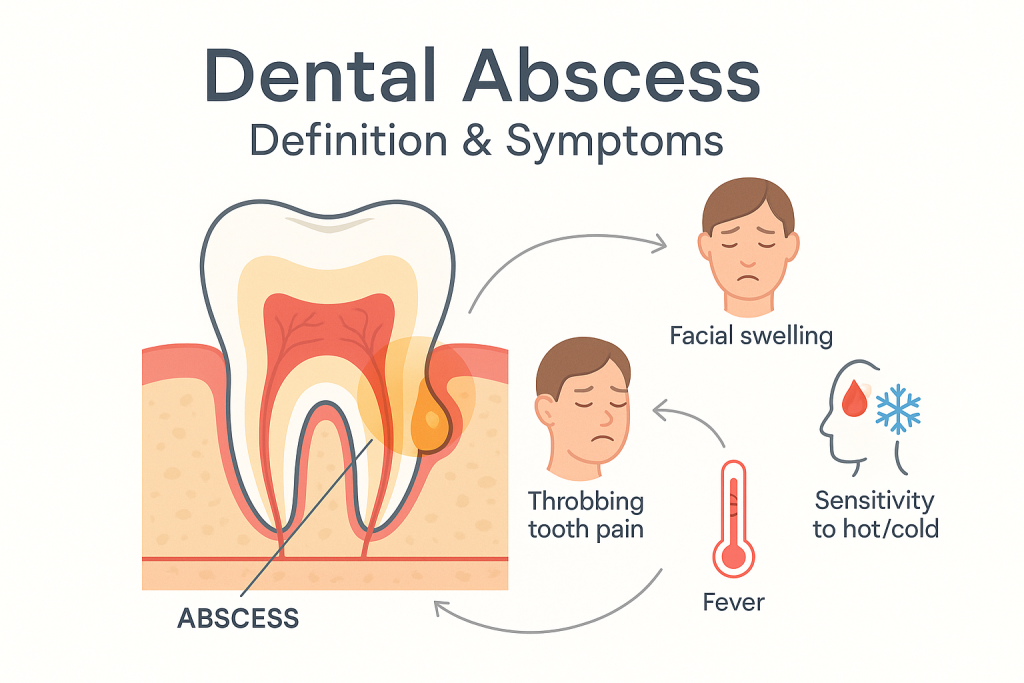
A dental abscess forms when bacteria reach tissue that your body can’t clear on its own. The infection often begins in enamel damage, gum pockets, or a break in the tooth structure. Once bacteria move deeper, the immune system sends white blood cells to fight the problem. Pus collects as a result, and pressure builds inside the area.
The tooth’s pulp chamber is one common place where this process begins. The pulp contains nerves and blood vessels, so once bacteria reach it, discomfort can become intense. A deep cavity, fractured tooth, or injured tooth can expose this inner area and allow bacteria to spread toward the root.
Gum disease can also lead to an abscess. When gums pull away from teeth, pockets form where bacteria collect. A periodontal abscess may develop beside the tooth rather than inside it. This type can still cause swelling, tenderness, and drainage.
Some abscesses are linked to prior dental work. Crowns, fillings, or build-up material can fail over time if decay forms around the edges or bacteria get trapped underneath. Dental work such as older restorations does not cause an abscess by itself, but gaps, leaks, and untreated decay around restorations can create a path for infection.
Dental implants can cause dental abscesses in some cases when bacteria infect the surrounding gum or bone. This is usually tied to poor healing, peri-implant disease, or plaque buildup around the implant area.
Common Causes of Tooth Infection and Risk Factors
Most dental infections start with everyday oral problems that go untreated. A small cavity can seem minor until bacteria move through enamel and dentin. Gum bleeding may look harmless until pockets deepen and bacteria reach tissue below the gumline. A chip may not hurt right away, but it can still expose the tooth to infection.
The most common causes include:
- Untreated dental cavities that allow bacteria to reach the pulp
- Gum disease that creates infected pockets around teeth
- Cracks, chips, or injury that expose inner tooth layers
- Loose crowns, damaged fillings, or leaking restorations
- Poor oral hygiene that allows plaque and bacteria to build
- Dry mouth, smoking, diabetes, or immune system problems that reduce the body’s ability to fight infection
Odontogenic infections begin in the teeth or tissues that support them. A dentoalveolar abscess affects the tooth and nearby bone. Endodontic infections begin inside the tooth pulp and often move toward the root tip.
Pain is not always the first sign. Some people feel pressure before they feel sharp discomfort. Others notice swelling in the gums caused by pus collecting under the tissue. A bad taste, bad breath, fever, or swollen lymph nodes may also appear.
| Cause | How It Can Lead to an Abscess | Common Warning Signs |
| Deep cavity | Bacteria move through enamel into the pulp | Sensitivity, throbbing, pain when chewing |
| Gum disease | Bacteria collect in deep gum pockets | Swollen gums, bleeding, pus, loose teeth |
| Cracked tooth | Bacteria enter through a fracture | Sharp pain, pressure, sensitivity |
| Failed restoration | Decay forms near a crown or filling | Aching, bad taste, swelling |
| Dental trauma | Nerves and blood vessels become damaged | Darkening tooth, swelling, delayed pain |
Why Periapical Abscesses Cause Severe Tooth Pain
Periapical abscesses form at the tip of the root. They usually start when bacteria infect the pulp inside the tooth. As the infection caused by decay or injury moves downward, pus gathers near the root tip and creates pressure in the surrounding bone.
This pressure is why a tooth abscess can hurt so much. The area has little room to expand, so swelling presses against nerves and tissue. Pain may feel deep, throbbing, or constant. It may spread to the jaw, ear, temple, or neck. Biting down can make it worse because pressure travels through the affected tooth.
A periapical abscess often needs dental treatment to stop the source of infection. Antibiotics may help control spread in some situations, but they do not remove infected pulp or drain pus trapped at the source. A dentist may recommend root canal treatment to clean the inside of the tooth and preserve it. If the damage is too severe, extraction may be needed.
Trying to drain a tooth abscess at home can push bacteria deeper, injure the gums, and delay proper care. Warm saltwater rinses may offer short-term comfort, but they do not treat the infection. Over-the-counter pain relievers may reduce discomfort, but they cannot remove pus or repair the underlying problem.
If swelling, fever, or difficulty swallowing develops, the situation should be treated as urgent. Emergency Dental Squad can help connect you with a local emergency dentist when symptoms appear outside normal office hours or when pain becomes hard to manage.
Symptoms in Teeth and Gums That Mean You Should Act Quickly
A dental abscess can become dangerous when infection spreads beyond the original area. The tooth spreads bacteria into nearby tissue when pressure and pus break through natural barriers. Once bacteria move into the jaw, cheek, neck, or bloodstream, the risk rises.
Contact a dentist promptly if you notice:
- Severe or worsening pain near one tooth
- Swelling in the gums, face, cheek, or jaw
- Pus, drainage, or a bad taste in the mouth
- Fever, chills, or swollen lymph nodes
- Pain when biting, chewing, or touching the tooth
- Trouble opening your mouth, swallowing, or breathing
Cellulitis can develop when bacteria spread into soft tissue. This may cause redness, warmth, swelling, and tenderness in the face or neck. If breathing or swallowing becomes difficult, seek emergency medical care right away.
A dental abscess rarely goes away on its own. Pain may ease if the pocket drains, but the infection can remain active. That temporary relief can be misleading. Without treatment, bacteria may continue damaging the root, bone, and nearby teeth.
Some people ask how quickly an abscess can spread. The timing varies. A mild infection may worsen over days, while a severe one can escalate within hours. Fever, facial swelling, and rapid changes are warning signs that you should not wait.
A doctor may be needed if symptoms suggest the infection is affecting the body beyond the tooth. A dentist is still needed to treat the dental source. In many cases, both medical and dental care work together when symptoms are severe.
Treatment Options for a Tooth Abscess
The right treatment depends on the location, severity, and cause of the abscess. A dentist will examine the area, ask about symptoms, and may take X-rays to see whether the infection involves the root, bone, or nearby teeth.
Common treatment options include drainage, root canal therapy, extraction, antibiotics, or a combination of care. Drainage releases pus and reduces pressure. Root canal therapy removes infected pulp, cleans the canal, and seals the tooth. Extraction removes a tooth that cannot be saved. Antibiotics may be prescribed when swelling is spreading, fever is present, or the patient has added health risks.
For a periodontal abscess, care may include draining the pocket, deep cleaning around the gumline, and treating the gum disease that allowed bacteria to collect. For an abscess linked to crowns or older restorations, the dentist may need to remove decay, repair the restoration, or replace it.
At-home steps can support comfort while you wait for care, but they should not replace professional treatment. Rinse gently with warm saltwater. Avoid chewing on the affected side. Use cold compresses for swelling. Take over-the-counter pain medication only as directed on the label or by a healthcare professional.
Do not place aspirin directly on the gums. Do not cut into swollen tissue. Do not ignore drainage because the pressure feels better afterward. These choices can irritate tissue, worsen infection, or delay care.
Emergency Dental Squad is built for moments when patients need fast help finding local emergency dental care. Whether symptoms begin at night, during a weekend, or before a busy workday, the service helps connect you with a local emergency dentist who can evaluate the problem and recommend the right treatment.
Get Help from Emergency Dental Squad when Abscess Symptoms Appear
Dental abscess symptoms can feel frightening, but fast action makes a real difference. Pain, swelling, pus, fever, and pressure around a tooth are signs that your body is fighting an infection that needs professional care.
Emergency Dental Squad helps patients find urgent dental support when waiting is not a good option. If you have sudden pain, facial swelling, drainage, or signs of a spreading infection, reach out for help right away. Getting connected with an emergency dentist can help you get evaluated quickly, relieve discomfort, and reduce the risk of serious complications.
When an abscess is suspected, don’t wait for it to settle on its own. Prompt care gives you the best chance of stopping the infection and getting back to normal with less stress.
