
How to Treat a Dental Abscess: Effective Treatment Tips for Abscess Relief
A dental abscess can turn from a dull ache into severe pain quickly. Home care may ease symptoms for a short time, but it won’t remove the infection. If you’re looking for how to treat a dental abscess, a dentist needs to drain the abscess, treat the infected tooth, or remove the source of the problem so the infection doesn’t spread.
An abscess is a pocket of pus caused by bacteria. It may form near the root of a tooth, in the gums, or in the bone that supports the teeth. Many cases begin with untreated decay, a cracked tooth, gum disease, or an injury that lets bacteria move deeper into the mouth.
Pain, swelling, fever, a bad taste, and pressure near one tooth are warning signs that shouldn’t be ignored. Emergency Dental Squad helps patients find emergency dental care when symptoms are painful, sudden, or getting worse. If you need fast help, our team can connect you with a dentist who can evaluate the infection and recommend the right treatment.
What a Dental Abscess Is and Why It Happens
A dental abscess forms when bacteria enter a vulnerable area of the mouth and the body responds by creating pus. The pressure from that pus can cause throbbing pain, swelling, and tenderness around the affected tooth or gum tissue.
There are a few common types of abscesses. A periapical abscess forms near the tip of the tooth root and often starts inside the tooth. A periodontal abscess forms in the gums, usually because of gum disease or trapped debris. A gum abscess can also develop when food or other debris gets lodged under the gumline and bacteria multiply. Understanding why dental abscesses form can help you spot risks earlier and seek care before symptoms get worse.
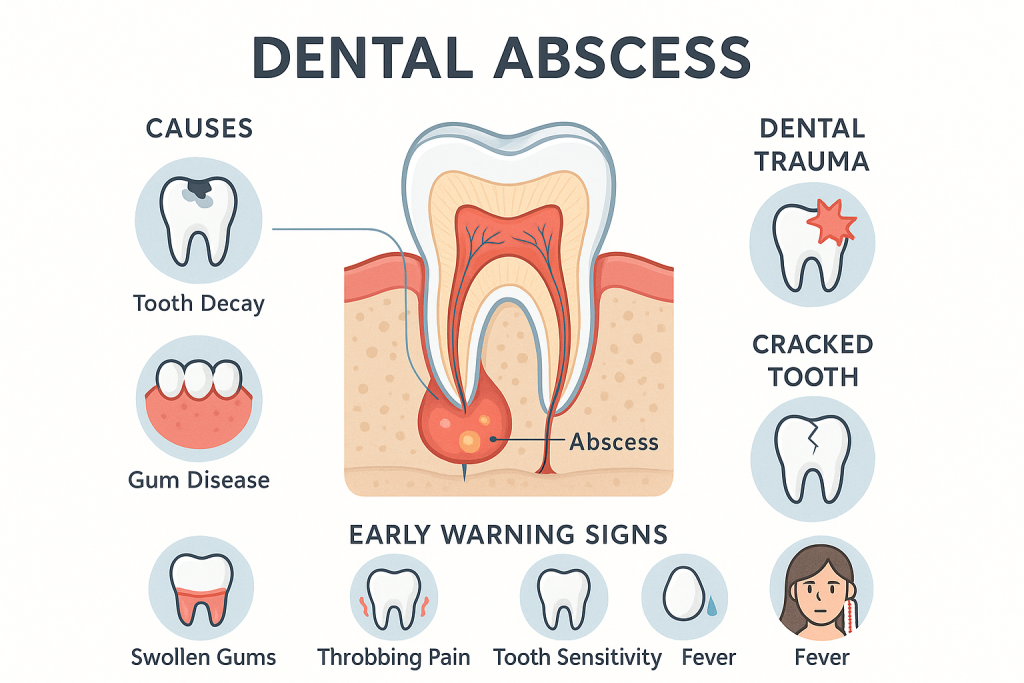
Dental abscesses are usually treated by removing the source of the infection. That may mean draining the pocket of pus, cleaning the inside of the tooth with a root canal, treating gum infection, or performing tooth extraction when the tooth can’t be saved.
Common causes include:
- Deep tooth decay that reaches the inner pulp
- Cracked, broken, or injured teeth
- Advanced gum disease
- A failed or damaged dental restoration
- Food or debris trapped under the gums
- Poor oral hygiene that allows bacteria to build up
- Delayed dental treatment after tooth pain begins
An abscess won’t heal safely just because pain fades for a while. Sometimes pressure releases on its own, which can lower discomfort, but the infection may still be active. That’s why it’s important to see a dentist even if symptoms come and go.
Symptoms That Mean Emergency Dental Care Is the Right Choice
Abscess symptoms can vary, but they often become harder to ignore as pressure builds. The pain may feel sharp, throbbing, or constant. It may spread to the jaw, ear, cheek, or neck. Some people also notice swelling near the gumline or a small bump that looks like a pimple on the gums.
A tooth abscess can also make chewing painful. Hot, cold, or sweet foods may trigger sudden sensitivity. If the abscess drains into the mouth, you may notice a bad taste, bad breath, or fluid with an unpleasant odor.
Some symptoms suggest that the infection needs urgent care. Call for emergency dental help if you have facial swelling, fever, trouble opening your mouth, trouble swallowing, or pain that doesn’t improve with an over-the-counter pain reliever.
| Symptom | What It May Mean | What to Do |
| Throbbing tooth pain | Pressure from infection near the root or gums | Schedule a dental appointment as soon as possible |
| Swollen gums or jaw | Inflammation and pus buildup | Seek same-day dental care |
| Fever or swollen lymph nodes | The infection may be affecting the body beyond the tooth | Contact an emergency dental clinic |
| Bad taste or pus | The abscess may be draining | Still see a dentist, even if pain eases |
| Trouble swallowing or breathing | Possible spread into deeper tissues | Get urgent medical or dental care right away |
Pain relief matters, but the bigger goal is stopping the infection. Dental infections can spread to nearby tissue, surrounding teeth, and other parts of the body. Quick treatment lowers the risk of complications and helps protect your health.
A dental abscess should be treated quickly, but some symptoms call for emergency dental care. Severe pain, spreading swelling, fever, or trouble swallowing can mean the infection is moving beyond the original site. Waiting may make treatment harder and recovery longer.
Call for urgent help if you notice swelling in your face or jaw, pain that keeps you from sleeping, fever, pus, a broken tooth with swelling, or a toothache that feels worse by the hour. If you have trouble breathing, trouble swallowing, or swelling near the eye or neck, seek emergency medical care right away.
Emergency treatment focuses on three goals. First, reduce pain. Second, control the infection. Third, prevent the problem from spreading or damaging nearby teeth and tissue. The dentist may drain the abscess, prescribe antibiotics when needed, begin a root canal, or remove the tooth if that’s the safest option.
You don’t have to decide on your own whether your symptoms are serious enough. Emergency Dental Squad can help you find a dentist who handles urgent tooth abscess treatment and can explain what to do next.
Safe Pain Relief Steps You Can Take before Your Appointment
At-home care can help you manage discomfort while you wait to see a dentist. These steps are not a cure, and they should not replace professional abscess treatment. They can make the pain easier to handle and may reduce irritation around the infected area.
Start by rinsing gently with warm salt water. Don’t swish aggressively. A calm rinse can help clean the mouth, soothe irritated tissue, and loosen debris near the gums.
You can also take an over-the-counter pain reliever, such as ibuprofen or acetaminophen, as directed on the label. Don’t place aspirin or any pain medicine directly on the gums or tooth. That can burn tissue and make the area more painful.
Use these steps for temporary comfort:
- Rinse with warm salt water several times a day
- Keep your head elevated when resting
- Avoid chewing on the painful side
- Choose soft foods until you’re treated
- Stay away from very hot, cold, sugary, or acidic foods
- Use a cold compress on the outside of the cheek for swelling
- Follow medication labels and avoid doubling doses
Never try to drain a dental abscess at home. Cutting, squeezing, or puncturing swollen tissue can push bacteria deeper, cause injury, and make the infection harder to treat. Online searches for how to drain a gum abscess at home can lead to unsafe advice. A dentist can drain the area under clean conditions and reduce the risk of the infection spreading.
Antibiotics may be part of treatment, but they are not always enough on their own. A dental abscess usually needs dental care to remove the source of infection. In some cases, a dentist may prescribe amoxicillin/clavulanate or another antibiotic if swelling has spread, symptoms are severe, or the patient has added health risks.
What Happens During Abscess Treatment at the Dental Office
A dentist will first examine your mouth, review your symptoms, and check the affected tooth and gums. X-rays may be used to see whether the infection is near the root, inside the tooth, or in the bone around it. This helps the dentist decide which treatment will provide lasting relief.
Incision and drainage may be needed when pus has collected in a swollen pocket. The dentist numbs the area, makes a small opening, and allows the pocket to release pus. They may rinse the area to remove bacteria and other debris. In some cases, a small drain is placed for a short time to keep the area open while fluid continues to leave.
If the tooth can be saved, root canal treatment may be recommended. During a root canal, the dentist removes infected pulp from inside the tooth, cleans the canals, seals the space, and often restores the tooth with a crown. This can stop the infection while keeping the natural tooth in place.
If the tooth is badly damaged or the infection can’t be controlled another way, tooth extraction may be the safest option. Removing the tooth also removes the source of infection. Your dentist can then talk with you about replacement options once the area heals.
Professional care may include:
- Exam and dental X-rays
- Draining the abscess
- Root canal treatment
- Tooth extraction when needed
- Antibiotics for spreading infection
- Follow-up care to confirm healing
The cost can vary based on whether you need draining, a root canal, medication, or extraction, so reviewing typical abscess treatment costs can help you prepare for the appointment.
Many people worry that a dentist won’t pull an abscessed tooth. In some cases, a dentist may delay extraction if swelling, limited mouth opening, or medical concerns make immediate removal less safe. That doesn’t mean you’ll be left untreated. The dentist may drain the infection, prescribe medication, reduce swelling, and plan the safest time for the next step.
How to Lower Your Risk of Future Dental Abscesses
Preventing dental abscesses starts with keeping bacteria under control and treating small problems before they reach the tooth root or gums. Brushing twice a day with fluoride toothpaste, flossing daily, and keeping routine dental visits can lower the risk of decay and gum disease.
Small cavities don’t always hurt at first. Gum disease can also build slowly. Regular dental exams help catch these issues before they turn into painful infections. If a filling, crown, or tooth feels loose or cracked, schedule care promptly. Damaged areas can create openings where bacteria enter.
Your daily habits matter too. Drink water often, limit sugary snacks, and avoid using teeth to open packages or chew hard objects. If you play sports or grind your teeth at night, ask a dentist about a mouthguard. Protecting teeth from injury helps prevent cracks that can lead to infection.
Pay attention to early symptoms. Lingering sensitivity, gum swelling, pain when biting, or a pimple-like bump on the gums should be checked. Treating a small dental problem is usually simpler, faster, and less painful than treating a full abscess.
Get Fast Help from Emergency Dental Squad
A dental abscess needs prompt attention. Home remedies may ease pain for a short time, but they can’t remove the infection or protect the tooth on their own. The safest step is to contact a dentist who can diagnose the problem, drain the abscess when needed, and recommend the right treatment.
Emergency Dental Squad helps patients connect with local dentists for urgent tooth pain, swelling, infection, broken teeth, and abscess concerns. If your symptoms are worsening or you’re unsure what to do next, don’t wait for the pain to become harder to manage.
Call Emergency Dental Squad now for help finding fast dental care near you. A same-day appointment can help you get a clear diagnosis and the next step toward relief.
