
How Much Does Dental Abscess Treatment Cost?
A dental abscess can bring severe pain, swelling, pressure, and worry about what comes next. Treatment may involve an emergency exam, X-rays, antibiotics, drainage, a root canal, extraction, or follow-up care, depending on where the infection started and how far it has spread. The cost can also change based on your location, the dentist’s fees, and whether you have insurance.
For many patients, how much does dental abscess treatment cost depends on the exact care needed to stop the infection and protect the tooth or surrounding tissue. A simple visit with medication may cost far less than a root canal, crown, or surgical extraction. The fastest way to get a clear estimate is to have an emergency dentist examine the tooth and explain your options before treatment begins.
Emergency Dental Squad helps patients across the United States connect with local dentists and urgent dental providers through a 24/7 support service. If you’re dealing with swelling, intense pain, or abscess symptoms, fast attention can protect your health and help you avoid higher costs later.
What Affects Abscessed Tooth Treatment Costs?
Abscessed tooth treatment costs can vary widely because no two infections are exactly alike. A small gum abscess may need drainage, cleaning, and medication. A deeper infection inside the tooth may need root canal therapy. If the tooth is too damaged to save, extraction may be the safest option. The final price depends on what the dentist finds during the exam.
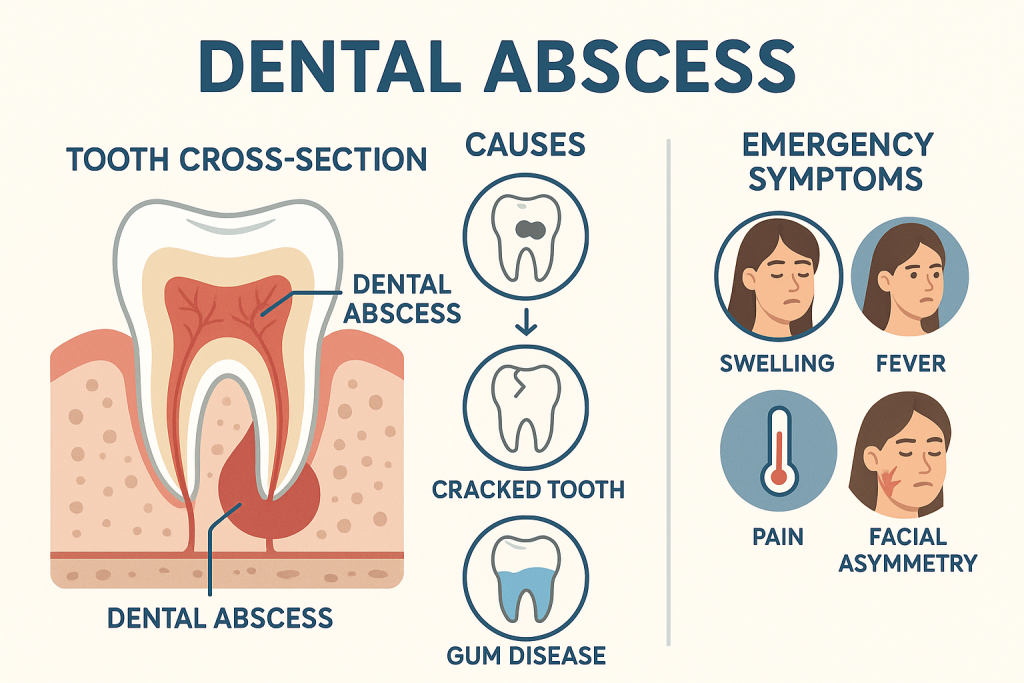
Location also matters. Dental fees often run higher in large metro areas than in smaller towns. After-hours visits may carry different fees than standard office appointments. A clinic may also charge separately for the emergency exam, digital X-rays, local anesthesia, sedation, prescriptions, drainage, or follow-up visits.
Insurance can lower the amount you pay out of pocket, but coverage depends on the plan. Some plans cover exams and X-rays well, while major services such as root canal treatment or crowns may have coinsurance, deductibles, annual limits, or waiting periods.
Common factors that affect abscess cost include:
- The type and location of the abscess
- Whether the infection involves the tooth root, gum tissue, jaw, or surrounding areas
- The need for X-rays, drainage, antibiotics, root canal treatment, extraction, or a crown
- The dentist’s location, office fees, and emergency appointment policies
- Your dental insurance benefits, deductible, annual maximum, and network rules
- Whether you need sedation, specialist care, or multiple visits
A low-cost visit may feel appealing when you’re in pain, but the right treatment matters most. If the infection source remains, symptoms can return and the total cost can rise. A dentist can tell you whether the tooth can be saved, whether removal is needed, and what steps will stop the infection from spreading.
Average Treatment Costs for a Dental Abscess
The ranges below are general estimates. Your actual treatment costs may be higher or lower based on your city, the dentist, the severity of the infection, and your insurance. Emergency Dental Squad can help connect you with a local dentist or urgent dental provider who can discuss fees, appointment timing, and payment options before you commit to care.
| Treatment or Service | What It Does | Typical Cost Range Without Insurance |
| Emergency exam and X-rays | Identifies the abscess, checks the root and bone, and helps the dentist choose treatment | $75 to $300 |
| Abscess drainage | Releases pus and pressure when drainage is appropriate | $100 to $500 |
| Antibiotics | Helps control bacterial infection when prescribed by a dentist | $10 to $100 |
| Root canal | Removes infected pulp, cleans the canal, and helps save the natural tooth | $700 to $1,800 |
| Simple extraction | Removes a tooth that can’t be saved and eliminates the infection source | $150 to $450 |
| Surgical extraction | Removes a broken, impacted, or difficult tooth | $250 to $900 or higher |
| Crown after root canal | Protects a weakened tooth after treatment | $800 to $2,000 |
A root canal often costs more than extraction upfront, especially if a crown is needed afterward. Still, saving the natural tooth may help you avoid replacement costs later. Extraction may be less expensive at first, but a missing tooth can affect chewing, bite alignment, and appearance. Replacing it with an implant, bridge, or partial denture can add to long-term dental costs.
Antibiotics are usually not a complete fix on their own. They may reduce swelling and help control infection, but the dentist still needs to address the source. That may mean drainage, root canal therapy, or extraction. Taking leftover medication or delaying care can allow the abscess to worsen.
Tooth Abscess Treatments and What Each Option Means
Tooth abscess treatments focus on two goals: stopping the infection and relieving pain. The dentist will first examine your mouth, review symptoms, take X-rays when needed, and decide where the infection started. From there, treatment is based on whether the tooth can be saved.
A root canal may be recommended when the infection is inside the tooth, but enough healthy tooth structure remains. During the procedure, the dentist or specialist removes infected pulp, cleans the canal, disinfects the area, and seals the tooth. A crown may be placed later to protect the tooth from fracture. This option can preserve your bite and natural smile.
Extraction may be recommended when the tooth is severely broken, loose, decayed, or damaged beyond repair. Removing the tooth also removes the infection source. The dentist may discuss replacement options once the area heals, especially if the missing tooth affects chewing or appearance.
Drainage may be used when pus has collected in the gum or near the tooth. This can reduce pressure and pain quickly. Drainage is often paired with another treatment because the infection may return if the cause remains.
Antibiotics may be prescribed when swelling has spread, fever is present, the immune system needs support, or the dentist wants to control infection before or after a procedure. They can help, but they don’t clean out a dead nerve, repair decay, or remove a cracked tooth.
Prompt dental treatment is the safest path. A dentist can explain how to treat the infection based on your symptoms, X-rays, and whether the tooth can be saved. Seek urgent care right away if swelling spreads to your face, jaw, neck, or eye area. Trouble swallowing, trouble breathing, fever, confusion, or feeling very ill can signal a medical emergency. In those cases, call emergency services or go to the nearest emergency room.
Insurance, Payment Plans, and Ways to Lower Out-of-Pocket Costs
Dental insurance can make abscess treatment easier to afford, but it rarely works the same for every patient. A plan may cover preventive care at a high percentage and cover major services at a lower percentage. Emergency exams, X-rays, extractions, root canal treatment, and crowns may each fall under different benefit categories.
Before your dental appointment, ask your insurance provider what applies to your situation. If you’re in severe pain, don’t wait days for every detail, but get the basics as soon as possible. Many offices can also help verify benefits before treatment starts.
Questions to ask about insurance and costs include:
- Is the emergency exam covered?
- Are X-rays covered at this visit?
- Is the dentist in network or out of network?
- What is my deductible?
- How much of a root canal or extraction does my plan pay?
- Does my plan have a waiting period for major dental care?
- How much of my annual maximum has already been used?
- Will a crown after a root canal be covered?
If you don’t have insurance, ask about payment plans, savings plans, third-party financing, dental schools, community clinics, and phased care. Some dentists can treat the infection first, then schedule restorative work after symptoms improve. That can make costs easier to manage while still protecting your health.
Avoid trying to drain a tooth abscess at home. It may push bacteria deeper into tissue, worsen swelling, or delay proper care. Warm salt water rinses, cold compresses, and over-the-counter pain relievers may help you cope until your appointment, but they don’t replace dental treatment.
When an Abscess Becomes a Dental Emergency
An abscess should be taken seriously because infection can spread beyond the tooth. Pain that keeps you awake, swelling that changes your face shape, fever, or a bad taste from drainage are signs you need care soon. A dental emergency can also include a cracked tooth with swelling, a toothache that doesn’t respond to pain relievers, or jaw swelling that gets worse over several hours.
Not every toothache requires same-day treatment, but certain urgent infection signs should never be ignored. Emergency Dental Squad connects patients with local dentists who can evaluate urgent symptoms, explain treatment, and help you move forward without endless searching. The service is built for people who need fast exams, digital X-rays, pain relief, and same-day help when available.
When you call for help, be ready to share your symptoms, how long they’ve been happening, where the pain is located, what makes it better or worse, and whether you have fever or swelling. Also have your insurance card, medication list, allergy information, and preferred pharmacy ready. These details help the dental team prepare for your visit and give you more accurate cost guidance.
If you’re waiting for your appointment, rinse gently with warm salt water. Use a cold compress on the outside of the face for swelling. Take over-the-counter pain relief only as directed on the label or by a healthcare professional. Don’t place aspirin directly on your gum or tooth because it can burn the tissue. Don’t use sharp tools or pressure to force drainage.
Fast care can lower the chance of bigger problems. It can also help you avoid repeated urgent visits, stronger pain, and higher dental costs later.
Call Emergency Dental Squad for Fast Abscess Care and Clear Next Steps
A dental abscess is painful, stressful, and hard to ignore. Cost concerns are real, but waiting can make the infection harder and more expensive to treat. The right dentist can explain whether you need antibiotics, drainage, root canal care, extraction, or another treatment plan, then review your expected costs before work begins.
Emergency Dental Squad is available 24/7 to help connect you with emergency dental care options near you. Whether you have insurance, no insurance, severe pain, swelling, or an urgent question about treatment costs, our team can help connect you with a local dentist or urgent dental provider as soon as possible.
Call Emergency Dental Squad now at (855) 907-3090 to speak with a local dentist, ask about same-day service, and take the next step toward relief.
