
Tooth Abscess Treatment: When Is a Dental Abscess an Emergency?
A dental abscess can start with a dull ache, a swollen gum, or sensitivity that seems manageable at first. The concern is that infection can spread quickly once bacteria move deeper into the tooth, jaw, face, or surrounding tissue. Knowing when is a dental abscess an emergency helps you act before pain, swelling, or fever becomes harder to control.
A tooth abscess is a pocket of infection that often forms near a tooth root or in the gum. It may come from deep decay, a cracked tooth, gum disease, an injury, or dental work that left the inner tooth vulnerable. Once infection builds, pressure increases. That pressure can cause severe pain, facial swelling, a bad taste in the mouth, and sensitivity that makes eating or drinking difficult.
Emergency Dental Squad helps patients across the U.S. connect with local emergency dentists when dental pain can’t wait. If you’re dealing with a possible abscessed tooth, prompt care from a dental provider can relieve pain, protect nearby teeth, and lower the risk of complications.
What a Severe Dental Abscess Means for Your Health
A dental abscess forms when bacteria reach tissue inside or around a tooth. The body responds by sending infection-fighting cells to the area. Pus collects, pressure builds, and the surrounding gum or jaw may swell. In the early stages, the ache may come and go. As the infection grows, the ache is consistent and may feel sharp, throbbing, or deep in the jaw.
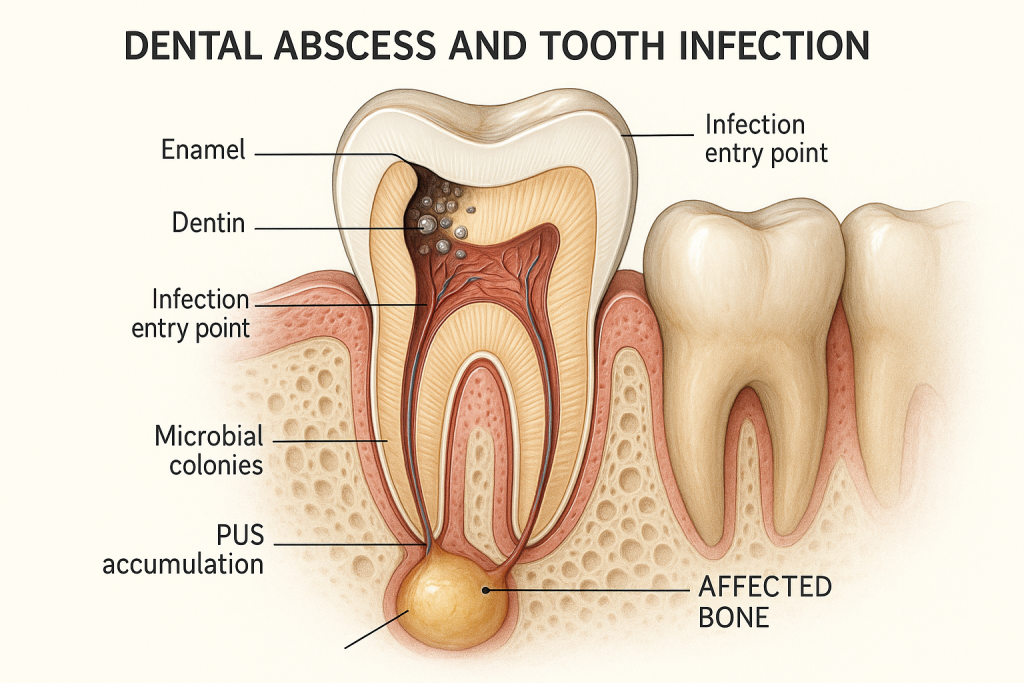
There are different types of dental abscesses. A periapical abscess begins at the tip of the tooth root, often from untreated decay or trauma. A periodontal abscess starts in the gum tissue, usually linked to gum disease or trapped debris below the gumline. Understanding what caused the infection can help a dentist choose the right treatment and reduce the chance of the same problem returning. Both types can cause pain, swelling, and pus. Both need a dentist.
A tooth infection doesn’t stay predictable. Pain may temporarily improve if the abscess drains, but that doesn’t mean the infection is gone. In some cases, the pressure drops after pus escapes into the mouth. The area may feel better for a short time, while bacteria remain active beneath the surface.
A tooth abscess is serious because the mouth is close to the jaw, sinuses, throat, and bloodstream. If infection spreads, it can affect breathing, swallowing, facial tissues, or overall health. That’s why dental abscesses should never be handled with home remedies alone. Rinsing, cold compresses, and over-the-counter medicine may help you cope briefly, but they don’t remove the infection.
The safest move is to get dental care before symptoms escalate. An emergency dentist can examine the tooth, take dental X-rays when needed, identify the source, and recommend treatment that targets the infection instead of only masking pain.
Tooth Abscess Danger Signs: Severe Pain, Fever, and Swelling
Some dental symptoms can wait for a regular appointment. Abscess symptoms are different when they point to spreading infection, severe inflammation, or pressure near the airway. If taking painkillers doesn’t help, or pain returns quickly after medication wears off, don’t wait several days to be seen.
Seek emergency dental care if you notice:
- Severe pain that throbs, spreads to the jaw or ear, or keeps you from sleeping
- Swelling in the gum, cheek, jaw, face, or neck
- Fever, chills, fatigue, or feeling unusually ill
- Pus, a pimple-like bump on the gum, or a bad taste in the mouth
- Trouble swallowing, breathing, speaking, or opening your mouth
- Neck swelling or swelling that moves toward the eye, throat, or under the jaw
- A loose tooth or pain when biting down
- Symptoms that worsen quickly after a toothache, injury, or cracked tooth
A dental abscess needs urgent treatment when it’s accompanied by fever, spreading swelling, or symptoms that affect breathing or swallowing. These signs may mean the infection is moving beyond the tooth and gum tissue.
Go to an emergency room right away if swelling affects your airway, you can’t swallow fluids, you have confusion, chest pain, rapid heartbeat, or signs of sepsis. Sepsis can begin when infection enters the bloodstream and triggers a body-wide response. Early signs may include fever, chills, fast breathing, dizziness, extreme weakness, or feeling very unwell.
If your symptoms are painful but not affecting breathing or swallowing, an emergency dentist is usually the right place to start. Emergency dentists can treat the source of the tooth abscess, while an emergency room may only be able to manage immediate medical risks and advise you to see a dentist for the tooth itself.
Dentist vs Emergency Room: Where to Go
Choosing between an emergency dentist and the emergency room can be stressful when pain is high. A simple rule can help: dental source, dentist first. Airway, severe swelling, or whole-body illness, ER first.
An emergency dentist can diagnose and treat the infected tooth. That may include draining the abscess, prescribing medication when appropriate, performing a root canal, or removing a tooth that can’t be saved. The dentist can also check nearby teeth and gum tissue for damage.
An emergency room is the safer choice when symptoms suggest a medical health emergency. ER doctors can treat serious swelling, dehydration, fever, breathing trouble, and signs of infection spreading through the body. They may give antibiotics or other medical support, but most ERs don’t provide root canal treatment, tooth extraction, or dental restoration.
| Symptom or Situation | Best First Step | Why It Matters |
| Tooth pain with localized gum swelling | Call an emergency dentist | The dentist can find and treat the infected tooth |
| Severe pain that prevents sleep or eating | Call an emergency dentist | Pain may signal pressure, nerve involvement, or infection |
| Fever with facial swelling | Seek urgent care quickly, dentist or ER depending on severity | Fever can mean infection is spreading |
| Trouble breathing or swallowing | Go to the emergency room | Airway symptoms need immediate medical care |
| Neck swelling, eye swelling, or swelling under the jaw | Go to the emergency room | Infection may be moving into higher-risk tissue spaces |
| Pus, bad taste, or gum boil without airway symptoms | Call an emergency dentist | Drainage may reduce pressure but won’t cure the infection |
| Dental injury with a cracked or knocked-out tooth | Call an emergency dentist right away | Fast treatment may help save the tooth |
Emergency Dental Squad can help connect you with a local dental provider when you’re unsure where to turn for urgent dental symptoms. If your symptoms sound medically dangerous, seek emergency medical care first.
What Emergency Dental Treatment May Involve
Emergency dental treatment depends on the cause, the location of the abscess, the amount of swelling, and whether the tooth can be saved. The first step is usually an exam. The dentist may ask when pain started, whether swelling has changed, what triggers pain, and whether you’ve had fever or drainage.
Dental X-rays may be used to look for infection around the root, bone changes, deep decay, fractures, or issues with nearby teeth. Once the dentist knows where the infection started, treatment can focus on the source.
Drainage may be needed when pus has collected and pressure is causing pain. The dentist may make a small opening in the abscess or clean the infected area so fluid can escape safely. This can reduce pressure, but it’s usually only one part of treatment.
If the infection began inside the tooth and the tooth can be saved, a root canal may be recommended. During root canal treatment, infected tissue is removed from inside the tooth, the canals are cleaned, and the tooth is sealed. A crown may be needed later to restore strength.
If the tooth is too damaged, an extraction may be the safest option. Removing the tooth can remove the source of infection when repair isn’t realistic. The dentist can talk through replacement options after the immediate infection and pain are under control.
Antibiotics may be prescribed when infection has spread, swelling is significant, or there are health concerns that raise risk. Antibiotics alone are not a full fix for most dental abscesses because they don’t remove infected pulp, deep decay, or a fractured tooth. They may help control infection while dental treatment addresses the cause.
Pain relief is also part of care. A dentist may recommend safe medication options, cold compresses, or follow-up steps based on your medical history. Treatment can vary depending on the exam, imaging, infection severity, and procedure needed, so ask the provider about the cost of abscess treatment before care begins whenever possible. Tell the provider about allergies, current medications, pregnancy, immune conditions, diabetes, heart issues, or any recent hospital care.
What to Do before and after Urgent Care
While you’re waiting to see a dentist, focus on reducing irritation and watching for symptoms that would make the situation medically urgent. Don’t try to drain a gum abscess at home. Squeezing or cutting swollen tissue can push bacteria deeper, increase pain, or create a larger wound.
Before your visit:
- Rinse gently with warm salt water to help keep the mouth clean
- Use a cold compress on the outside of the cheek for swelling
- Take over-the-counter pain medicine only as directed on the label
- Avoid heat on the swollen area, since it may increase throbbing
- Don’t chew on the painful side
- Don’t place aspirin directly on the gum or tooth
- Save any broken tooth pieces or lost dental work if injury is involved
- Call Emergency Dental Squad if you need help finding an emergency dentist
After urgent treatment, follow the dentist’s instructions closely. Take prescribed medication exactly as directed. Don’t stop antibiotics early unless your provider tells you to. Return for follow-up care if a root canal, crown, extraction site check, or deep cleaning is needed.
Prevention matters once the immediate problem is handled. Brush twice daily with fluoride toothpaste, floss every day, and schedule routine dental visits. Small cavities, gum pockets, cracked fillings, and worn crowns are easier to treat before they become an abscess emergency. If you grind your teeth, play contact sports, or have old dental work, ask a dentist how to reduce your risk of cracks and infection.
Pay attention to early warning signs. Lingering sensitivity, pain when biting, gum swelling, or a recurring pimple on the gum should be checked. Waiting until pain becomes severe often means the infection has had time to grow.
Emergency Dental Squad Can Help You Find Care Fast
A dental abscess can feel scary, especially when pain starts at night, swelling appears on a weekend, or you don’t have a regular dentist. You don’t have to spend hours calling offices while symptoms get worse.
Emergency Dental Squad helps connect patients with local emergency dentists who can evaluate urgent concerns like tooth abscess pain, jaw swelling, broken teeth, toothaches, extractions, and root canal needs. Same-day options may be available, and help is available 24/7.
