
Why Does a Dental Abscess Happen?
A tooth abscess can turn from a dull ache into severe pain quickly. The reason why does a dental abscess happen usually starts with bacteria entering an area they shouldn’t reach. When bacteria move inside a tooth, into the gums, or around the root, the body responds to infection. Pus can collect in the area, pressure builds, and the tooth or surrounding gums may become swollen, tender, and painful.
A dental abscess is not the same as a minor toothache. It often points to a deeper problem, such as untreated dental cavities, gum disease, tooth trauma, or a failed root canal treatment. Some dental abscesses are caused by decay that reaches the tooth pulp. Others begin in the gums or bone around a tooth. Either way, the infection needs dental care.
Emergency Dental Squad helps people across the U.S. find urgent dental care when pain, swelling, or signs of infection can’t wait. If your mouth hurts, your face is swelling, or you suspect an abscessed tooth, fast action can help relieve pain and lower the risk of the infection spreading.
What a Tooth Abscess Is and What Causes It
A tooth abscess is a pocket of pus caused by a bacterial infection. It can form at the tip of the tooth root, inside the gum, or in the tissues that support the tooth. Dental abscesses are usually painful because the infection creates pressure in a tight space filled with nerves, blood vessels, and sensitive tissues.
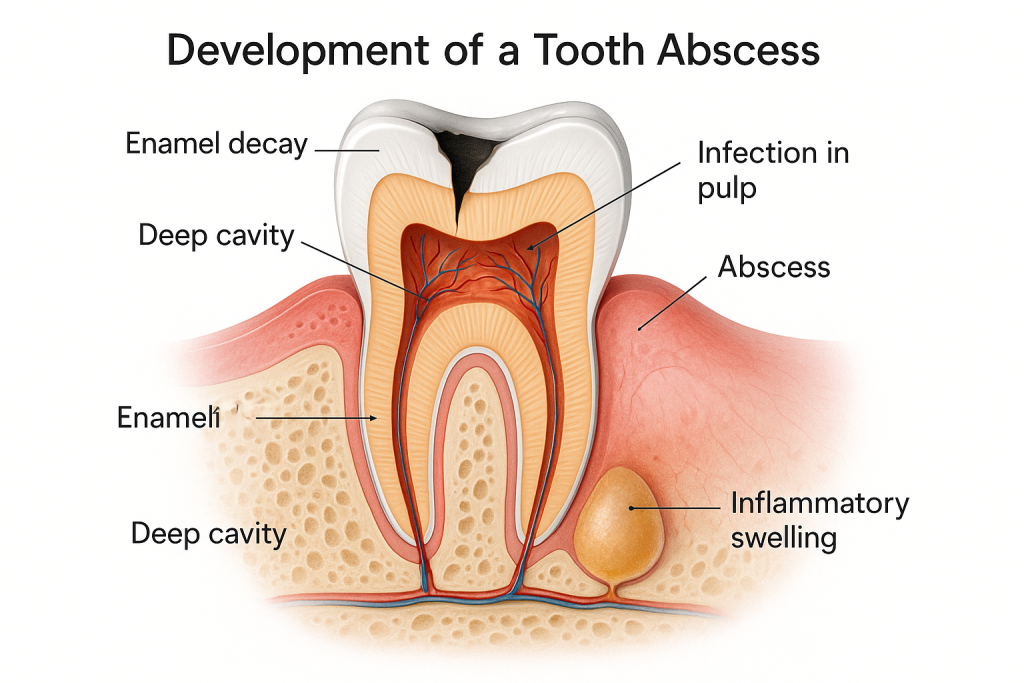
The most common type is a periapical abscess. This starts at the root tip after bacteria get inside your tooth. The infection often begins when enamel decay plaque is left untreated long enough to create a cavity. Once decay moves past the enamel and dentin, bacteria can reach the tooth pulp. The pulp is the soft center of the tooth that contains nerves and blood vessels. When the pulp becomes infected, pain can become intense.
A periodontal abscess starts in the gums or bone around the tooth. This often happens when gum disease creates deeper pockets between the teeth and gums. Bacteria can collect inside those pockets, leading to swelling, drainage, and pain. Gum disease or injury can also let bacteria move into areas that are hard to clean.
Dentists may also describe these problems as odontogenic infections, which means the infection starts in or around the teeth. Endodontic infections begin inside the tooth and often need root canal therapy or extraction. No matter where the abscess starts, the goal is to stop the infection, drain the pus when needed, and protect nearby teeth, bone, and soft tissue.
A dental abscess usually develops when bacteria find a way past the tooth’s natural defenses. Healthy enamel, tight gum attachment, and good oral hygiene help protect the mouth. When those defenses weaken, infection has an easier path.
Several problems can raise the risk of a tooth abscess:
- Untreated cavities: Decay can move through enamel and dentin until bacteria reach the pulp.
- Cracked or chipped teeth: Even a small crack can give bacteria a path into deeper tooth structures.
- Gum disease: Periodontal pockets can trap plaque and bacteria around the root.
- Dental injury: Trauma can damage the pulp even when the outside of the tooth looks normal.
- Failed root canal treatment: Infection can remain or return if bacteria survive inside the canal system.
- Poor oral hygiene: Plaque buildup increases the chance of decay, gum inflammation, and infection.
- Dry mouth: Reduced saliva makes it harder for the mouth to wash away bacteria and food particles.
- Weakened immune health: Some medical conditions can make infections harder for the body to control.
Diet can also play a role. Frequent sugary snacks and drinks feed the bacteria that cause tooth decay. Acidic drinks can wear down enamel, leaving teeth easier to damage. Smoking and tobacco use can affect gum health and slow healing, which may raise the risk of gum infection.
A tooth infection can also develop after dental work if a tooth was already badly damaged or if bacteria remain inside a deep cavity or root canal space. That doesn’t mean dental treatment caused the abscess. In many cases, the infection was already developing and only became painful later.
Why Infection Causes Tooth Pain, Swelling, and Pressure
Tooth abscess pain often feels sharp, throbbing, or constant because the infection affects nerves and tissues with little room to expand. When bacteria enter the pulp or gum tissues, your immune system sends white blood cells to fight the infection. Pus forms from bacteria, immune cells, and damaged tissue. As pus collects, pressure builds.
That pressure can press on nerves inside the tooth or around the root. The result may be deep pain that spreads to the jaw, ear, cheek, or neck. Biting or chewing can make it worse because pressure on the tooth pushes against inflamed tissues.
Swelling happens for a similar reason. The body sends fluid and immune cells to the infected area. The gum near the tooth may look red, raised, or shiny. Your cheek or jaw may swell if the infection moves into surrounding tissues. A bad taste in the mouth can happen if the abscess drains pus.
The table below shows how different abscess symptoms can connect to what may be happening under the surface.
| Symptom | What It May Mean | Why It Needs Attention |
| Throbbing tooth pain | Infection may be pressing on tooth nerves | Pain often worsens without dental treatment |
| Swollen gum near one tooth | Pus may be collecting near the root or gum pocket | The abscess may need drainage and treatment |
| Facial or jaw swelling | Infection may be spreading into nearby tissues | Swelling can become serious if it progresses |
| Fever or chills | The body may be reacting to a spreading infection | A dentist or medical provider should evaluate you promptly |
| Bad taste or pus drainage | The abscess may have ruptured into the mouth | Pain may ease briefly, but infection can remain |
| Pain when biting | The root area or supporting bone may be inflamed | The tooth may need root canal treatment or extraction |
A tooth abscess can sometimes feel better if it drains, but that doesn’t mean it healed. The source of infection can stay inside the tooth or gums. Without care, bacteria can continue damaging tissue and may spread into the jaw, face, or bloodstream. Cellulitis, a spreading soft tissue infection, is one possible complication that needs urgent attention.
Signs That Mean You Should Call an Emergency Dentist
Some tooth pain can wait for a regular appointment. Abscess symptoms should be taken seriously, especially when pain is severe or swelling is present. A dental abscess can worsen quickly because the infection is trapped in a small area and may spread through tissues.
Call an emergency dentist right away if you notice:
- Severe tooth pain that doesn’t improve with over-the-counter pain relief
- Swelling in the gums, cheek, jaw, face, or neck
- Fever, chills, or feeling sick along with tooth pain
- Trouble swallowing, breathing, or opening your mouth
- A pimple-like bump on the gum that leaks pus
- A foul taste, bad breath, or sudden fluid release in the mouth
- Pain that spreads to the ear, jaw, temple, or neck
- A loose tooth with swelling or gum tenderness
Trouble breathing, trouble swallowing, swelling under the jaw, or swelling that affects the eye area can be signs of a serious infection. Those symptoms may need emergency medical care, not just a dental visit.
For many abscess cases, an emergency dentist can examine the tooth, take X-rays, drain the infection when appropriate, and recommend treatment. Antibiotics may be used when infection has spread or there are signs of systemic illness, but antibiotics alone usually don’t fix the source. The tooth often needs root canal treatment, extraction, periodontal care, or another dental procedure.
How Dentists Treat a Dental Abscess
Treatment depends on where the abscess is, how far the infection has spread, and whether the tooth can be saved. The dentist’s first priority is to control the infection and relieve pressure. From there, they work to remove the source so the abscess doesn’t return.
For a periapical abscess, root canal therapy may be recommended if the tooth is restorable. During a root canal, the dentist removes infected pulp, cleans and shapes the canal space, and seals the tooth. A crown may be needed afterward to protect the tooth from breaking.
If the tooth is too damaged to save, extraction may be the safest option. Removing the tooth also removes the source of infection. The dentist may discuss replacement options later, such as an implant, bridge, or partial denture.
For a periodontal abscess, treatment may involve draining the pocket, deep cleaning around the root, removing trapped debris, and treating gum disease. If bone loss is severe or the tooth has poor support, extraction may be needed.
Dentists may also drain the abscess through a small incision in the gum. This can reduce pressure and help pus leave the area. Drainage may bring relief, but it’s usually only one part of treatment. The infection source still has to be addressed.
Pain control is another part of care. Your dentist may recommend safe over-the-counter pain relief or prescribe medication when needed. Avoid placing aspirin directly on the gum or tooth because it can burn the tissue. Warm salt water rinses may help keep the mouth cleaner until your appointment, but rinses won’t cure a tooth abscess.
Preventing Tooth Abscesses Before They Start
Not every abscess can be prevented, but many start with problems that can be caught early. Daily home care and regular dental visits lower the chance that bacteria will reach the pulp or settle deep around the gums.
Brush twice a day with fluoride toothpaste, and clean between your teeth daily. Flossing helps remove plaque from spots a toothbrush can’t reach. If floss is difficult, a water flosser or interdental brush may be easier to use. Pay attention to the gumline, since plaque often collects there.
Routine dental exams are just as important. A dentist can find small cavities, cracked fillings, early gum disease, and worn enamel before they become painful. Professional cleanings remove hardened buildup that brushing can’t remove at home.
Protecting your teeth from injury also helps. Don’t chew ice, hard candy, pens, or other objects that can crack enamel. Wear a mouthguard if you play contact sports or grind your teeth at night. If a tooth cracks, a filling falls out, or pain starts after an injury, don’t wait for symptoms to become severe.
People with a history of abscessed teeth, gum disease, or deep dental work should be extra watchful. Sensitivity, swelling, a bad taste, or pain when biting can be early warning signs. Getting help sooner can make treatment simpler and may improve the chance of saving the tooth.
Emergency Dental Squad Is Ready When Tooth Pain Can’t Wait
A dental abscess happens when bacteria reach vulnerable areas inside or around a tooth, causing infection, swelling, pressure, and pain. It may start with untreated decay, gum disease, injury, or a tooth that has already had dental work. Once symptoms appear, waiting can give the infection time to spread.
Emergency Dental Squad helps patients across the U.S. connect with trusted local dentists for urgent dental care, with 24/7 support when dental pain or swelling can’t wait. If you have severe tooth pain, facial swelling, pus, fever, or pain that keeps getting worse, reach out now. Fast scheduling support can help you get evaluated sooner, protect your health, and connect you with a dentist who can recommend the right treatment for the source of the infection.
