
Who Repairs Broken Teeth and Best Dentist Options
A chipped or broken tooth can happen without warning. You might bite down on a hard piece of food, fall, take a hit during sports, or notice a tooth crack after grinding your teeth at night. Some chips are small and mostly cosmetic. Others cause pain, sensitivity, bleeding, swelling, or a sharp edge that cuts your cheek or tongue.
Fast care can protect the tooth and help prevent infection, deeper fractures, and higher repair costs. A dentist can examine the damage, take X-rays if needed, and recommend the right treatment. Depending on the injury, repair may involve bonding, dental fillings, dental veneers, a dental crown, root canal treatment, or tooth replacement.
Who repairs broken teeth? Emergency Dental Squad helps patients across the U.S. connect with emergency dental care when a tooth chips, cracks, breaks, or starts hurting. If you are in pain or worried about the damage, call now to find a nearby provider and schedule your appointment.
Why Chipped Teeth and Broken Teeth Happen
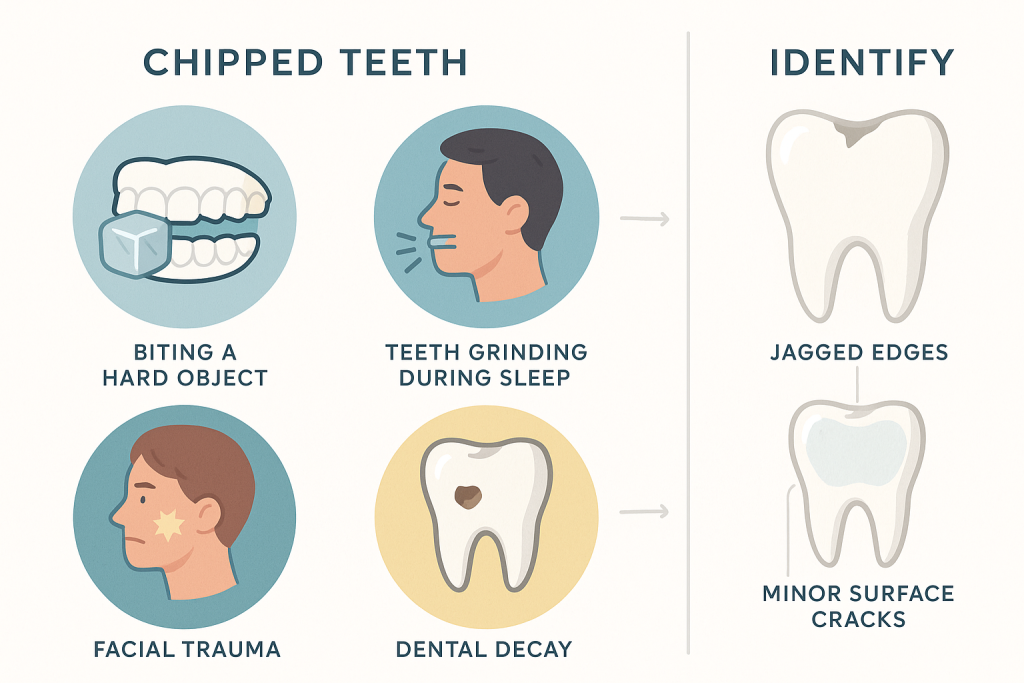
Teeth are built to handle daily biting and chewing, but enamel can still fracture under pressure. A small chip may only affect the outside layer of the tooth. A deeper break can reach the dentin or pulp, where nerves and blood vessels are located.
Common causes include biting ice, hard candy, popcorn kernels, bones, or other hard foods. Falls, car accidents, sports injuries, and direct hits to the mouth can also break teeth. Some people chip teeth because of nighttime grinding or clenching. Others have weakened enamel from decay, old fillings, or previous dental work that no longer supports the tooth well.
You may notice a rough edge, a visible missing piece, or a tooth that looks uneven. Pain is not always present. A slightly chipped tooth may feel normal at first, but it can still collect bacteria or continue cracking when you chew. Sensitivity to hot, cold, or sweet foods can signal that the damage has reached a deeper layer.
Larger breaks are usually easier to spot. If half of your tooth breaks off, you may feel pain when biting, see bleeding around the gum, or notice swelling. A broken front tooth can also affect speech, eating, and confidence. Prompt dentistry can often save the tooth and restore its shape before the problem gets worse.
What to Do with a Broken Tooth until a Dentist Can See You
Home care is only temporary, but the right steps can reduce pain and protect your mouth until you reach a dentist. There is no safe way to fix a cracked tooth naturally or repair a chipped tooth at home permanently. Store-bought dental wax or temporary dental cement may help for a short time, but professional treatment is still needed.
- Rinse your mouth with warm water. This helps clear away blood, food, and small fragments.
- Save any broken piece. Place it in a clean container and bring it to your appointment.
- Apply gentle pressure if there is bleeding. Use clean gauze or a soft cloth.
- Use a cold compress. Hold it against the outside of your cheek to help with swelling.
- Cover sharp edges. Dental wax or sugar-free gum can protect your lips, tongue, and cheek.
- Chew on the other side. Choose soft foods and avoid sticky, crunchy, hot, or cold items.
- Use pain relievers as directed. Do not place aspirin directly on the gum or damaged tooth.
Call for urgent help if you have severe pain, facial swelling, fever, uncontrolled bleeding, a loose tooth, or trouble swallowing. Those symptoms may point to infection or a deeper injury.
Emergency Dental Squad can help you find care when regular dental offices are closed or when you are not sure who to contact. A fast call can connect you with an emergency dental provider who can evaluate the damage and explain your treatment options.
Who Repairs Broken Teeth?
A general dentist repairs many chipped and broken teeth. For smaller chips, the repair may be simple and completed in one visit. For larger injuries, the dentist may recommend a specialist.
A cosmetic dentist may help when a broken front tooth needs a natural-looking repair. An endodontist treats damage inside the tooth, including cases that need a root canal. Prosthodontists focus on advanced restorations such as crowns, bridges, dentures, and implant restorations. An oral surgeon may be needed if the tooth is fractured below the gumline or cannot be saved.
The right provider depends on the location of the tooth, the size of the break, the amount of pain, and whether the tooth root or pulp is affected. A dental exam can show whether the tooth can be repaired or whether replacement should be considered.
| Tooth Problem | Possible Treatment | Provider You May Need | How Soon to Seek Care |
| Small chip with little or no pain | Smoothing, bonding, or dental fillings | General dentist | Soon, before it spreads |
| Broken front tooth | Bonding, veneers, or crown | General or cosmetic dentist | Same day if possible |
| Large break with pain | Crown, root canal, or extraction | Dentist or endodontist | Urgent care |
| Crack near the gumline | Crown, root canal, or surgical care | Dentist, endodontist, or oral surgeon | Urgent care |
| Tooth too damaged to save | Bridge, partial denture, or dental implant planning | Dentist, prosthodontist, or oral surgeon | Prompt evaluation |
Emergency Dental Squad provides emergency cracked tooth repair connections through a national network of dental professionals. Instead of spending time searching while you are uncomfortable, you can call for help finding available care near you.
Best Repair Options for a Chipped or Broken Tooth
The best treatment depends on how much of the tooth is damaged and whether the inner tissue is exposed. Your dentist may recommend one of several options.
Dental bonding is often used for small chips, especially on front teeth. The dentist applies tooth-colored resin, shapes it, and hardens it with a special light. Bonding can improve appearance and smooth sharp edges.
Dental fillings may repair small to moderate damage, especially on back teeth. A filling restores the missing area and helps block bacteria from entering the tooth.
Dental veneers can be a good option for visible front-tooth chips when the tooth is stable. Veneers cover the front surface with porcelain or composite material, improving shape, color, and symmetry.
A dental crown may be recommended when a larger part of the tooth has broken. A crown covers the visible portion of the tooth and helps restore chewing strength. Crowns are often used when a tooth has been weakened by decay, a large filling, or a deeper fracture.
Root canal treatment may be needed if the break reaches the pulp. Signs can include lingering pain, sensitivity, swelling, or a bump on the gum. During a root canal, damaged tissue is removed, the inside of the tooth is cleaned and sealed, and a crown is often placed afterward.
Extraction and replacement may be needed if the tooth cannot be repaired. Replacement options can include bridges, partial dentures, or a dental implant. Your provider can explain what fits your oral health, timeline, and budget.
Cost depends on the treatment type, materials, tooth location, and whether pain or infection must be treated first. A small bonding repair often costs less than veneers, crowns, root canal therapy, bridges, or implant treatment. If cost is a concern, ask about payment plans, financing, community clinics, dental schools, or staged treatment.
How to Protect the Tooth after It Chips
After a tooth chips or breaks, avoid putting pressure on it until a dentist checks it. Even mild pain can worsen if the fracture spreads. Choose soft foods, chew on the opposite side, and avoid ice, nuts, hard bread, chewy candy, popcorn, and very hot or cold drinks.
Keep the area clean with gentle brushing and careful flossing. Do not snap floss against the gum near the damaged tooth. A mild saltwater rinse may help soothe the area and wash away food particles.
Do not file the tooth at home. Do not use craft glue, household adhesives, or non-dental products. These can harm your mouth and make repair harder. Temporary dental cement from a pharmacy may help cover a small area for a short time, but it should not replace professional care.
Your dentist may also recommend prevention steps after the repair. A nightguard can help protect teeth from grinding. A custom mouthguard can protect athletes during contact sports. Routine dental visits can also catch decay, worn fillings, bite problems, and weak enamel before another tooth breaks.
A chipped tooth can feel minor, but small damage can turn into a bigger dental emergency. Getting timely care gives you a better chance of preserving the tooth and avoiding a more involved procedure later.
Get Fast Help for a Broken Tooth
A broken tooth can affect how you eat, speak, smile, and sleep. It can also expose the tooth to bacteria, sensitivity, and infection. The safest next step is to have the damage checked by a dental professional as soon as possible.
Emergency Dental Squad helps connect patients with dentists who treat chipped teeth, broken teeth, cracks, dental pain, and urgent oral health concerns. Whether you need bonding, veneers, a crown, root canal treatment, or guidance on replacement options, help is available.
If your tooth is sharp, painful, swollen, bleeding, or visibly broken, do not wait for the damage to spread. Call Emergency Dental Squad now to find urgent dental care near you and schedule your appointment.
