
How to Fix a Broken Tooth: Repair Options for Cracked, Chipped, or Fractured Teeth
A broken tooth can be painful, stressful, and hard to ignore. It may happen after biting down on ice, candy, popcorn kernels, or another hard food. It may come from a fall, sports injury, car accident, teeth grinding, or an old filling that no longer supports the tooth. Some damage is obvious right away. Other cracks are harder to see but still cause tooth pain when you bite, chew, or drink something hot or cold.
How to fix a broken tooth? Fast dental care can help protect the damaged tooth and lower the chance of infection, deeper tooth cracks, and further breakage. The right repair depends on the type of injury, how much enamel is missing, whether the nerve is affected, and whether the tooth can still support a restoration.
Emergency Dental Squad helps connect patients across the U.S. with trusted emergency dentists 24/7. If you have a cracked tooth, chipped tooth, fractured tooth, swelling, bleeding, or pain that will not settle down, help is available. Call for fast scheduling and guidance from a local provider who can evaluate the damage and recommend treatment.
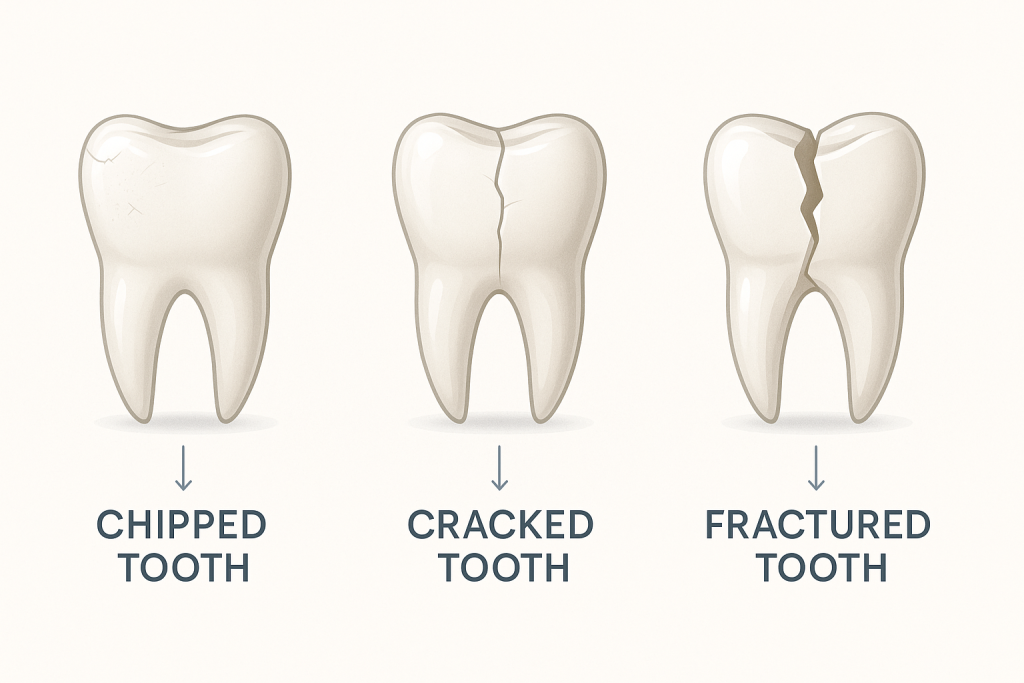
What Broken, Cracked, and Chipped Teeth Can Mean
Tooth damage can range from a small surface chip to a deep fracture that reaches the inner pulp. A chipped tooth often affects the edge or surface enamel. It may feel rough, sharp, or uneven when your tongue touches it. Chipped teeth are common after biting hard foods, grinding, or taking a blow to the mouth.
A cracked tooth can be harder to spot. The tooth may look normal, but it may hurt when you chew or when you release pressure after biting. You may also notice sensitivity to cold, heat, or sweets. Some cracks stay near the surface. Others move deeper and may reach the nerve.
A fractured tooth is often a larger injury. A piece may break away, or the crack may run through the tooth. If the tooth cracked below the gum line or the root is affected, treatment can become more involved. A fractured tooth may need a crown, root canal therapy, extraction, or replacement planning.
Common causes of a damaged tooth include:
- Biting hard foods such as ice, popcorn kernels, nuts, or hard candy
- Falls, car accidents, sports injuries, or other trauma to the mouth
- Teeth grinding or clenching during sleep
- Tooth decay that weakens enamel and inner structure
- Large or aging fillings that no longer support the tooth well
- Using teeth to open packaging or hold objects
Symptoms can include sharp pain, swelling, bleeding, rough edges, sensitivity, a loose piece of tooth, or pain that comes and goes. Some people only feel discomfort while chewing. Others may have constant pain if the pulp is exposed or infected.
Don’t assume a cracked broken tooth is safe because the pain fades. A small crack can spread under chewing pressure. Bacteria can enter the tooth and cause infection. Early treatment can often keep the repair simpler and help preserve your natural tooth.
What to Do Right Away While Waiting for Dental Help
Home care can help you stay comfortable and protect your mouth, but it cannot repair a broken tooth permanently. A dentist needs to examine the area, check for hidden damage, and decide which treatment is safe.
Use these steps while you wait for care:
- Rinse gently with warm water. This clears away food, blood, and debris without irritating the tooth.
- Save any broken fragment. Place the fragment in milk, saline, or saliva and bring it to your visit. Your dentist may be able to bond your tooth back together in some cases.
- Control bleeding. Hold clean gauze or a soft cloth against the area with light pressure.
- Use a cold compress. Hold it to the outside of your cheek in short intervals to help reduce swelling.
- Cover sharp edges. Dental wax or sugar-free gum can protect your tongue, cheek, and lips until you are seen.
- Avoid chewing on that side. Choose soft foods and stay away from hard, sticky, very hot, very cold, or sugary items.
- Use pain relief as directed. Do not place aspirin directly on the tooth or gum because it can irritate soft tissue.
Don’t try to file the tooth at home. Do not use craft glue, household adhesive, or non-dental products. These can injure your mouth and make repair harder. A temporary dental product from a pharmacy may cover a rough spot for a short time, but it is not a lasting repair.
If you are searching for ways to fix a cracked tooth naturally or fix a broken tooth at home, treat those ideas with caution. Rinsing, protecting the area, and avoiding pressure can help for a short period, but the tooth still needs professional care. A delay can lead to pain, infection, or a more complex repair.
Call an emergency dentist if the tooth is painful, bleeding, loose, darkening, swollen, or broken close to the gum line. Emergency Dental Squad can help you find care when regular office hours do not fit the situation.
When a Broken Tooth Needs Urgent Care
Some tooth injuries are mild enough to wait briefly for a scheduled dental visit. Others need same-day or immediate attention. When in doubt, call. A quick conversation can help you decide whether the problem can wait or needs urgent dental care.
You should seek urgent help if you have severe tooth pain, facial swelling, fever, pus near the gum, bleeding that will not stop, a loose tooth, a large missing piece, or a broken front tooth. These signs may point to nerve exposure, infection, deep fracture, or trauma that needs prompt treatment.
A knocked-out adult tooth also needs immediate attention. If the tooth is whole, handle it by the crown, not the root. If it is dirty, gently rinse it with water. Keep it moist in milk or saliva and contact an emergency dentist right away.
| Tooth Issue | Urgency Level | What to Do | Possible Dental Support |
| Small chip with no pain | Prompt, not always immediate | Protect sharp edges and schedule an exam | Smoothing, bonding, or monitoring |
| Cracked tooth with bite pain | High | Avoid chewing on that side and call | X-rays, bite check, bonding, crown, or root canal |
| Large broken tooth | High | Rinse, save the fragment, and seek urgent care | Crown, root canal, extraction, or replacement planning |
| Knocked-out tooth | Immediate | Keep the tooth moist and get help now | Reimplantation attempt or replacement options |
| Swelling or abscess symptoms | Severe | Call urgently and avoid pressing on the area | Infection control, drainage, root canal, or extraction |
Tooth pain that comes and goes should still be checked. Cracks can irritate the nerve before the tooth becomes visibly damaged. A provider fills small areas when possible, but deeper damage may need a stronger restoration.
Emergency Dental Squad helps patients find local dentists who can handle urgent tooth repair, exams, X-rays, pain relief, and treatment planning. If your symptoms feel serious or are getting worse, do not wait for the next normal opening.
Tooth Repair Options Dentists May Recommend
The right treatment depends on how much of the tooth is damaged, where the tooth is located, and whether the pulp is affected. Your dentist will examine the tooth, check your bite, and may take X-rays to look for deeper cracks or infection.
Dental bonding is often used for small chips and shallow cracks, especially on front teeth. The dentist applies tooth-colored resin, shapes it to match the tooth, and hardens it with a curing light. Bonding can smooth rough edges, improve appearance, and restore minor structure.
Dental fillings may be recommended when a chip or crack affects a small to moderate area, often on a back tooth. A filling replaces missing structure and helps seal the area from bacteria. Tooth-colored materials can blend with natural enamel.
Veneers may be an option for certain front tooth injuries when the damage is mainly cosmetic and the tooth is stable. Veneers cover the front surface of the tooth and can improve shape, color, and symmetry.
Dental crowns are often used when a larger part of the tooth has broken or when the remaining structure is too weak for a filling. A crown covers the visible part of the tooth and helps restore chewing strength. Crowns may also be placed after root canals to protect the tooth.
Root canals may be needed if the crack or break reaches the pulp. Signs may include lingering sensitivity, strong pain, swelling, or a bump on the gum. During treatment, damaged or infected tissue is removed from inside the tooth. The tooth is then sealed and usually restored with a crown.
Extraction and replacement may be needed if the tooth cannot be saved. Replacement options may include a bridge, partial denture, full dentures when several teeth are missing, or a dental implant. Implants can replace missing teeth after the area is healthy enough for treatment planning.
Cost varies by the repair type, materials, tooth location, insurance, and whether infection or nerve damage is present. A small bonding repair usually costs less than a crown, root canal, implant, or bridge. If cost is a concern, ask about payment options, financing, community clinics, dental schools, or staged treatment.
How to Protect Your Tooth after Treatment
After treatment, follow your dentist’s care instructions closely. A repaired tooth needs time to settle, especially if you had a crown, root canal, extraction, or deep filling. Mild soreness may be normal for a short period, but worsening pain, swelling, or a bite that feels uneven should be reported.
Avoid chewing hard foods on the repaired area until your dentist says it is safe. Skip ice, hard candy, popcorn kernels, sticky candy, and very crunchy foods. If you grind your teeth, ask about a nightguard. Grinding can damage enamel, crack restorations, and cause new tooth cracks over time.
Good oral hygiene also helps protect your repair. Brush gently twice a day with a soft-bristled toothbrush. Floss carefully around the repaired tooth. If floss catches or shreds, contact your dentist because the restoration may need adjustment.
Routine dental visits help catch small problems before they become painful. A dentist can check old fillings, worn crowns, bite pressure, enamel wear, and signs of grinding. If you have had a broken tooth for years, schedule an exam even if it does not hurt. Long-term cracks and broken edges can collect bacteria and may weaken further.
A mouthguard can protect athletes from trauma during contact sports. Avoid using your teeth as tools for opening packages, cutting tags, or holding items. These habits can chip enamel and strain restorations.
Most broken tooth repairs are meant to restore comfort, appearance, and function. Protecting the repair helps it last longer and lowers the risk of repeat damage.
Get Fast Help from Emergency Dental Squad
A broken tooth can interfere with eating, sleeping, speaking, and smiling. It can also create worry when you are unsure whether the damage is minor or serious. The safest next step is to have a dental professional examine it.
Emergency Dental Squad connects patients with local emergency dentists for chipped teeth, cracked teeth, fractured teeth, toothaches, lost fillings, broken crowns, swelling, abscess symptoms, extractions, root canals, and other urgent needs. Support is available 24/7, including nights, weekends, and holidays.
If your tooth is sharp, painful, swollen, bleeding, loose, or visibly broken, call Emergency Dental Squad now. Fast action can help relieve pain, protect your oral health, and give you a clear treatment plan for restoring your tooth.
