
When Should Dentures Be Repaired? Denture Repair Signs, Timing, and Next Steps
Dentures help restore eating, speaking, and smiling after tooth loss. When they fit well, they can feel like a normal part of your day. When they crack, loosen, rub, or break, they can quickly become painful and stressful.
So, when should dentures be repaired? In most cases, you should call a dentist as soon as you notice damage, discomfort, or a change in fit. Waiting can turn a simple denture repair into a larger problem. A small chip can become a fracture. A loose fit can lead to sore gums. A rough edge can irritate your mouth and make eating difficult.
Emergency Dental Squad helps patients find fast dental help when problems can’t wait. If your denture unexpectedly breaks, if your partial feels unstable, or if you’re dealing with oral pain, call now to speak with a local dentist. Same-day service may be available, and support is open 24/7.
Early Denture Problems That Shouldn’t Be Ignored
Many denture problems start small. You may feel a little rubbing, hear a clicking sound, or notice that chewing feels different. These early signs are easy to overlook, but they often mean your appliance needs attention.
A denture should rest comfortably against the gums without pinching, rocking, or shifting. If it suddenly feels loose, tight, uneven, or painful, something has changed. Your gums and jaw can naturally change shape over time. When that happens, the appliance may stop fitting the way it should.
Watch for these signs that it may be time for repair:
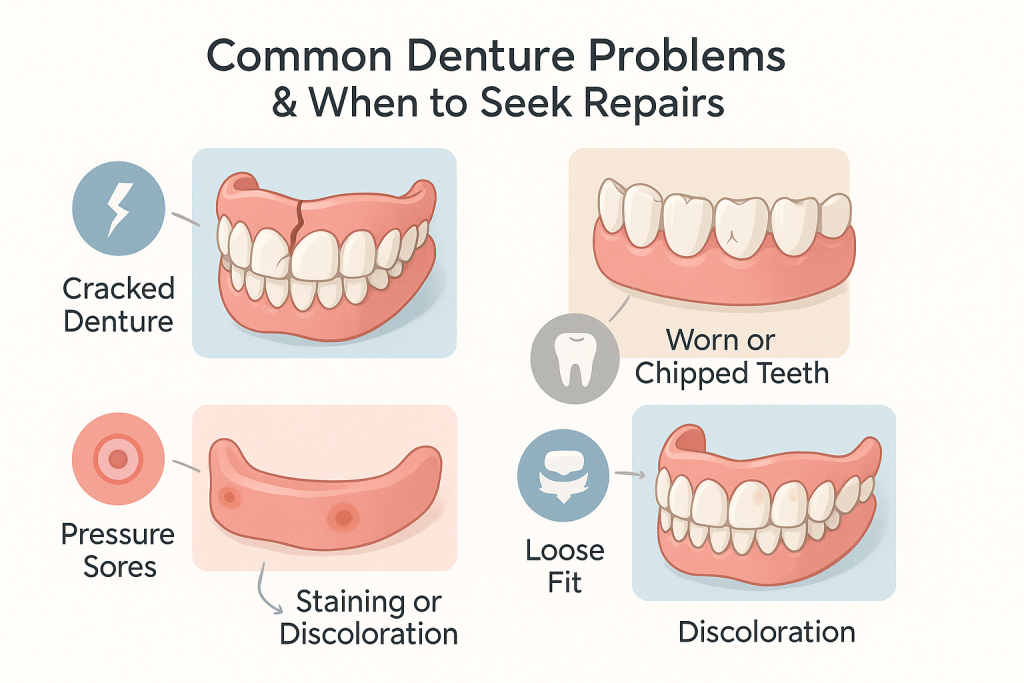
- Visible cracks, chips, or rough edges
- Soreness, swelling, or red spots under the denture
- Clicking, slipping, or movement while speaking
- Trouble chewing foods you could eat before
- Bad odor, staining, or buildup that doesn’t improve with cleaning
- A partial that feels loose around the supporting teeth
- A denture tooth that moves, shifts, or falls out
Even if your dentures are still wearable, damage should be checked. Wearing a damaged appliance can place pressure on the gums, change your bite, and make the repair more difficult. A dentist can tell whether the issue can be fixed, whether denture adjustments are needed, or whether replacement should be discussed.
Don’t wait until a small problem becomes a broken appliance. Early care can protect your comfort, your oral health, and the fit of your denture.
Cracked Dentures, Loose Fit, and When Denture Adjustments Help
Cracked dentures may not hurt right away, but they should be treated seriously. A fine line in the base can spread under daily chewing pressure. A chip near the edge can rub the gums. A loose tooth in the appliance can affect how the bite comes together.
Denture cracks often happen because of daily wear, accidental drops, hard foods, drying out, or pressure from an uneven fit. Wear and tear happens over time, even with careful cleaning. The material can weaken, especially if the appliance is older or has been repaired before.
A poor fit is another common reason people need denture repair. When a denture doesn’t sit evenly, certain areas take on extra pressure. That pressure can lead to sore spots, cracked material, and trouble chewing.
| Problem | What You May Notice | Best Next Step |
| Hairline crack in denture plate | Thin line, clicking, or a weak area | Stop using it if it feels unstable and call a dentist |
| Loose denture | Slipping, rubbing, food trapping, or sore gums | Ask about denture adjustments or a denture reline |
| Broken denture tooth | Tooth shifts, chips, or falls out | Save the tooth and schedule repair |
| Damaged partial | Loose clasp, movement, or pressure on teeth | Have the partial checked before it damages support teeth |
| Repeated breaks | Same area cracks again | Ask whether replacement or a new treatment plan is needed |
A denture reline may help when the appliance is in good condition but no longer fits the shape of the gums. During a reline, the inside surface is adjusted so it rests better against the mouth. This can improve comfort, reduce movement, and lower the chance of future damage.
Denture adjustments may also help when the appliance causes pressure points or rubbing. A dentist can smooth rough spots, improve the bite, and check whether the base is stable.
If the denture breaks in half, feels sharp, or causes bleeding, call for help right away. Emergency Dental Squad can help connect you with a dentist who handles urgent denture concerns, broken dental work, and other time-sensitive dental needs.
Why Professional Repairs Are Safer than DIY Fixes
When a denture breaks, it’s normal to want a fast solution. Many people search for a denture repair kit, glue for broken dentures, or ways to fix dentures at home. These products may seem convenient, but they can create new problems.
Household glue is not made for oral use. It may contain chemicals that can irritate your mouth. It can also change the shape of the appliance, trap bacteria, or make professional repairs harder. Even small changes to the surface can affect your bite and cause sore spots.
DIY repairs also don’t address the reason the damage happened. If the appliance cracked because the fit changed, gluing it back together won’t correct the pressure. If a partial is loose because a clasp bent, a home repair may put extra force on nearby teeth. If the denture is worn or warped, a quick patch may fail again.
Avoid these actions if your appliance is damaged:
- Don’t use superglue, craft glue, or household adhesive.
- Don’t file sharp spots with tools.
- Don’t bend metal clasps on a partial.
- Don’t keep wearing a denture that cuts your gums.
- Don’t sleep in a broken appliance.
- Don’t throw away broken pieces.
Professional repairs are different because a dentist or dental lab can review the appliance, check the fit, clean the area properly, and use materials made for dental use. A dentist can also decide whether the appliance should be repaired, relined, adjusted, or replaced.
If cost is a concern, ask about options during the appointment. Broken denture repair cost can vary based on the damage, material, lab work, and whether replacement is needed. Getting the appliance checked early is often the best way to avoid a larger repair.
Emergency Dental Squad is available 24/7 to help patients find care when denture damage affects eating, speaking, or comfort.
Denture Repair, Reline, or Replacement: How Dentists Decide
Not every damaged denture needs to be replaced. Many appliances can be repaired when the base, teeth, and fit are still sound. Other cases need a denture reline, especially when the appliance is loose but the structure is still in good condition.
A dentist will usually check the appliance and your mouth before recommending treatment. The right choice depends on how the denture broke, how old it is, and whether it still fits.
Denture repair may be recommended when the damage is limited. Examples include a small crack, a broken tooth on the appliance, a chip, or a clean fracture that can be restored safely. Repair denture treatment may also be possible for some partial damage, depending on the clasp, base, and nearby teeth.
A denture reline may be recommended when the appliance doesn’t fit well because your gums or jaw have changed shape. This can happen gradually, especially after tooth loss. A reline can help the appliance sit better and reduce movement.
Replacement may be the better choice when the appliance is badly worn, warped, stained, unstable, or repaired many times. If it keeps breaking in the same place, the denture may not be properly supported. A new appliance may provide better comfort and function.
Some patients may also ask about implant-supported options. An implant-supported denture may improve stability for certain patients. It’s not the right choice for everyone, but a dentist can explain whether implant treatment may help reduce movement and improve chewing.
Partials also need prompt care. A partial that doesn’t fit well can put pressure on natural teeth. If a clasp is bent, a tooth on the partial breaks, or the appliance rocks, schedule an appointment before the surrounding teeth become sore or loose.
The goal is simple: restore function, protect your mouth, and help you return to normal eating and speaking as soon as possible.
How to Protect Dentures after Repair
After a denture has been repaired, daily care matters. Good habits can help the repair last and reduce the chance of future damage. Dentures can serve you well for years, but they need gentle handling and regular maintenance.
Handle the appliance over a folded towel or a sink filled with water. Many broken dentures happen because they slip during cleaning. A soft landing can prevent chips and cracks.
Clean the appliance every day with a soft brush and a cleanser made for dentures. Regular toothpaste can be too abrasive. Hot water can warp the material, so use cool or lukewarm water unless your dentist gives different instructions.
Soaking is also important. Letting the appliance dry out can affect the shape and increase the risk of damage. Follow your dentist’s instructions for overnight storage.
Food choices can also protect the appliance. You may be able to eat many foods comfortably, but very hard, sticky, or tough foods can increase pressure. Cut food into smaller pieces and chew evenly on both sides when possible.
Keep up with dental visits, even if you have no natural teeth. A dentist can check your gums, bite, jaw, appliance fit, and oral health. Small adjustments may prevent new cracks and sore spots.
Contact Emergency Dental Squad
Call a dentist if you notice movement, soreness, odor, stains, chips, or changes in speech. Regular care helps protect comfort and lowers the chance of sudden damage.
Denture damage can disrupt your routine, but help is available. Emergency Dental Squad connects patients with local dentists for urgent dental needs, including broken dentures, cracked dentures, damaged partials, pain, swelling, broken teeth, and other dental emergencies.
Call now if your denture unexpectedly breaks, if you can’t eat comfortably, or if a rough edge is hurting your mouth. Fast scheduling and 24/7 support can help you get clear next steps without calling office after office.
If you need denture repair near you, don’t wait for the damage to get worse. Call Emergency Dental Squad now to speak with a local dentist and get help restoring your comfort, function, and confidence.
