
How Much Does Denture Repair Cost? Pricing, Repairs, and When to Get Help
A broken denture can interrupt your day fast. It may affect how you eat, speak, smile, or feel in public. The damage can also create sore spots, sharp edges, or pressure on your gums if you keep wearing it.
Many patients want to know one thing right away: how much does denture repair cost? The answer depends on the type of damage, the material, the kind of denture, whether lab repairs are needed, and how quickly you need the work done. A simple fix may cost much less than repairing a denture that broke in half or needs several teeth replaced.
Emergency Dental Squad helps patients find fast dental care when dental problems can’t wait. If your denture breaks, cracks, rubs, or keeps you from eating comfortably, you can call 24/7 to speak with a local dentist. Same-day service may be available, and getting help quickly can prevent a small problem from becoming a larger repair.
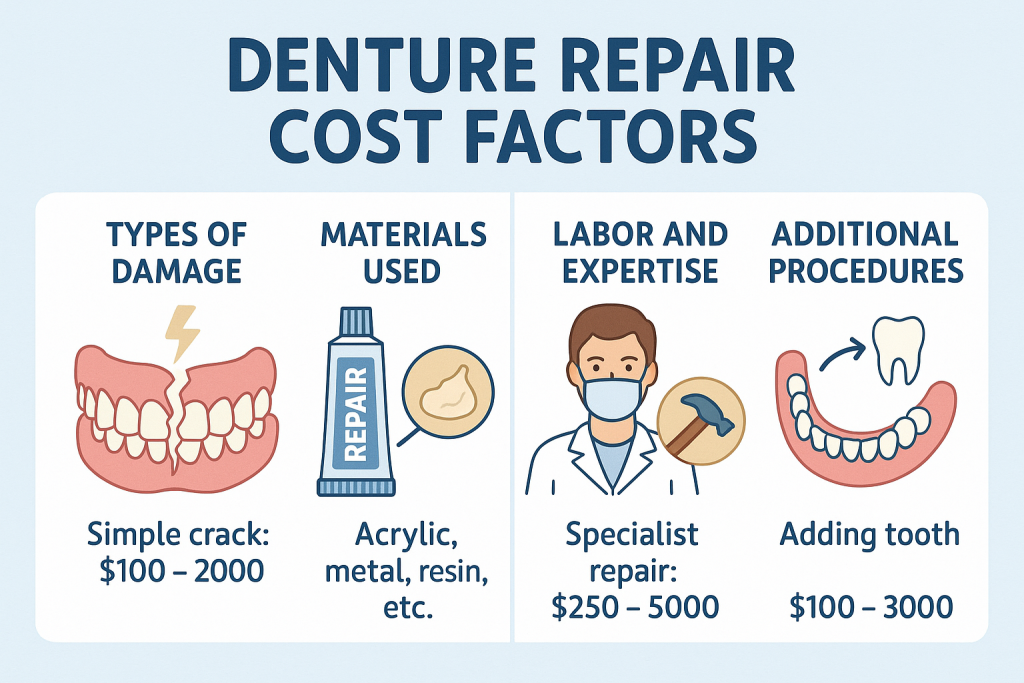
Average Cost for Denture Repairs and What Affects the Repair Cost
The average cost for denture repairs can vary widely. A minor chip, small crack, or loose tooth may be on the lower end. A denture that has snapped, warped, or needs several parts replaced may cost more, especially if a dental lab must handle the repair.
In many cases, a simple single denture repair job may cost less than replacing the appliance. However, the exact repair cost depends on the dentist, local pricing, materials, and the amount of work involved.
| Denture Issue | Typical Repair Need | Cost Factors to Expect |
| Small crack or chip | Smoothing, bonding, or acrylic repair | Size of damage, material, chairside vs. lab work |
| Broken denture tooth | Tooth replacement or reset | Tooth type, shade match, lab involvement |
| Denture broken in half | Structural repair or possible replacement | Break pattern, fit, age of appliance |
| Loose or poor fit | Adjustment or denture reline | Gum changes, impression needs, reline material |
| Damaged partial | Clasp, base, or tooth repair | Metal parts, acrylic areas, nearby tooth support |
| Implant denture issue | Attachment or fit evaluation | Implant parts, wear, dentist assessment |
The average price is only a starting point. Your dentist will need to see the appliance and check your mouth before giving a clear estimate. A denture that looks repairable may still need replacement if the fit is poor, the base is worn, or the same area has broken before.
If cost is a concern, call before using a home fix. A dentist can explain whether the repair is simple, whether a reline is needed, or whether replacement would be the better long-term choice.
Low-Cost Dentures, Repair Services, and Why Prices Vary
Low-cost dentures and lower repair prices may seem appealing, especially during an unexpected dental emergency. Still, price shouldn’t be the only factor. A poorly completed repair can affect your bite, irritate your gums, and fail quickly.
The type of appliance matters. Full dentures, partial dentures, flexible dentures, and implant-supported dentures may require different materials and repair methods. A full acrylic denture may be repaired differently than a partial with metal clasps. An implant-supported appliance may need extra evaluation because attachments, fit, and bite pressure all matter.
The location of the damage also affects pricing. A small surface chip may be easier to fix than a crack running through the center of the base. A lost denture tooth may be simple if the base is stable. If the appliance is old, brittle, or warped, the dentist may need to do more work to restore a safe fit.
Repair timing can also change the cost. A standard appointment may cost less than an emergency repair, same-day visit, weekend appointment, or after-hours service. That said, urgent care can be worth it when the appliance is cutting your mouth, preventing you from eating, or affecting your ability to speak.
Several factors may influence the price:
- Type of denture , such as full, partial, flexible, or implant-supported
- Type of damage , including cracks, broken teeth, warping, or snapped bases
- Materials used , including acrylic, metal, resin, or replacement teeth
- Repair location , such as in-office repair or outside lab work
- Urgency , including same-day or after-hours care
- Fit problems , especially when a denture reline is needed
- Age of the appliance , since older materials may be harder to repair
Emergency Dental Squad can help connect you with repair services when you don’t want to call office after office. The goal is to help you find a local dentist who can evaluate the damage, explain your options, and help you move forward with confidence.
Emergency Repair for a Broken Denture or Broken Dentures
A broken denture is not always just an inconvenience. It can become an oral health issue if sharp edges cut the gums, if the appliance no longer fits, or if you can’t chew properly. Broken dentures can also cause stress if the damage happens before work, travel, a family event, or a meal.
You should seek emergency repair if the damage affects comfort, function, or safety. Don’t keep wearing the appliance if it cuts your gums, causes bleeding, shifts during chewing, or feels unstable. Continuing to use it can make the damage worse and may increase repair costs.
Call for urgent help if you notice:
- A denture broken in half
- A severe crack through the base
- A sharp edge that rubs or cuts the mouth
- A missing or loose denture tooth
- Sudden change in fit
- Pain, swelling, or sores under the appliance
- Trouble eating or speaking
- Damage to a partial or implant attachment
If your denture breaks, place all pieces in a clean container and bring them to the appointment. Don’t throw away broken parts. Even small pieces may help the dentist understand the damage or complete the repair.
Emergency Dental Squad provides 24/7 support for urgent dental needs. If you’re dealing with a broken denture, broken dental work, severe pain, swelling, or another dental issue that can’t wait, call now to speak with a local dentist. Fast scheduling can help you avoid extra discomfort and get a clear plan for repair.
Dental Insurance, Payment Options, and Denture Repair Costs
Dental insurance may help reduce denture repair costs, but coverage varies by plan. Some plans may cover a portion of repairs, relines, or replacement, while others may include waiting periods, deductibles, yearly limits, or exclusions. The best way to understand your benefits is to check your plan or ask the dental office to review your information.
If you have dental insurance, bring your card and plan details to the appointment. Ask whether your plan covers denture repair, denture reline treatment, partial repairs, replacement teeth, or lab fees. It also helps to ask whether preauthorization is required for larger repairs.
Patients without insurance can still ask about pricing and payment options. Depending on the provider, cash payments or payment plans may be available. The dental office can explain available options based on the condition of the appliance and the type of repair needed.
To help keep costs manageable, take these steps:
- Ask for an estimate before treatment begins.
- Confirm whether lab repairs are included in the quoted price.
- Ask whether the appliance needs a reline, adjustment, or replacement.
- Check whether dental insurance covers part of the visit.
- Ask about available payment options.
- Avoid DIY glue, which can make professional repair harder.
- Schedule routine denture maintenance before small issues grow.
Cost matters, but comfort and safety matter too. A low price doesn’t help if the repair fails quickly or changes the way your teeth meet. Professional care allows the appliance to be evaluated properly and helps protect your oral health.
Repair, Reline, or Replacement: What Your Dentist May Recommend
Not every damaged appliance needs to be replaced. Dentists often repair a denture when the damage is limited and the fit is still stable. A simple crack, loose tooth, or small chip may be repairable.
A denture reline may be recommended when the appliance is loose but otherwise in good condition. Over time, gums and bone can change shape. When that happens, the denture may shift, rub, or place pressure on the wrong areas. A reline helps the inside of the appliance fit the mouth better.
Replacement may be the better option if the denture is old, worn, warped, badly cracked, or repaired many times. If it keeps breaking in the same spot, the issue may be poor fit or uneven bite pressure rather than the material alone.
A dentist may recommend repair when:
- The base is stable.
- The crack is limited.
- The denture tooth can be replaced.
- The appliance still fits well.
- The material is strong enough to support repair.
A dentist may recommend replacement when:
- The appliance is badly worn.
- The denture has several cracks.
- The fit is poor even after adjustment.
- The bite has changed.
- Repairs have failed before.
- The material has become brittle.
Implant-supported dentures may require a closer look. Sometimes the appliance itself is damaged. Other times, an attachment, locator, or fitting component is worn. A dentist can check the implants, attachments, bite, and denture base before recommending treatment.
Partials also need careful handling. A damaged clasp or poor fit can put stress on natural teeth. Don’t bend a clasp at home. A dentist can adjust or repair a partial safely while checking the teeth that support it.
Fast Help for Denture Repair Cost and Urgent Care
Denture damage can feel overwhelming, especially when you’re unsure what repair will cost. The best first step is to have the appliance checked by a dentist. Once the damage is reviewed, you can get a clearer estimate and find out whether repair, reline, or replacement makes sense.
Emergency Dental Squad helps patients find local dentists for urgent dental care, including denture repair, broken dental work, tooth pain, swelling, extractions, partial plates, and dentures. If you need fast help, call now. Support is available 24/7, and same-day appointments may be available near you.
