
What to Do if Dentures Break: Safe Steps, Repair Options, and When to Call a Dentist
Broken dentures can disrupt your routine in seconds. A cracked plate, loose tooth, sharp edge, or snapped base can make it hard to eat, speak, or smile comfortably. It can also irritate your gums if the appliance keeps shifting or rubbing.
What to do if dentures break? If you’re unsure what to do if dentures break, start with one rule: protect your mouth first, then arrange professional repair. Don’t keep wearing damaged dentures if they hurt, cut your gums, or change the way your bite feels. Even a small crack can spread when chewing pressure is applied.
Emergency Dental Squad helps patients connect with trusted local dentists for urgent dental problems 24/7. If your broken dentures issue is affecting comfort, eating, speech, or oral safety, call now to speak with a local dentist. Same-day service may be available depending on your location and the type of repair needed.
Contact Your Dentist Immediately after Dentures Break
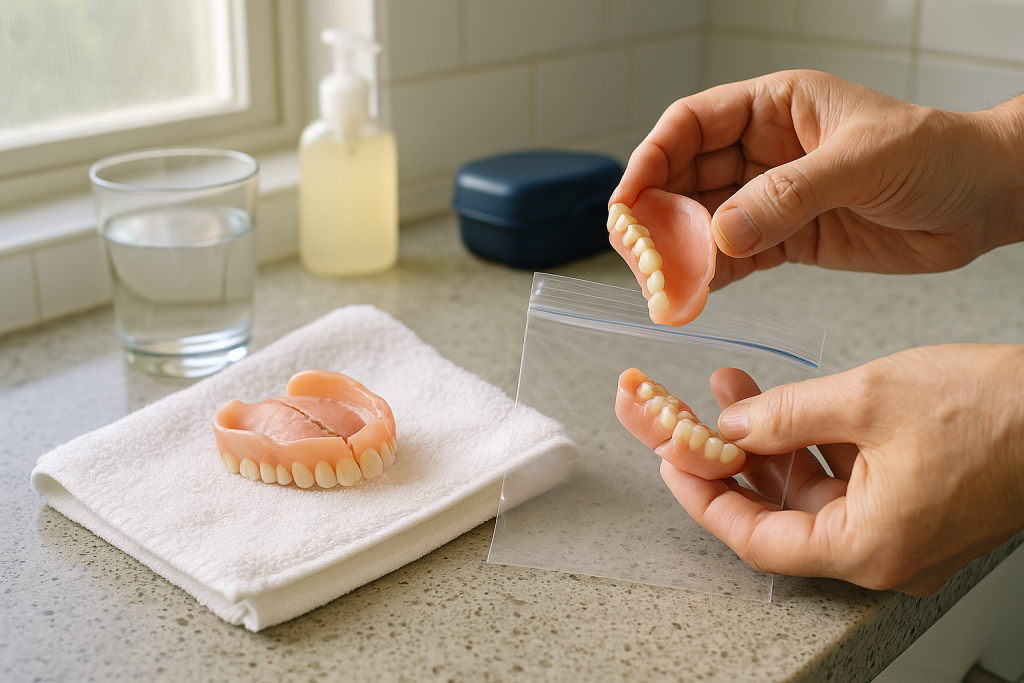
When dentures break, remove them gently and check your mouth. Look for sore spots, bleeding, swelling, cuts, or pieces that may have come loose. If a broken edge is sharp, don’t put the appliance back in your mouth.
Save every piece. A loose denture tooth, a small chip, or a broken clasp may help the dentist determine whether repair is possible. Place the pieces in a clean container so they’re easy to bring to your appointment.
Follow these steps right away:
- Remove the denture carefully. Don’t bite down to test whether it still works.
- Rinse your mouth with lukewarm water. If your gums feel irritated, a gentle saltwater rinse may help.
- Inspect the appliance without forcing pieces together. Look for cracks, sharp edges, missing teeth, or bending.
- Store the denture safely. Use a clean container and keep the appliance moist if that is part of your normal care routine.
- Avoid hard or sticky foods. Soft foods are safer until the appliance is checked.
- Contact your dentist. Explain what broke, when it happened, and whether you have pain.
- Call for urgent help if needed. If you don’t have an established dentist or can’t get an emergency appointment, Emergency Dental Squad can help you find care.
A denture emergency is more urgent when the damage causes bleeding, cuts, swelling, severe gum pain, trouble eating, or a sudden change in your bite. It’s also urgent if the appliance broke during a fall, car accident, sports injury, or another impact that may have injured your mouth.
If you also have loose teeth, a broken tooth, damaged crowns, jaw pain, or swelling, mention that when you call. Broken dentures may be only part of the problem. A dentist can check both the appliance and your oral tissues before recommending treatment.
Repair Kits, Denture Adhesive, and What Not to Do at Home
Many patients search online for denture repair at home after an appliance breaks. The instinct is understandable. You may need to get through work, a meal, travel, or a family event. Still, home fixes can make denture damage worse if they’re used the wrong way.
Denture adhesive may help a loose appliance feel steadier in some cases, but it’s not a true repair. It shouldn’t be used to hold together a major crack, a snapped denture, or a broken partial. If adhesive changes your bite or causes pressure on the fractured area, remove the appliance and call a dentist.
Repair kits are available at pharmacies and online. Some repair kits can provide short-term support for minor damage, but they’re not a substitute for dental care. If you choose to use a repair kit, only use one made specifically for dentures, read all directions, and stop if the appliance feels bulky, rough, unstable, or painful.
Don’t do the following:
- Don’t use superglue, craft glue, or hardware adhesive.
- Don’t file sharp areas with a nail file, knife, or tool.
- Don’t bend metal clasps on a partial.
- Don’t sleep in broken dentures.
- Don’t chew hard foods with a damaged appliance.
- Don’t throw away broken pieces.
- Don’t assume a small crack is harmless.
Household glues are not made for oral use. They can irritate your gums, damage the denture base, and make professional repair harder. A misaligned home repair can also change the way your teeth meet, which may lead to soreness, jaw strain, or a larger break.
If the appliance broke cleanly and you’re tempted to snap it back into place, resist that urge. Denture material can bend or crack further under pressure. Keep the pieces safe and let a dentist decide whether repair is possible.
Why Dentures Crack, Chip, or Break
Dentures are made to handle daily use, but they’re not indestructible. Eating, speaking, cleaning, and removing them every day can place stress on the material. Over time, that stress can lead to weak spots.
Dentures crack for several common reasons. Sometimes the cause is obvious, such as dropping the appliance on a tile floor. Other times, the damage builds slowly from fit changes, hard foods, or normal wear.
| Cause of Denture Damage | What Happens | Warning Signs |
| Accidental drop | The appliance hits a hard floor, sink, or counter | Chips, snapped base, loose tooth, sudden crack |
| Poor fit | Gum and jaw changes make the denture rock or shift | Sore spots, clicking, slipping, uneven chewing |
| Hard foods | Ice, nuts, hard candy, or tough foods create excess pressure | Crack near a tooth, discomfort while biting |
| Improper cleaning | Hot water, harsh cleaners, or rough scrubbing weaken the material | Warping, dull surface, rough spots |
| Age and wear | Daily use gradually weakens the base and teeth | Thinning, repeated breaks, poor fit |
| Dental implant or partial issues | Attachments, clasps, or support areas wear down | Movement, pressure, loose components |
A poor fit is one of the most common reasons dentures break. Your gums and jaw can change shape over time. When the appliance no longer rests evenly, chewing pressure may concentrate in one area. That area can weaken, then crack.
A partial denture can also break if a clasp bends, a support tooth changes, or the appliance no longer seats correctly. If you have dental implants supporting a denture, worn attachments may create movement or uneven pressure. A dentist can determine whether the denture, implant parts, or bite need attention.
Small warning signs deserve attention. Clicking, slipping, new soreness, bad odor, a rough edge, or a change in chewing can all point to a developing problem. Calling early may prevent a minor repair from turning into a replacement.
When Broken Dentures Need an Emergency Appointment
Not every denture issue requires immediate treatment, but many should be checked quickly. If the damage affects comfort, safety, or function, don’t wait days hoping it will improve.
Seek urgent help if:
- The denture broke in half.
- A sharp edge is cutting your gums, cheek, or tongue.
- A tooth on the appliance is loose or missing.
- The denture no longer fits in your mouth.
- You have bleeding, swelling, or severe soreness.
- You can’t eat or speak comfortably.
- The break happened during an accident or fall.
- A partial is pulling on natural teeth.
- An implant-supported denture feels unstable.
A broken denture can lead to more than inconvenience. Sharp edges may injure soft tissues. A poor fit can create pressure sores. Food and bacteria can collect around cracked areas. If you keep wearing a damaged appliance, your gums may become irritated and future repair may become more difficult.
Emergency Dental Squad helps patients find 24/7 emergency dental care when their regular office is closed or unavailable. If you’re traveling, facing a weekend problem, or unsure who to call, you can reach out for help connecting with a local provider.
Be ready to share a few details when you call. Tell the office whether the denture is full or partial, whether you have dental implants, whether a tooth came off, and whether you have pain. Mention any home products used, including denture adhesive or repair kits. This helps the dental team prepare for your visit.
Professional Repair, Replacement, and Preventing Future Denture Damage
A dentist will first check the appliance and your mouth. The goal is to find out what broke, why it broke, and whether the appliance can be repaired safely.
Professional repair may be possible when the denture has a small crack, a loose tooth, a clean break, or a damaged clasp. Some repairs can be handled quickly. Others require dental lab work. A dentist may also recommend an adjustment, a reline, or replacement depending on the condition of the appliance.
A reline may help if the denture isn’t broken but feels loose. During a reline, the fitting surface is updated so the appliance rests better against the gums. A better fit can reduce movement and lower the risk of future cracking.
Replacement may be recommended when the appliance is worn, warped, brittle, broken in several places, or repeatedly repaired. If the same area keeps breaking, the underlying issue may be fit, bite pressure, or age of the material.
To help protect your denture after repair:
- Clean it daily with a soft brush and denture-safe cleanser.
- Handle it over a towel or a sink filled with water.
- Avoid hot water, which may warp the material.
- Store it in a safe case away from pets and children.
- Avoid chewing ice, hard candy, pens, or packaging.
- Schedule routine dental visits to check the fit.
- Call a dentist if soreness, slipping, or clicking begins.
Good daily care can lower the chance of damage, but accidents can still happen. Keep Emergency Dental Squad’s number available so you can get help fast when you need urgent dental care.
Fast Help for Broken Dentures
Broken dentures can feel overwhelming, especially when they affect eating, speech, or your appearance. You don’t have to manage the problem alone. Emergency Dental Squad connects patients with local dentists for denture repair, broken dental work, damaged partials, tooth pain, swelling, extractions, crowns, and other urgent dental needs.
Call now if your dentures break, if a rough edge is hurting your gums, or if you need help finding a dentist for same-day care.
If your denture breaks and you need help now, call Emergency Dental Squad 24/7. Fast guidance and local dental care can help restore comfort, protect your mouth, and get you back to your normal routine.
