
When Does Dry Socket Pain Usually Start? Symptoms After Tooth Removal
Dry socket pain usually starts two to four days after a tooth extraction. It generally doesn’t begin the moment a tooth is removed. Soreness from the procedure often appears as the anesthetic wears off, but that discomfort should gradually become easier to manage. A sudden increase after initial improvement follows a different pattern and should be reported to a dental professional.
When does dry socket pain usually start? Dry socket, also called alveolar osteitis, occurs when the protective blood clot doesn’t form properly, dissolves, or comes out before new tissue covers the underlying bone. The exposed area can produce deep, throbbing discomfort that travels toward the ear, jaw, or temple. An empty-looking opening, visible bone, bad breath, or an unpleasant taste may appear as well.
Timing offers a useful clue, but it can’t confirm the condition. A new severe ache on day four falls within the usual window. Symptoms can appear later, including five days following a difficult procedure, so a delayed change still deserves attention. Normal soreness trends downward, while a developing problem often becomes stronger. Risk is higher after difficult or wisdom tooth procedures, but it can follow a routine removal. A clear change in recovery is enough reason to call.
If discomfort is worsening and the office that performed the procedure is closed, Emergency Dental Squad can help connect you with a local dentist 24/7. Urgent appointment options may be available in your area.
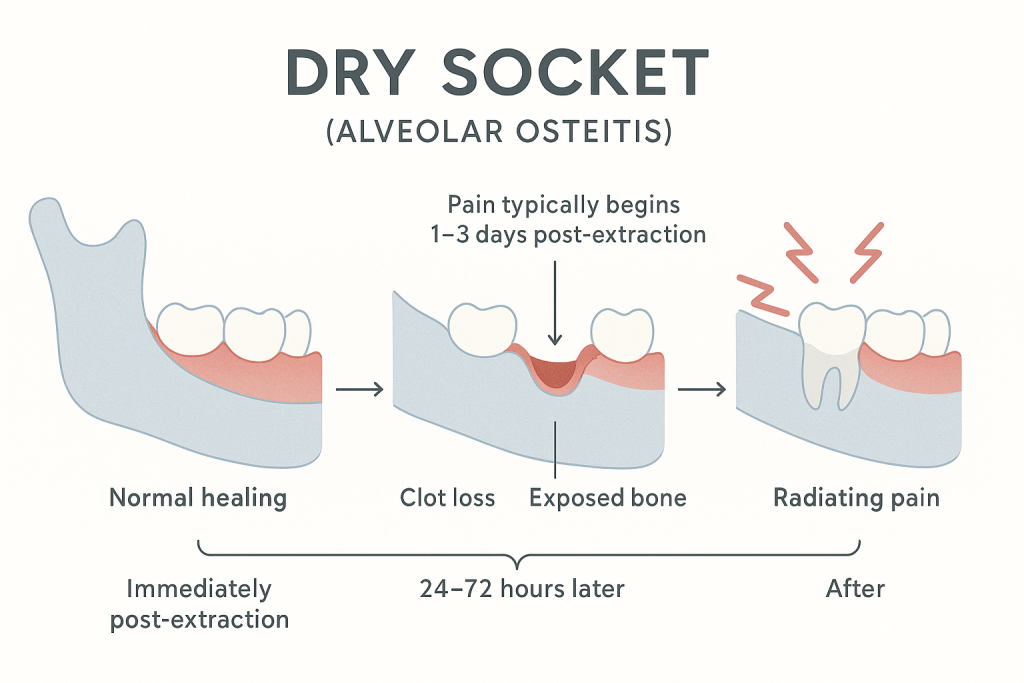
Dry Socket Timeline and Pain after Tooth Extraction
Once your dentist removes a tooth, the empty opening fills with blood and a blood clot begins to form. This protective layer shields sensitive bone and nerve endings while the early healing process gets underway. During the first 24 to 48 hours, mild to moderate soreness, tenderness, and swelling can be expected. Medication recommended by the provider should usually make these changes manageable.
The most common shift occurs two to four days later. Instead of continuing to improve, the discomfort becomes deeper, sharper, or more persistent. It may radiate beyond the treated area and interfere with sleep or eating.
| Time since the procedure | Expected recovery pattern | Possible warning pattern |
| First 24 hours | A protective covering forms, and soreness begins as numbness wears off. | Heavy bleeding that doesn’t slow or rapidly growing swelling needs prompt help. |
| 24 to 48 hours | Tenderness may continue but should remain manageable. | The opening feels increasingly raw, or discomfort rises sharply. |
| Two to four days | Swelling and soreness should begin easing. | Intense throbbing develops, returns after improvement, or spreads toward the ear or jaw. |
| Four to five days | Daily comfort should continue improving. | An empty-looking opening, visible bone, foul taste, or bad breath appears. |
| After five days | The surface continues closing, although the opening may remain visible. | New severe discomfort or a stalled recovery needs a dental assessment. |
These ranges are a practical summary. Recovery varies, but new or worsening discomfort during the first several days should be reported.
Does dry socket pain start immediately after losing clot? Not always. The moment of loss may go unnoticed, and symptoms can build as the exposed area is irritated by air, food, or movement. A few days post-procedure is the pattern people most often recognize. From roughly 48 to 96 hours, routine soreness should be improving. New severe discomfort doesn’t prove the condition, but an escalating pattern deserves a call to the treating office.
Early-Stage Dry Socket Symptoms vs Normal Healing
Normal recovery and early-stage dry socket can overlap at first. Both may involve tenderness near the treated area. The difference is usually the trend. Routine discomfort becomes less noticeable with each passing period, while discomfort from dry socket often intensifies and may feel out of proportion to the original procedure.
People asking what dry socket feels like often describe it as deep, throbbing, sharp, or raw. It can travel from the opening toward the ear, jaw, eye, temple, or neck on the same side. Over-the-counter medicine may offer little relief. Some people notice only minor swelling even when the discomfort is severe, so swelling isn’t required.
Watch for these socket symptoms:
- Worsening discomfort: The ache becomes stronger after it had started to settle.
- Radiating discomfort: The sensation moves toward the ear, jaw, temple, eye, or neck.
- A changed appearance: The opening looks empty, or a hard white surface may be visible.
- Taste or odor changes: Bad breath, a foul smell, or an unpleasant taste continues.
- Interrupted daily activity: Eating, sleeping, working, or concentrating becomes difficult.
- Poor response to medicine: The recommended pain plan provides little control.
Pictures of dry socket vs normal healing can offer context, but appearance alone is unreliable. Tissue color changes as the mouth repairs itself, and food debris can resemble bone or healing material. Look gently with a mirror and clean light, but don’t touch, scrape, or probe the opening. A dentist must examine the area to determine whether loss of protection, infection, a retained fragment, or another issue is causing the symptoms.
What Raises the Risk after a Tooth Is Removed?
The condition begins when the blood clot that should protect the opening is missing or breaks down too early. This may happen without an obvious mistake. Still, certain habits, health factors, and procedure details can raise the risk by disrupting proper formation or slowing tissue repair.
Factors linked with higher risk include:
- Smoking, vaping, or chewing tobacco during recovery
- Drinking through a straw, forceful spitting, or vigorous rinsing
- A difficult removal involving an impacted tooth or added bone work
- Poor oral hygiene or infection near the treated area
- A previous history of dry sockets
- Estrogen-containing birth control or other factors discussed with the treating provider
- Health conditions that may slow recovery
Don’t stop prescribed medication on your own. Tell the dentist about prescriptions, over-the-counter products, pregnancy, tobacco use, and medical conditions before oral surgery so the aftercare plan can reflect your needs.
Developing dry socket despite careful aftercare doesn’t automatically mean you made a mistake. No method can prevent the condition with complete certainty. Careful habits can lower risk, but they can’t remove it entirely. If problems develop despite following every instruction, that doesn’t mean you caused them. The safest response is to notice the change early and arrange an assessment.
Dry Socket Treatment and How Dentists Reduce Pain
A dentist usually begins by reviewing when symptoms started and examining the opening. An X-ray may be used when the provider needs to rule out a retained root tip, a small bone fragment, infection, or another source of discomfort.
Treatment focuses on relieving symptoms and protecting the exposed area while tissue grows. The provider may gently flush the opening with sterile fluid to remove food and loose material. A medicated gel, paste, or dressing may then be placed inside. Depending on the product and the severity of symptoms, the dressing may need to be changed during a follow-up visit.
The provider may recommend an over-the-counter option or prescribe pain medication based on your health history, allergies, current prescriptions, and the procedure performed. Antibiotics aren’t used for every case because alveolar osteitis isn’t automatically a bacterial infection. They may be appropriate when an examination points to infection or another health concern.
Many patients notice relief after cleaning and dressing, but tissue repair still takes time. How long dry socket lasts depends on the size of the opening, the procedure, personal health, and whether the area remains protected. With proper care, it often heals within seven to 10 days, although comfort may improve sooner. Keep follow-up appointments even if you feel much better after the first visit.
Pain getting stronger after your tooth extraction? Call Emergency Dental Squad at (855) 907-3090 for 24/7 help finding a local dental clinic. The service can assist with fast scheduling and ask about appointments available today near you.
How to Protect the Extraction Site during the First Few Days
The first three days deserve extra care because the protective covering is still stabilizing. Aftercare instructions from the treating office should come first because they reflect your procedure, stitches, medications, and health history. The goal is to keep the area clean without disturbing the protective area or irritating new tissue.
Use these steps during early recovery:
- Keep gauze in place as directed. Bite with gentle, steady pressure and replace it only according to the instructions you received.
- Avoid tobacco. Smoking, vaping, and chewing tobacco can interfere with blood flow and expose the opening to heat, chemicals, and suction.
- Skip straws and forceful mouth movements. Don’t spit hard or swish vigorously. Begin salt-water rinses only when your provider says it’s safe.
- Choose soft foods. Yogurt, applesauce, eggs, mashed vegetables, and similar choices require less chewing. Keep hard, crunchy, spicy, or seedy foods away from the treated side.
- Clean your mouth gently. Brush the other teeth, but keep bristles away from the opening until you’re told to clean closer.
- Rest and control swelling as directed. Keep your head elevated and use a cold pack outside the cheek in short intervals if recommended.
- Use medicine only as instructed. Don’t place aspirin, crushed tablets, oils, powders, or numbing products directly in the opening.
These measures support oral health and reduce avoidable irritation, but home care can’t diagnose or treat an established problem. If discomfort is becoming stronger, don’t keep testing home remedies while waiting for it to pass.
Post-Extraction Timing and When to Seek Dental Care
Call the office that performed the procedure if discomfort returns after improving, becomes severe, spreads toward the ear or jaw, or remains difficult to control with the recommended medicine. A visible hard surface, an empty-looking opening, persistent bad taste, foul odor, fever, pus, increasing facial swelling, difficulty opening the mouth, or bleeding that won’t slow also warrants prompt contact.
Dry socket doesn’t usually hurt right away. Its timing commonly places the strongest warning signs between two and four days after removal, and the 72-to-96-hour period is still within that window. New symptoms after that period shouldn’t be dismissed, especially when the overall recovery has stopped moving in the right direction. A professional exam is the safest way to separate loss of the protective covering from infection, trapped food, a retained fragment, or another dental problem.
Trouble breathing or swallowing, rapidly spreading swelling in the face or neck, major facial trauma, confusion, or uncontrolled bleeding requires emergency medical attention. Call 911 or go to the nearest emergency department.
Emergency Dental Squad helps people across the United States connect with local providers around the clock. It’s a free connection service, not a dental office, and it doesn’t replace an in-person diagnosis. For worsening post-procedure discomfort, call (855) 907-3090 to ask about available local care, including urgent appointment options.
